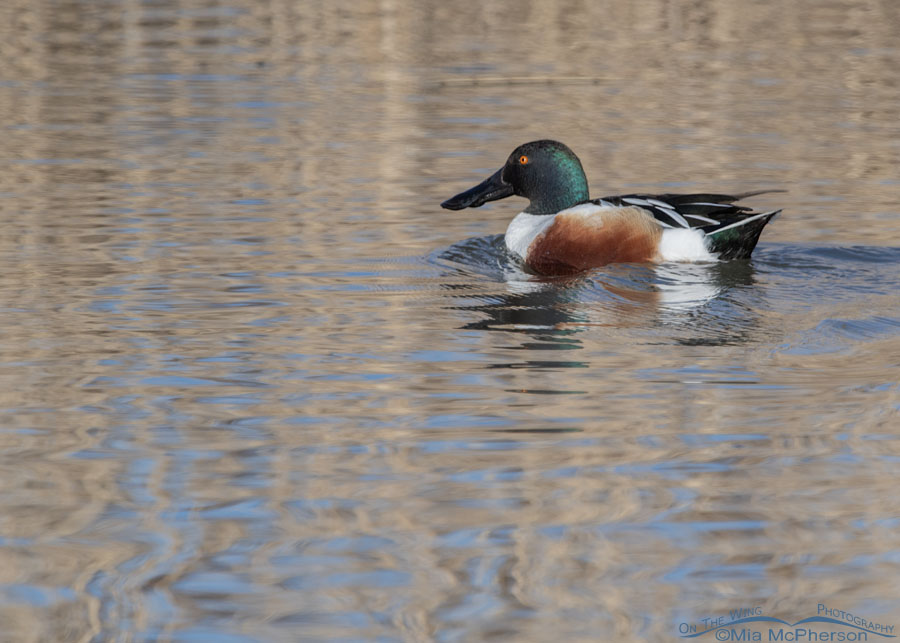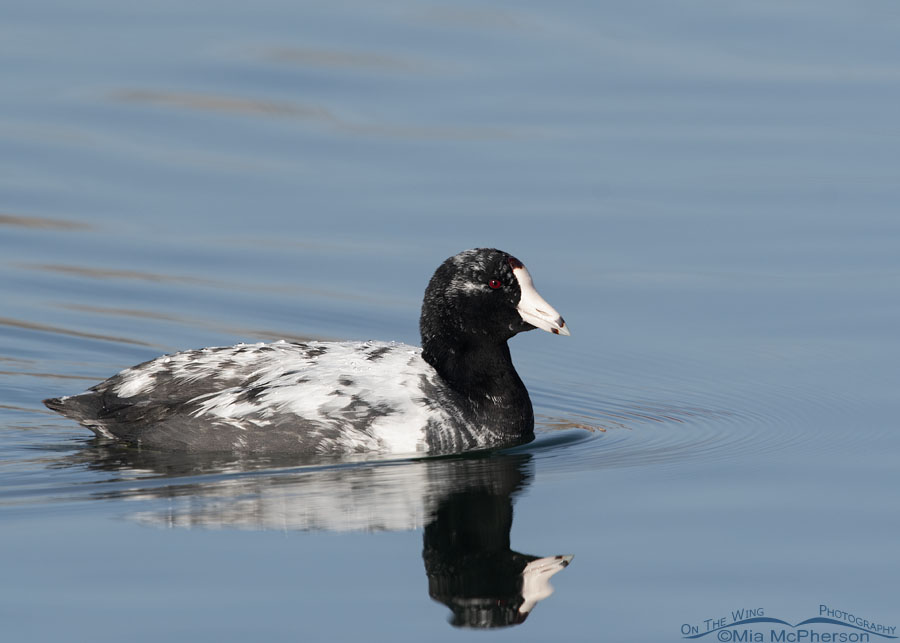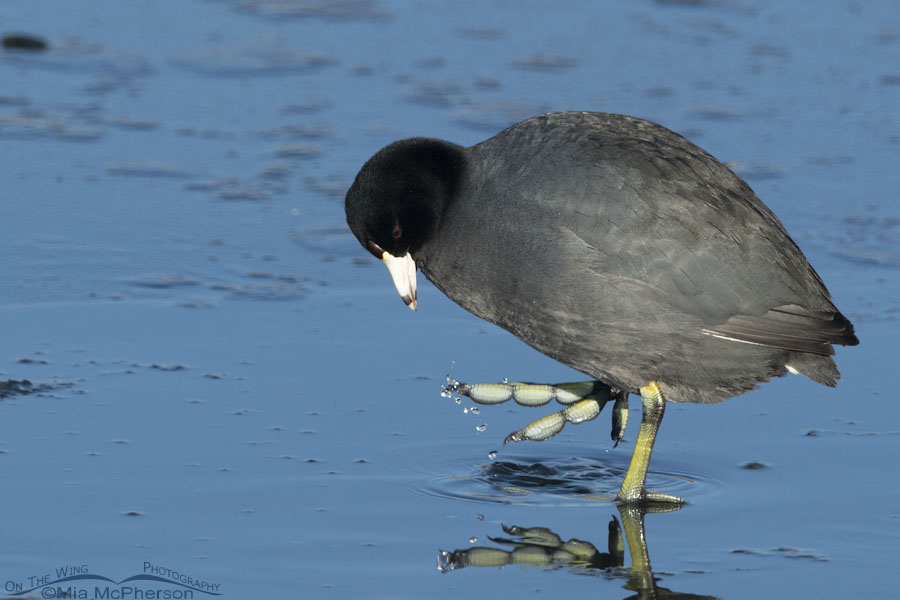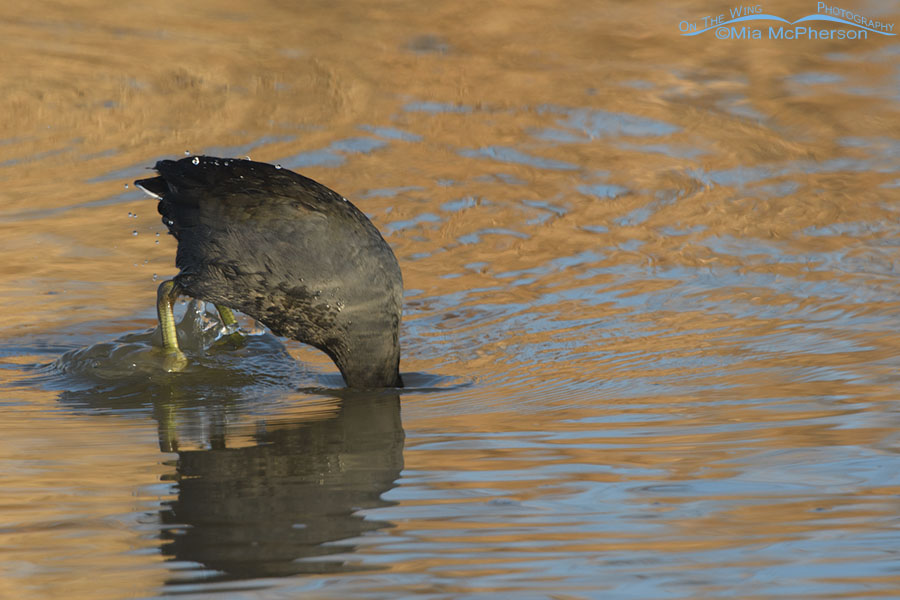

Whoops – American Coot on Thin Ice

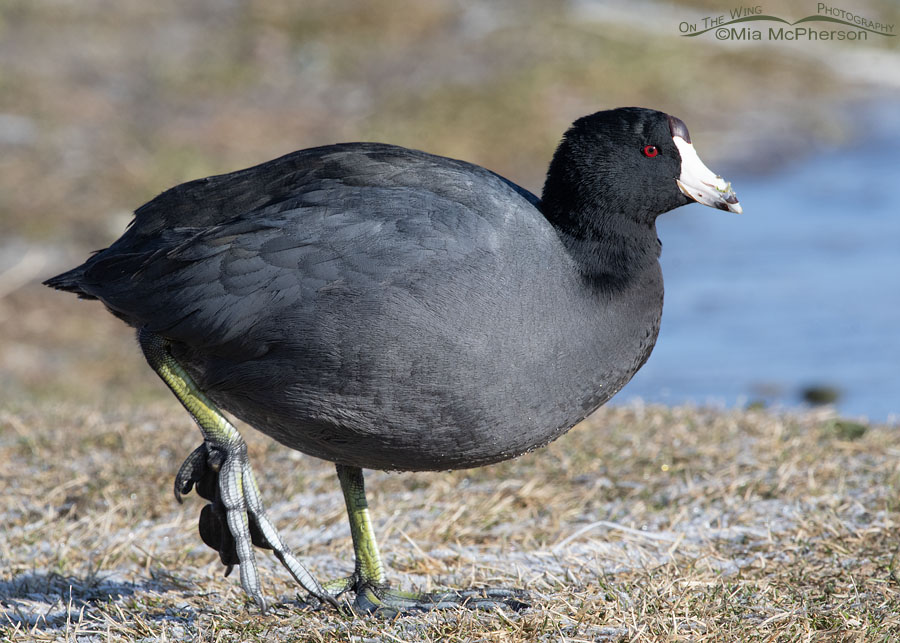
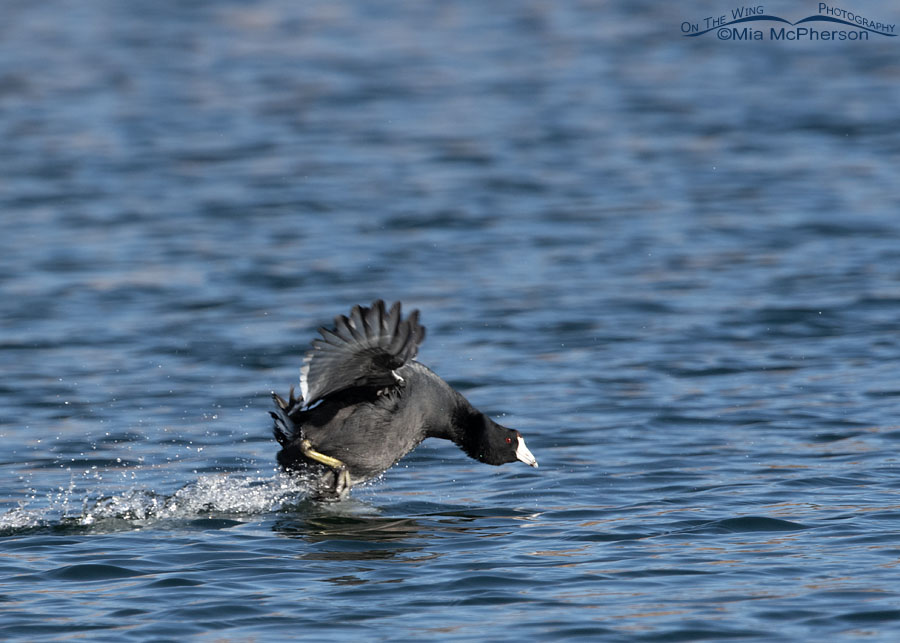
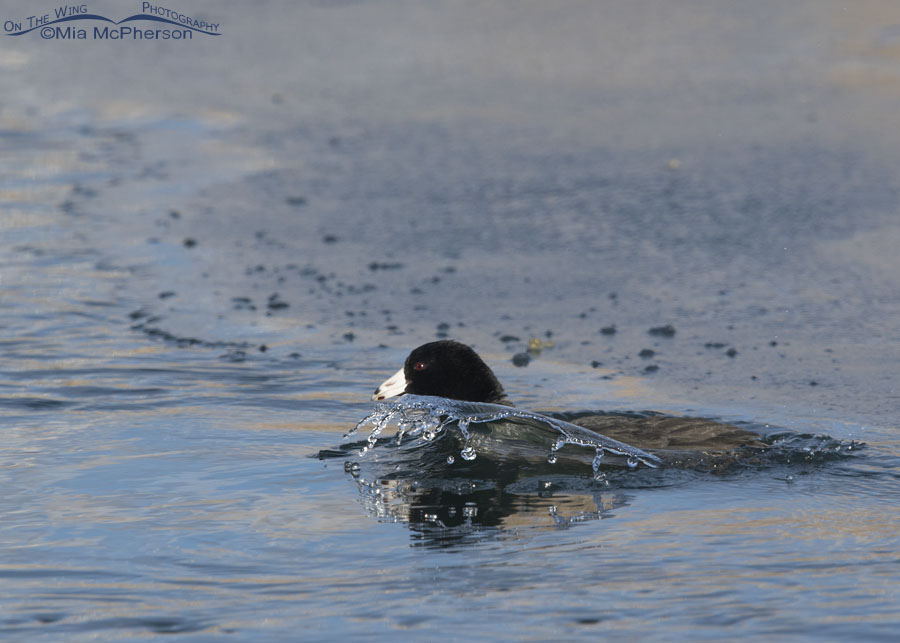
American Coot on thin ice

American Coot on thin ice - Nikon D200, tripod mounted, f7.1, 1/1250, ISO 320, Nikkor 200-400mm VR with 1.4x TC at 400mm, natural light

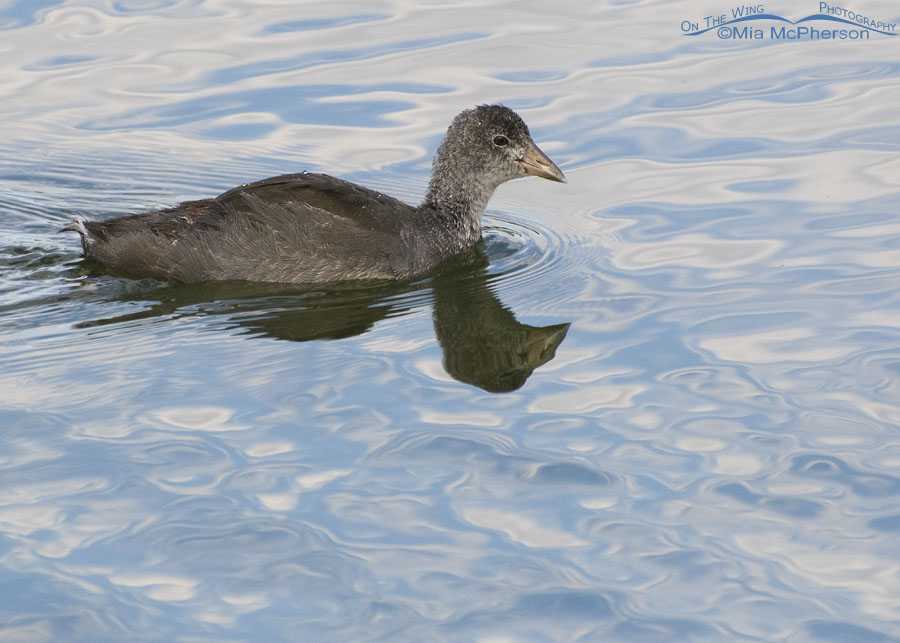
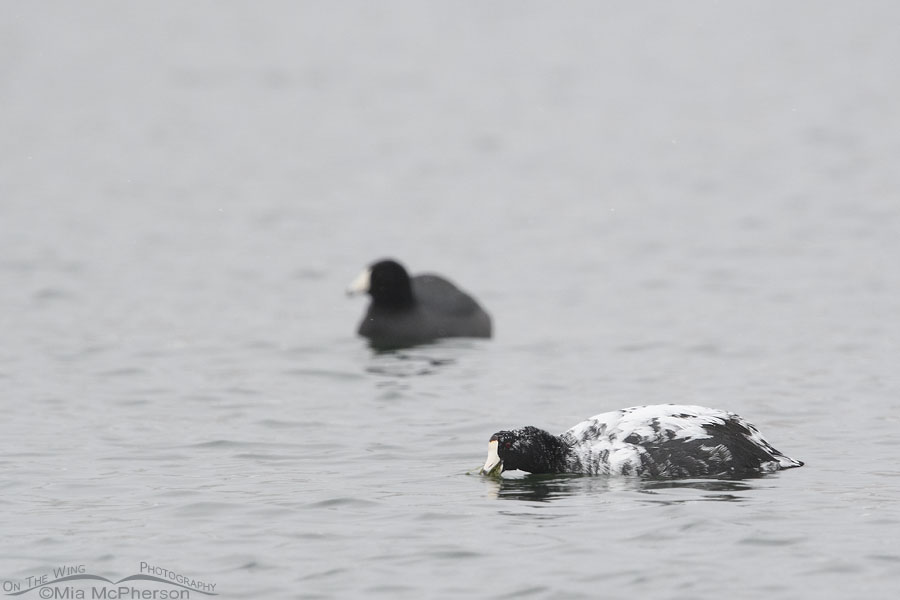
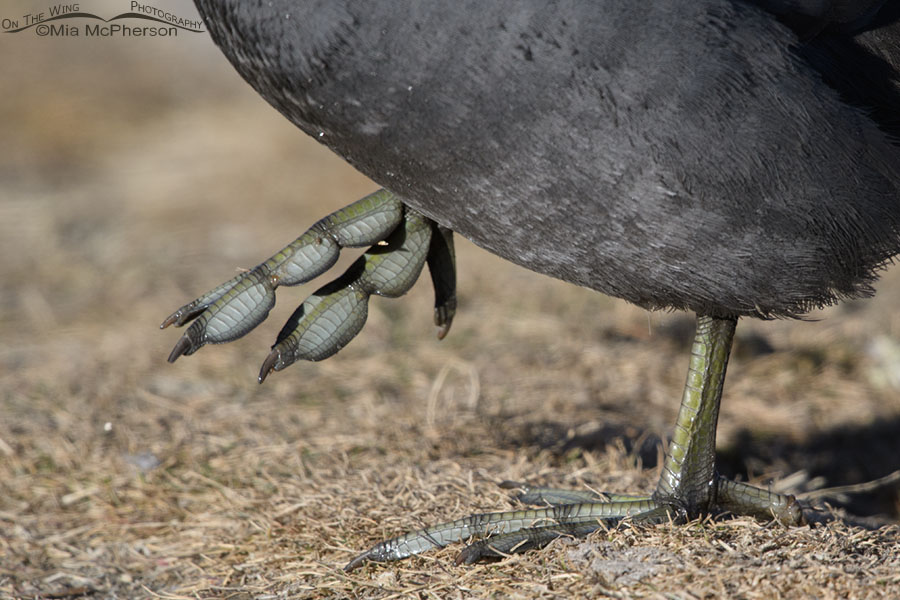
Some images are simply too funny not to share. Even with those huge feet this American Coot (Fulica americana) couldn’t stay in top of the ice at a pond near where I live in Salt Lake County, Utah.

Any wonderful captions come to mind?

Mia

More American Coot images

Facebook Twitter Stumbleupon Digg Delicious Reddit Posterous Pinterest Email

Share

American Coots – Birds to Rail About

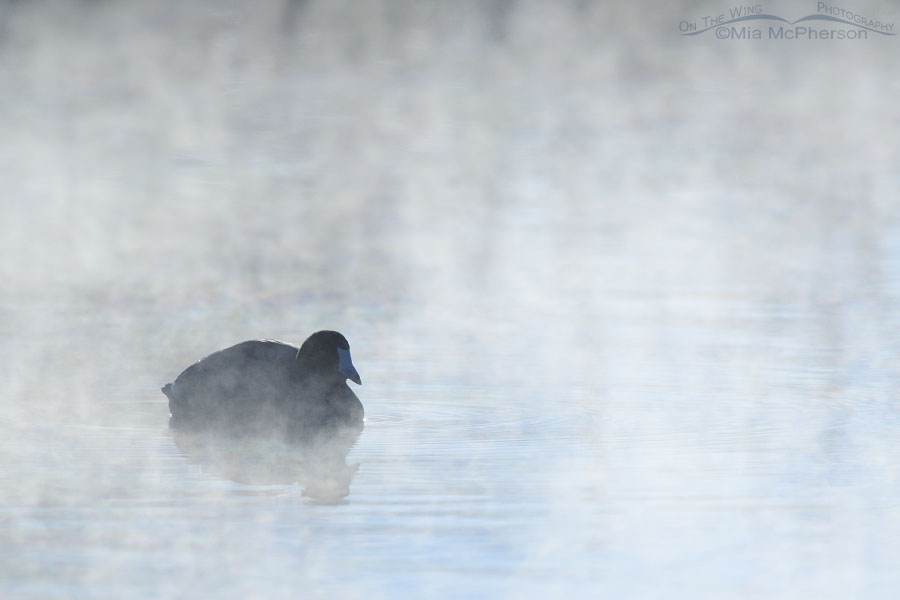
It is my belief that even birds that people consider too common, plain, drab, or boring can be photographed in ways that create visually compelling images, for instance when I am photographing American Coots I look for colors and patterns that will compliment or be in contrast to thier dark plumage,  appealing settings, great action or an interesting pose.

American Coots are the most widely distributed members of the Rail family in North America and are very abundant in habitats with open water. Some bird photographers pass up on photographing American Coots because they aren’t colorful and are common but if you have been following my blog for any length of time you know that if it has feathers and it is a bird, I’ll photograph it.

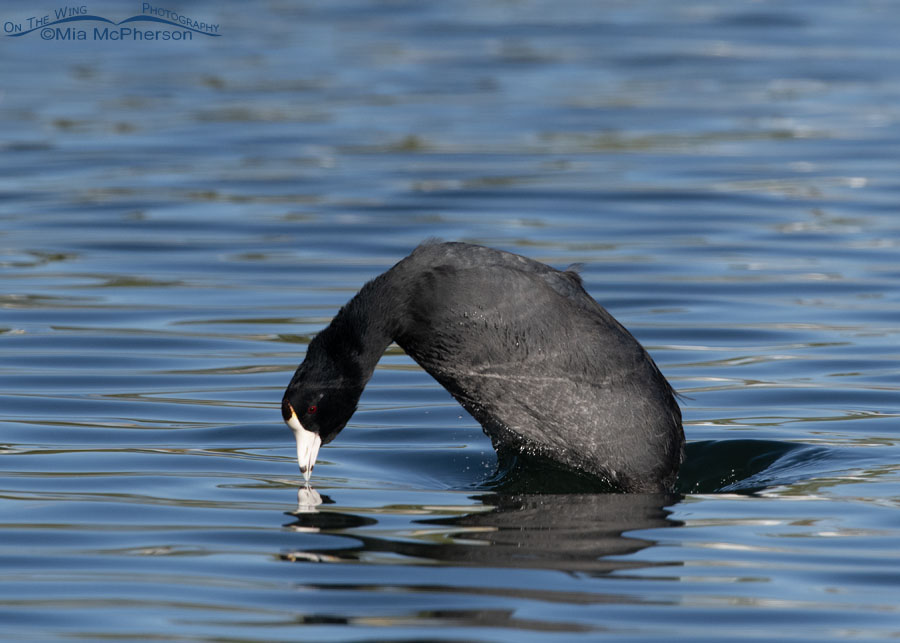
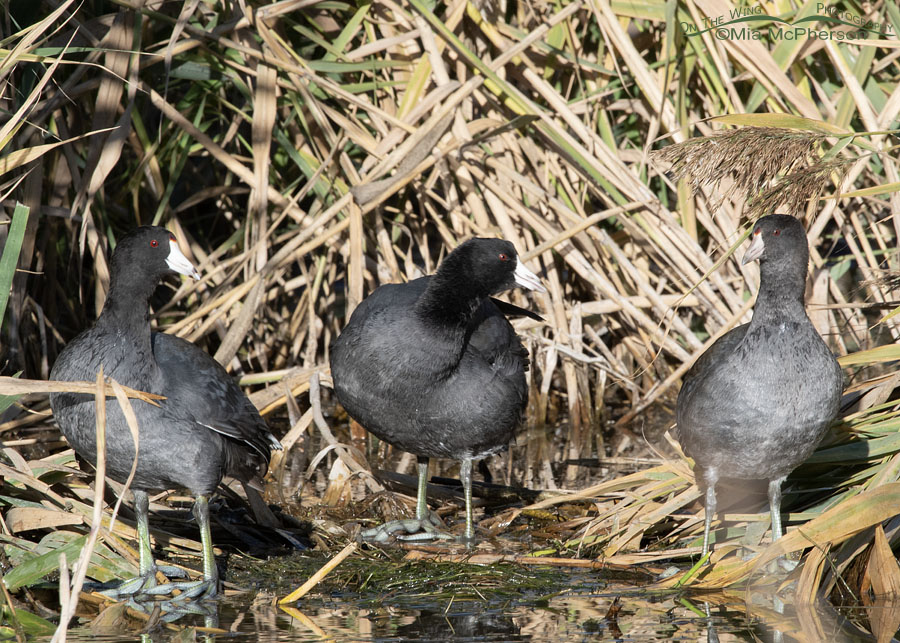
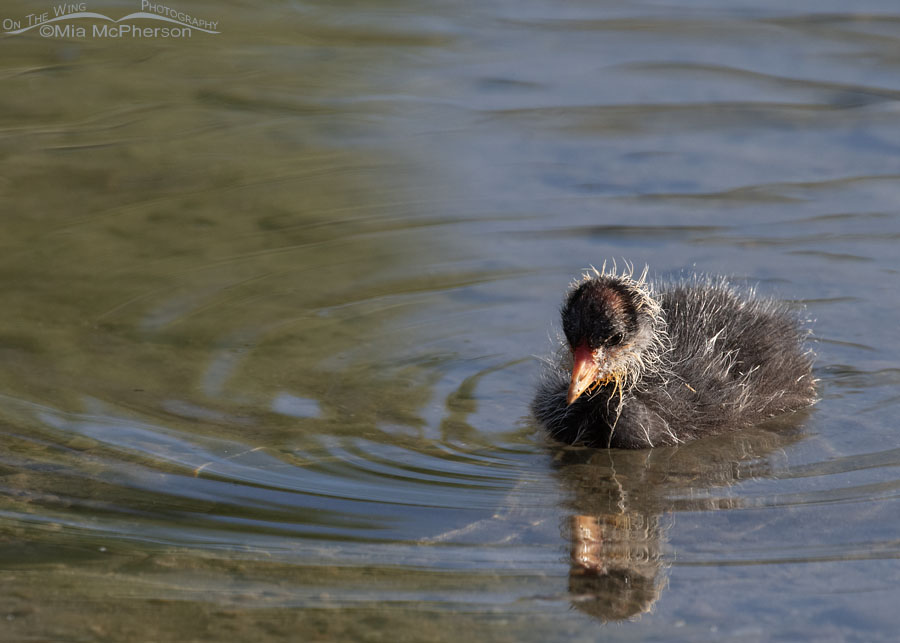
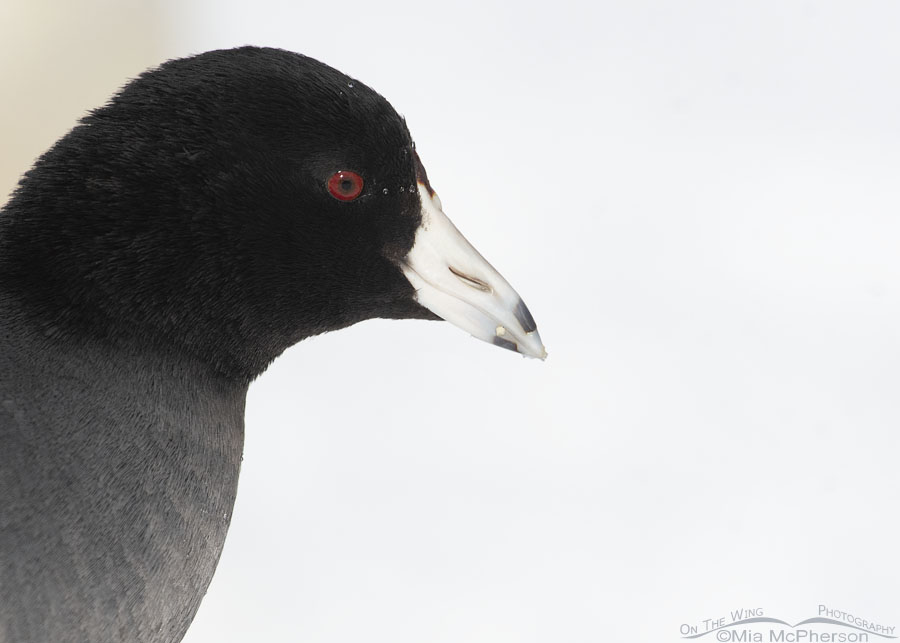
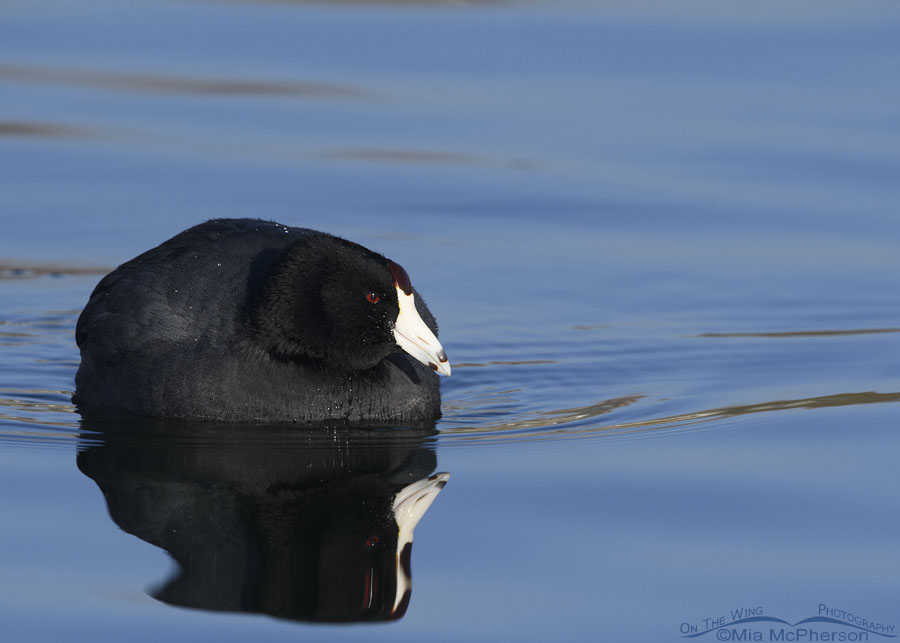
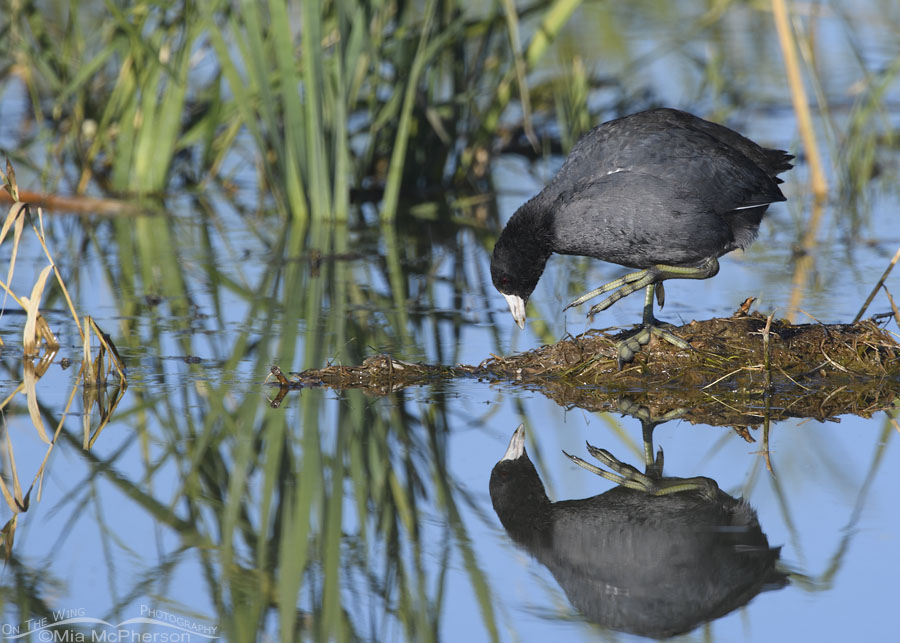
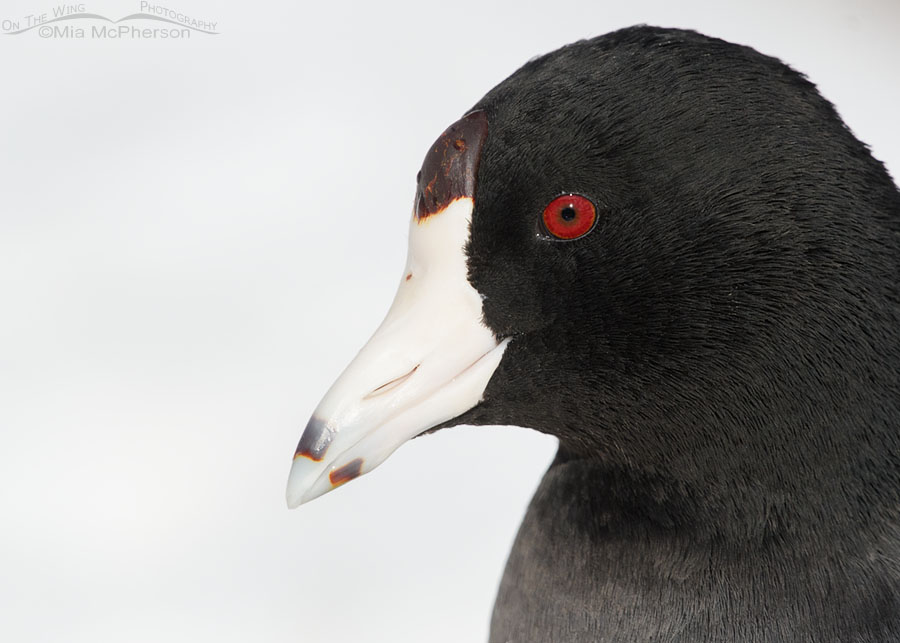
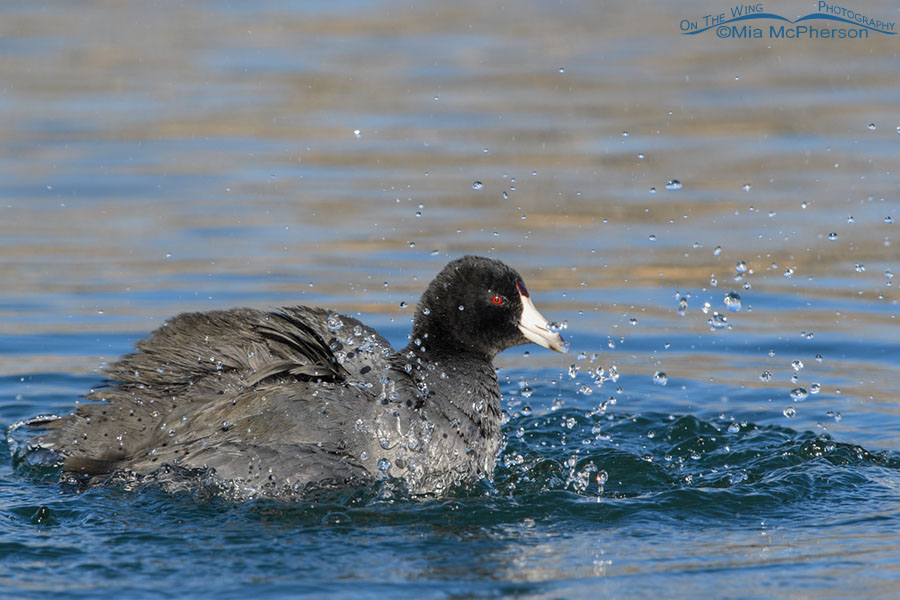
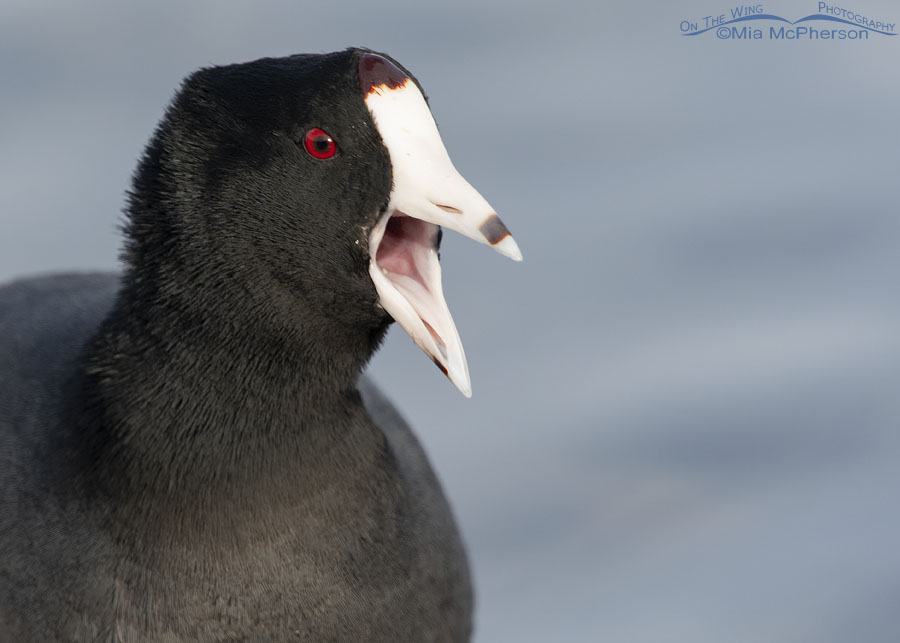
These members of the Rail family have large, lobed greenish feet, red eyes, very dark bodies with ivory colored bills topped by a reddish shield. They are often in the presence of ducks and are at times they are mistakenly labled a “duck” by people not familiar with birds. Coots can make a lot of noise and while they are gregarious they will often chase each other around in displays of aggression which is great fun to watch and photograph.

American Coot (Fulica americana) small in the frame

American Coot (Fulica americana) small in the frame
Nikon D200, tripod mounted, f7.1, 1/800, ISO 320, Nikkor 200-400mm VR with 1.4x Tc at 400mm, natural light

American Coots are difficult to expose correctly because of thier very darks bodies and thier very white bills, it can be a challenge to get details in the black without blowing out the whites in the bill. Paying attention to the angle of light and deciding whether to use negative or positive exposure compensation is critical when considering what settings to use when photographing these birds.

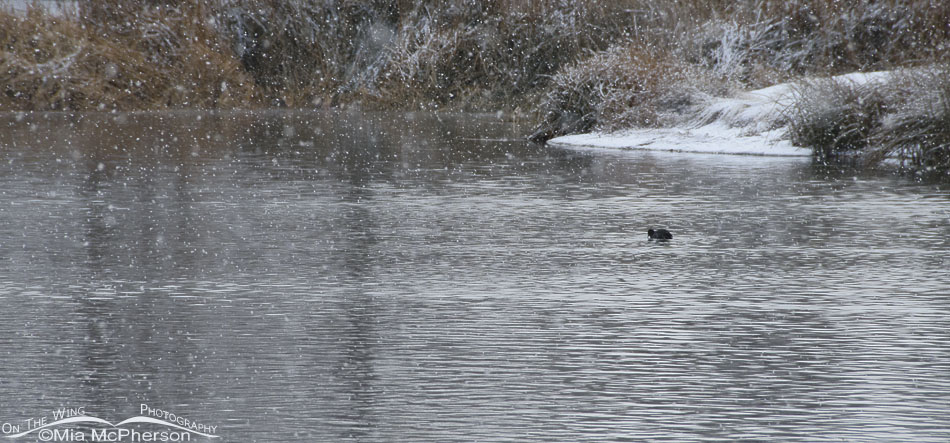
I photographed the American Coot in the image above on a very chilly winter day at a pond near where I live. The shades of white in the water were caused by snow on the bank of the pond and the golden tones were from the colors of the dried cattails along the shore. I decided to compose this image with the American Coot small in the frame because I felt the water was dramatic and was as visually stimulating as the bird itself.

American Coot (Fulica americana) chasing another
American Coot (Fulica americana) chasing another Coot
Nikon D200, tripod mounted, f7.1, 1/1000, ISO 250, Nikkor 200-400mm VR with 1.4x TC at 300mm, natural light

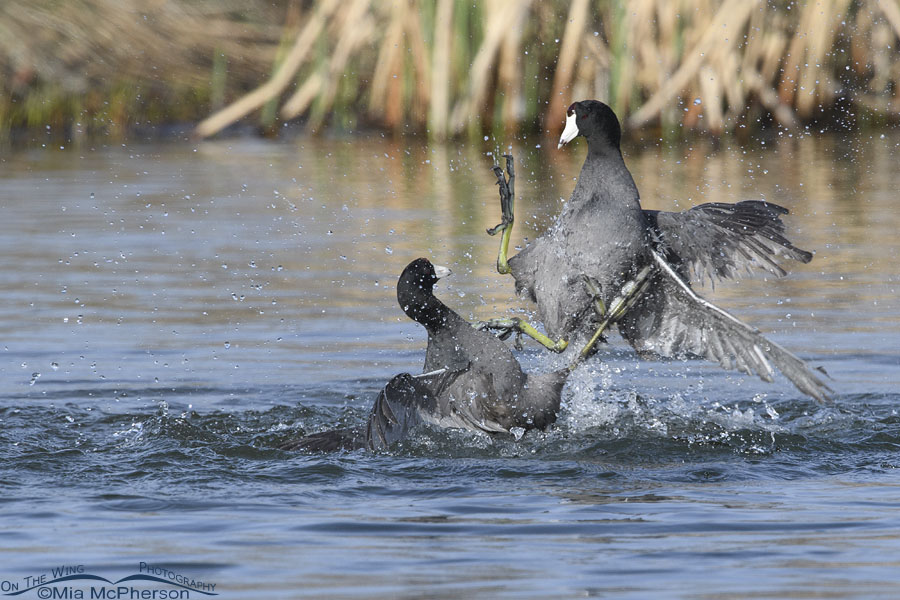
Earlier I mentioned that I look for great action when photographing American Coots, I feel that the action can convey not only a sense of movement but lends a bit of excitement too.

When I photographed the bird in this image I had been concentrating on bird that were close to where I was sitting with my tripod in front of me when I heard the Coots making sounds that indicate a squabble might happen soon so I zoomed back and got prepared for some action.  I saw one of the birds sneaking up on another and when the lead bird took off running across the top of the water I started tracking the bird that was doing the chasing and created a series of images of this Coot “walking on water”. Make that “running”.  I didn’t even mind the out of focus Pied-billed Grebe in the frame because it was so out of  focus and not intersecting with the main subject plus I also liked the feeling of depth the Pied-billed Grebe added to the image.

American Coot (Fulica americana) with tilted head

American Coot (Fulica americana) with tilted head
Nikon D200, tripod mounted, f9, 1/320, ISO 320, Nikkor 200-400mm VR with 1.4x TC 315 mm, natural light

I also mentioned that I look for interesting poses when photographing Coots and sometimes that includes the head angle of the subject.  I know some pro photographers would “wish” that the bird’s head in the frame above was tilted a few degrees downward and to the left side of the frame to convey better direct eye contact between the subject and viewer but I sort of think that is splitting feathers and I simply do not feel that I “must” always have the subject looking directly at me. 

I can clearly see the eye here and because the bird is looking up I can imagine it was looking at something in the sky and for me that adds interest and doesn’t subtract from the overall appeal of the image.

American Coot (Fulica americana) in silky waters

American Coot (Fulica americana) in silky waters
Nikon D200, tripod mounted, f7.1, 1/500, ISO 250, Nikkor 200-400mm VR with 1.4x TC at 400mm, natural light

Some of the features I like most about the image above is the silkiness of the water, the profile view of the head of the bird and how the ripples in the water distorted the reflections of the snow and vegetation to create a wonderful contrast from the plain colored bird not only in the colors but in textures and swirly patterns.

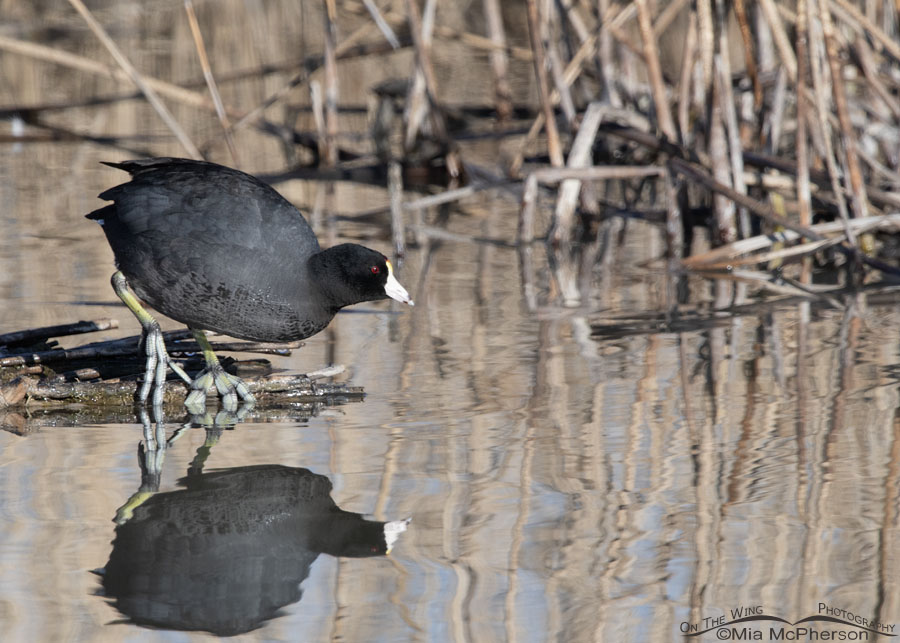
American Coot (Fulica americana) standing on golden colored ice and water

American Coot (Fulica americana) standing on bronze colored ice and water
Nikon D200, tripod mounted, f7.1, 1/350, ISO 250, Nikkor 200-400mm VR with 1.4x TC at 400mm, natural light

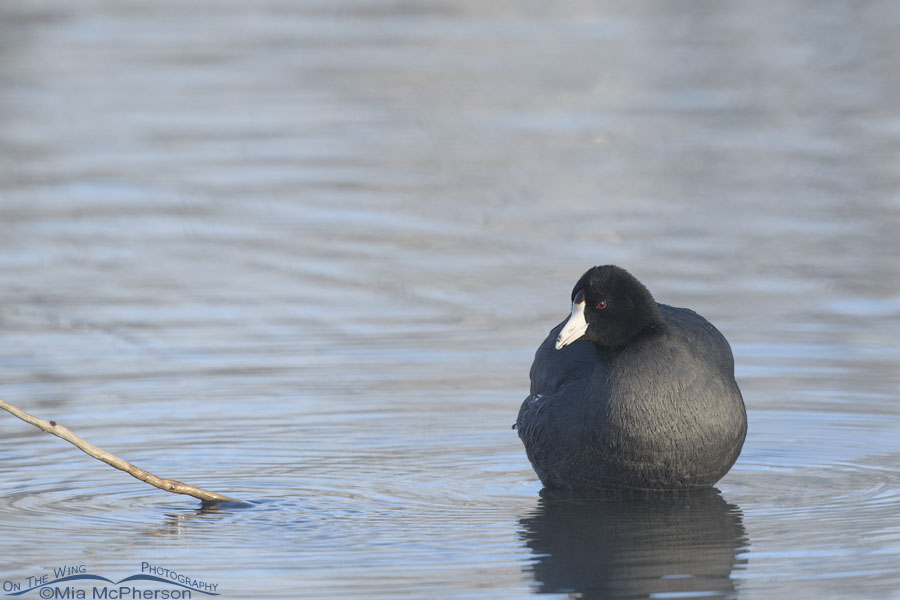
This American Coot was standing on thin ice near the shoreline and just the mere weight of the bird pushed the ice slightly under the water,  just enough that the stand of cattails was reflected on all of the water’s surface visible in this frame. Because the warm bronzy tones of the water are in contrast with the dark plumage of the bird the Coot stands out very well from the setting.  

Even “Plain Jane” birds can sparkle in the right light, setting or pose. Don’t you agree?

Mia

More American Coot images

Facebook Twitter Stumbleupon Digg Delicious Reddit Posterous Pinterest Email

Share

Head angles

Tricolored Heron with head tilt

Tricolored Heron (Egretta tricolor) with head tilt
Pinellas County, Florida

D200, handheld, laying flat on the sand, f6.3, 1/1500, ISO 250, 80-400mm VR at 330mm, natural light

On the web there are many image critique forums, I am only active on one of the nature photography critique forums, though I have participated on a few since 2003. I believe that by receiving and giving critiques I can strengthen my skills in composition, technique and learn a great deal about the birds I love to photograph.

I have seen some avian images posted on other forums that I found interesting and appealing but several people who critiqued the photos have talked about having the head angle 2 degrees this way or three degrees another. I’ve pondered those critiques and personally there are times when I think different head angles; even those that do not show the “perfect head turn” can be very compelling images.

I thought I would post a few of my photos on the avian critique forum where I am a member where the head angle isn’t perfect but where I find that I like the images despite the lack of direct eye contact. The feed back I received was very positive, so I don’t believe I am alone with my thoughts about head angles.

In the image above the Tricolored Heron (Egretta tricolor) turned its head towards the sky to eyeball an Osprey overhead and I feel that the head being turned upwards adds interest to the image. It can make the viewer wonder what the heron is looking at. You can see the eye but the bird is just going about its life and it was comfortable in my presence.

American Coot head angle

American Coot (Fulica americana)
Salt Lake County, Utah

D200, on Gitzo CF tripod, Black Widow head, F7.1, 1/500, ISO 250, 200-400mm VR with 1.4x TC at 400mm, natural light

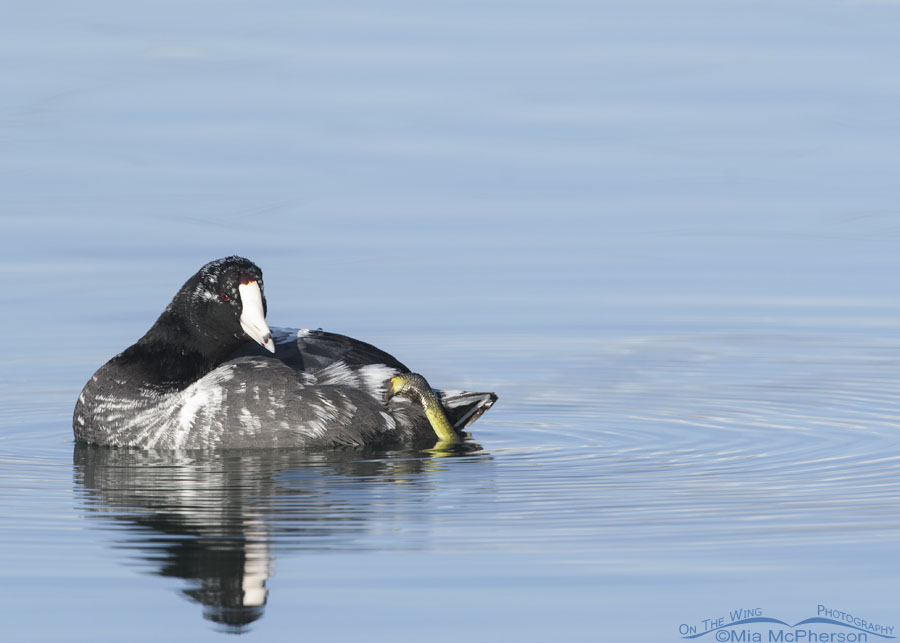
In this American Coot (Fulica americana) image the head angle might not be considered ideal, there is no direct eye contact or catchlight in the eye but I still feel that this is a compelling and interesting image because of the head angle and the bird’s pose and demeanor. I have more images of this coot where the head angle would be considered “better” but they do not have the same effect on me that this one does. In this image it is the head angle that draws me in and keeps my attention.

Snowy Egret gazing over stormy water

Snowy Egret (Egretta thula) gazing over stormy water
Pinellas County, Florida

D200, handheld, laying in the sand, f5.6, 1/500, ISO 500, 80-400mm VR at 400mm, natural light

In this photo the primary Snowy Egret (Egretta thula) is looking away, yet you can still see the eye. I believe the reason this image works for me is that it appears that the Snowy Egret is looking at the stormy water thus I don’t mind the head angle. For me this photo is as much about the setting as it is about the birds. I like the out of focus egret in the background, I feel it adds a tension that might not be there if that egret were absent.

The critiques I received on all three of the images were overwhelmingly positive which I feel supports my thoughts that even without what some may consider “the perfect head angle” that we can create interesting and compelling avian images.

Mia

Facebook Twitter Stumbleupon Digg Delicious Reddit Posterous Pinterest Email

Share

Bird Photography Close to Home

Many beginning photographers dream of taking images in far off places of exotic birds, and there is nothing wrong with that. But we shouldn’t overlook the benefits of photographing birds closer to home.

  • When you photograph species local to your area you can spend time learning about the behavior of the birds, the habitats they prefer and when and where to find them in the best light. You’ll also learn to anticipate certain actions of the birds as well.
  • When you photograph close to home you have ample opportunities to hone your techniques, learn your cameras settings as well as the strengths and limitations of your equipment.
  • You will begin to see the seasonal patterns of migration for birds and will be able to anticipate when those species will be arriving in your locale.

Male Ring-necked Duck on a winter day

Male Ring-necked Duck on a winter day
Salt Lake County, Utah
D200, tripod mounted, f8,1/800, ISO 250, 200-400mm VR with 1.4x TC at 400mm, natural light.

The Ring-necked Duck (Aythya collaris) photo above was taken at a city park pond a few blocks from where I live on a cold but sunny winter day. The duck was closer to the shoreline than it would be in summer because of the ice in the center of the pond. I’ll know this coming winter to look to see when the ice forms and will be able to anticipate that the ducks and grebes may be closer to shore.

Another reason to photograph birds closer to home are the resources that you can tap into to locate good birding spots.

  • Join or access the website for your local Audubon Chapter. You will find a wealth of information about the birds and quite often they write about great locations to find them.
  • Find the local bird listserve or online bird listing sites, you will be up to date with which birds are being seen where.
  • If there is a local website (like UtahBirds.org here) you can find information on locations to see & photograph birds there too.

Male Red-breasted Merganser

 Male Red-breasted Merganser
Salt Lake County, Utah
D200, tripod mounted, 1/800, ISO 400, 200-400mm VR with 1.4x TC at 400mm, natural light

The Male Red-breasted Merganser (Mergus serrator) photograph above was also taken at the pond near where I live, in fact all of the images you will see on this post were taken there.

This merganser stayed at the pond for several weeks allowing me plenty of time to practice my exposure settings for this species in breeding plumage. The high contrast of blacks, whites and reds make it a challenge to expose correctly. Because of my close proximity to this location I was able to spend quite a few mornings photographing this bird. I didn’t have to travel far plus I could sit and sip my coffee while I waited for it to get closer.

Pied-billed Grebe look back

Pied-billed Grebe look back
Salt Lake County, Utah
D200, tripod mounted, f7.1, 1/640, ISO 250, 200-400mm VR with 1.4x TC at 400mm, natural light

I took this Pied-billed Grebe (Podilymbus podiceps) photo above because when I looked through my viewfinder I loved the golden tones of the water caused by the reflection of a stand of dried Phragmites along the shoreline and was very pleased with the pose of the grebe in this image.

I don’t believe that you need to go to exotic locations to create beautiful and compelling images, you can most likely accomplish that within less than 10 -15 miles from where you live.  Even a town dump might be a fine location if you watch the background!

  • Look for “greenspaces” within your community. These areas can offer food, water and shelter, birds may live there all year long or migrate through.
  • Look  for small city or county parks and visit them at different times of the day and through the year, you might be surprised by what might show up.

American Whie Pelican about to lift offAmerican White Pelican about to lift off
Salt Lake County, Utah
D200, tripod mounted, f7.1, 1/2000, ISO 250, 200-400mm VR with 1.4x TC at 400mm, natural light

A flock of American White Pelicans (Pelecanus erythrorhynchos) flew down to the pond on the day I took the image above. I liked the pose this one took and how the feathers on the top of the head lifted up with a slight breeze.  

Get to know the managers, caretakers and visitors to your local parks, greenspaces and other areas, you will be surprised at how much you can learn from talking to people. Quite often a big lens is enough to encourage strangers to speak to you and they might share another location you might not be aware of.

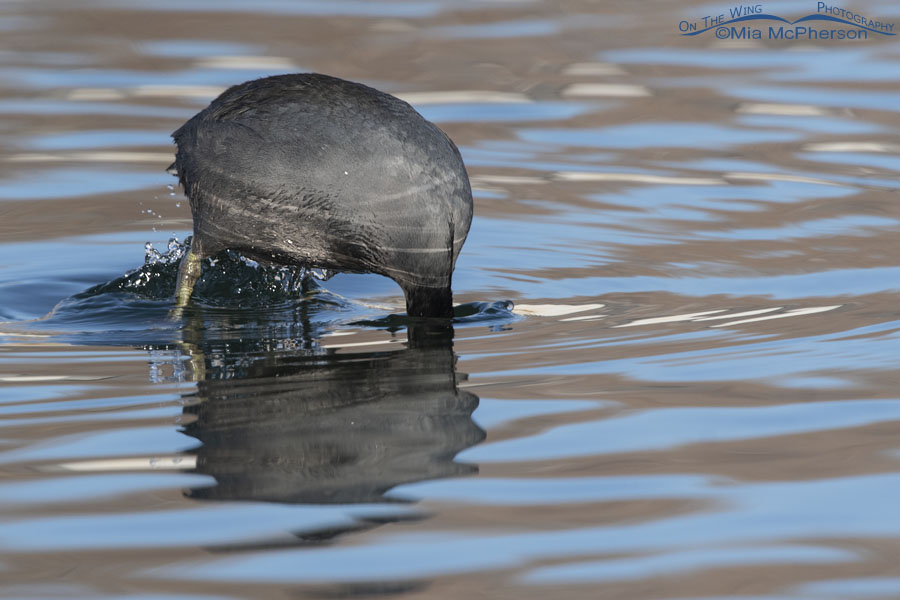
American Coot reflections

 American Coot and reflections
Salt Lake County, Utah
D200, tripod mounted, f7.1, 1/500, ISO 250, 200-400mm VR with 1.4x TC at 400mm, natural light.

American Coots (Fulica americana) can be challenging to photograph because of their dark plumage and by photographing close to home you will have time to learn how to expose them correctly.

By knowing your photographic locations well, learning what species of birds are present and at which time of the year, knowing the lighting in those locales at different times of the day and becoming knowledgeable about the subjects you want to photograph you can produce images that rival or surpass those taken in exotic locations.

And you won’t have to take out a second mortgage to do it.

Mia

More of my Bird images

Facebook Twitter Stumbleupon Digg Delicious Reddit Posterous Pinterest Email

Share