Photographing Pied-billed Grebes With Crayfish – Oh What Fun Can Be Had
The funniest photo I took yesterday, the one that made me laugh out loud the hardest, was when a crayfish landed on the Pied-billed Grebe's head after the bird shook it hard.


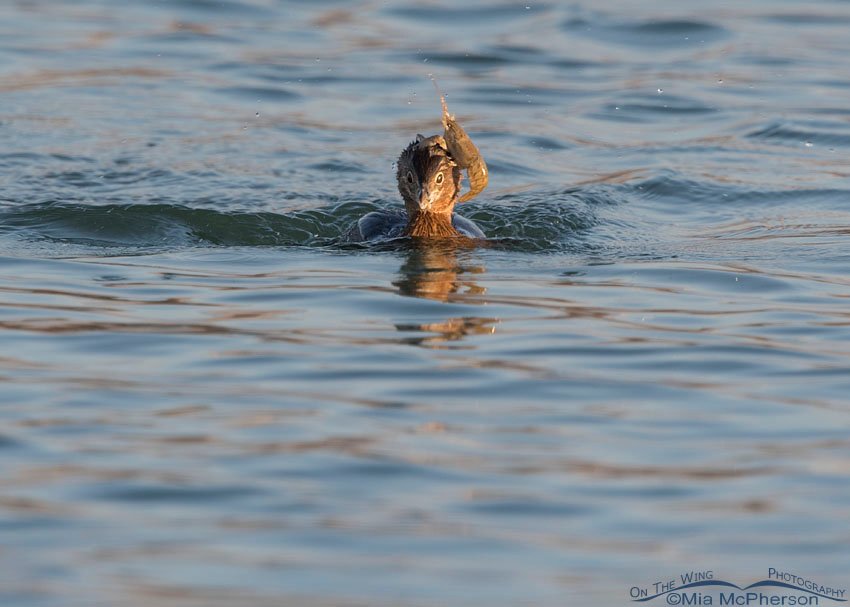
The funniest photo I took yesterday, the one that made me laugh out loud the hardest, was when a crayfish landed on the Pied-billed Grebe's head after the bird shook it hard.

I opted to leave my teleconverter on while photographing this bathing American Coot
Three afternoons ago I captured images of not just one flying crayfish in the air but two of them because of the Pied-billed Grebes capturing and consuming the freshwater crustaceans.

This aggressive encounter between the two Pied-billed Grebes only lasted a few seconds and if I hadn't been paying attention I would have missed photographing it.

The light wasn't great when I photographed these Ring-billed Gulls flying in a December snow storm but I had a great time with the gulls and the rest of the birds.

While observing American Coots I can see that they are feisty, pugnacious and aggressive in their behaviors and they don't seem to take any guff from each other.

Last December there were several Double-crested Cormorants hanging around my local pond here in northern Utah and I had a great time photographing them.

While at Bear River Migratory Bird Refuge two days ago I spotted my first of the season Common Merganser from the auto tour route.

After bathing the Mallards lift up, flap their wings and shake the water off and I have also noticed them repeat the process of bathing several times in succession. Bathe, shake, flap.

The Pied-billed Grebe was a bit too far away to take frame filling images of it but I was okay with that because I feel that the visual appearance of the silky water is just as important as the bird in these photos.
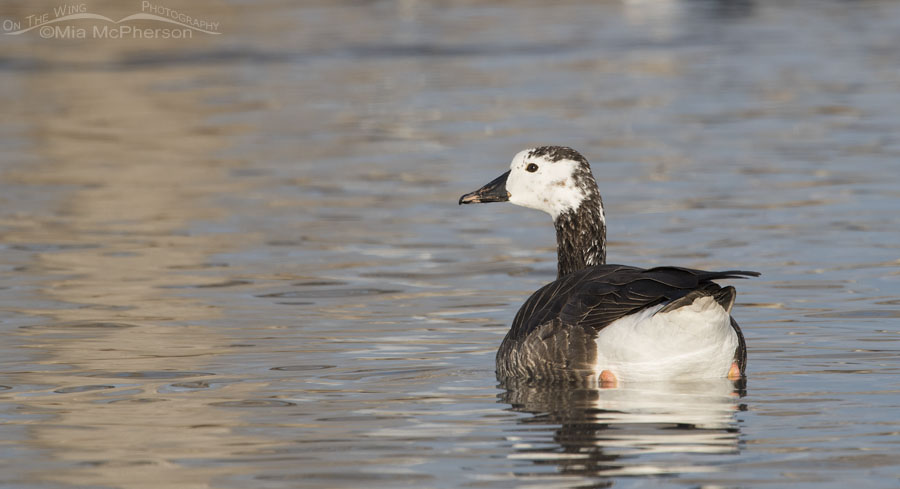
I've been wondering if "my" Canada x Snow Goose hybrid will be back this winter, if it will show up at the same pond and if I will be able to photograph it again.
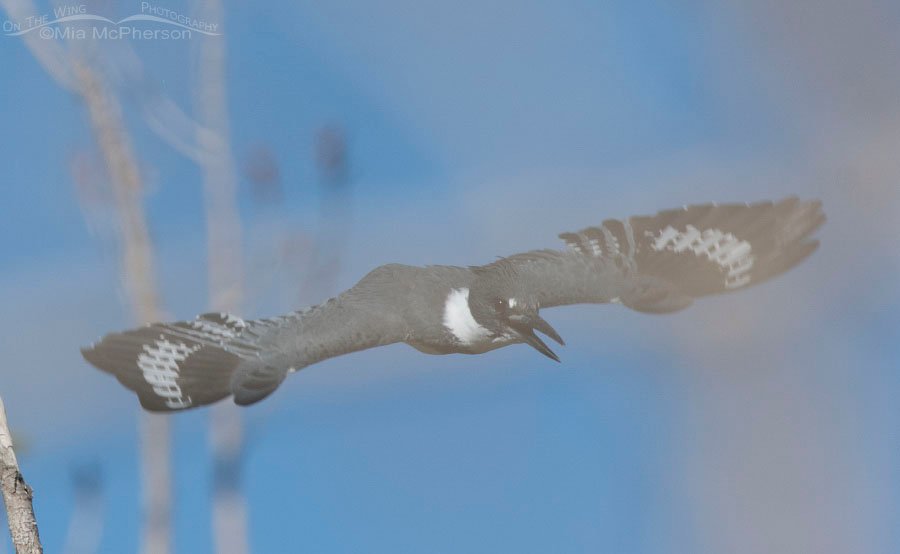
I never did get any decent shots of the Belted Kingfisher yesterday but I am glad to know he is back at the pond and that I should have more opportunities with him... if nothing gets in the way.
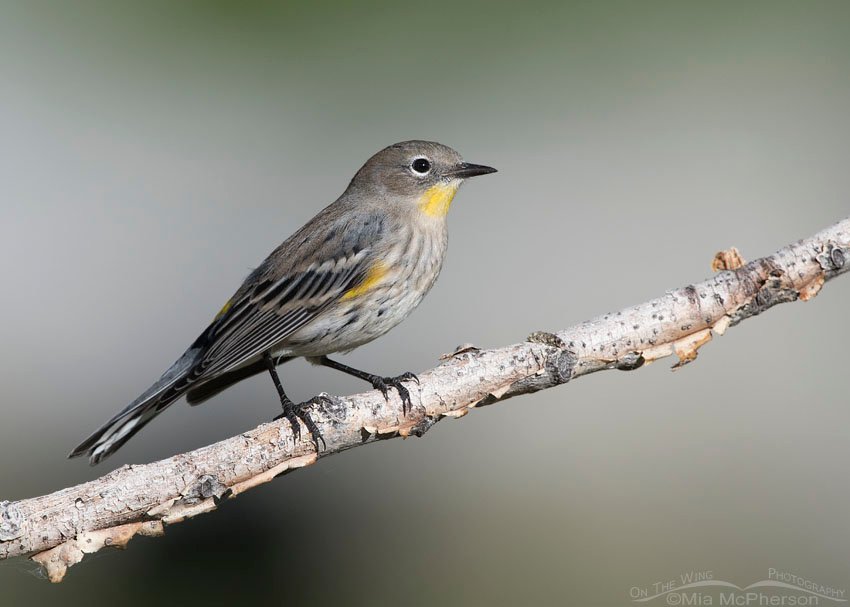
The Yellow-rumped Warblers are seen in high numbers here in northern Utah during spring and fall migration, these birds are migrating south now.
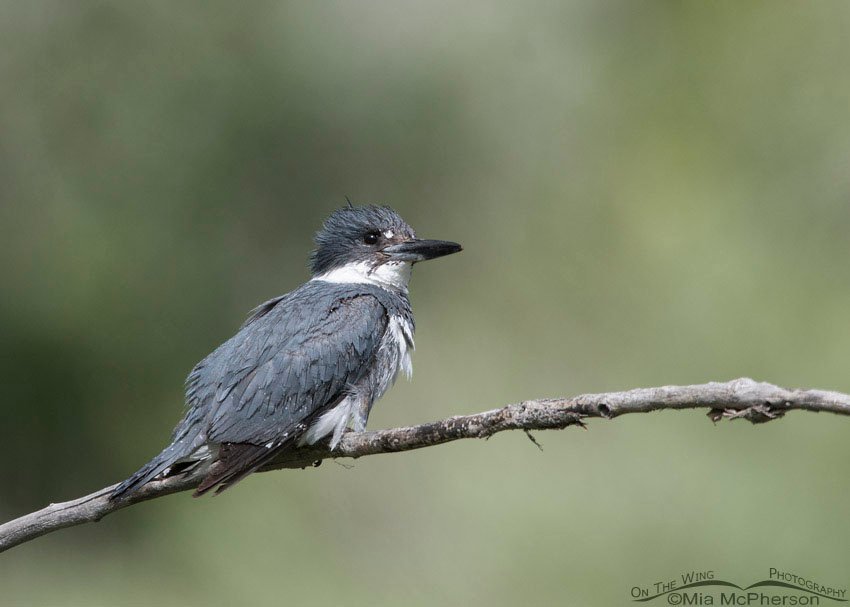
I photographed this male Belted Kingfisher last month as it perched on a thin branch at a small pond close to the Jordan River in Salt Lake County, Utah.

It felt great to photograph a nice mixture of birds yesterday and and to be out enjoying the beautiful scenery of northern Utah. Life is good.

American White Pelicans are returning to their breeding grounds in Utah and I have already seen a few of them myself and though I haven't been able to photograph them yet I know I will soon.
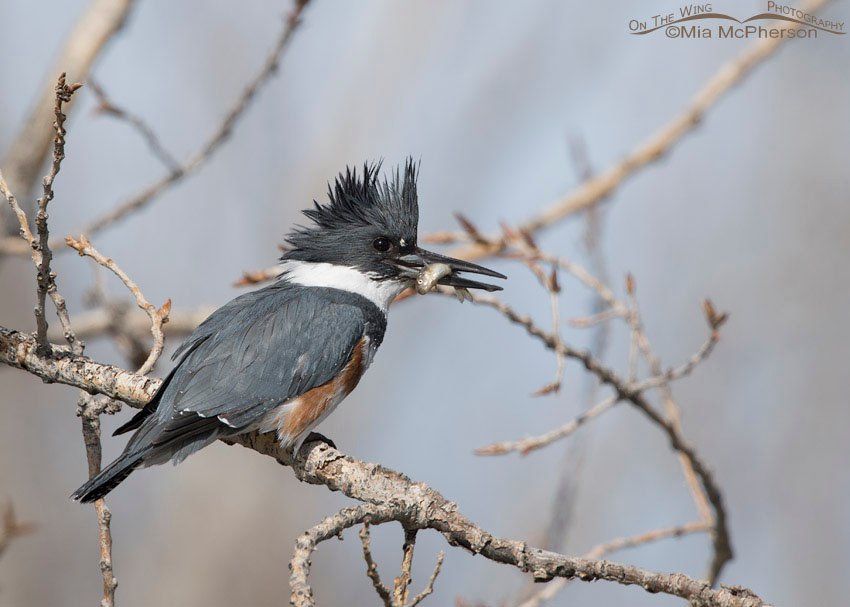
I took several hundred images of a female Belted Kingfisher looking for and catching prey while it was bright and sunny yesterday afternoon.

It was my photos of a Double-crested Cormorant and American Coot in the snow storm that touched me the most even though both birds are small in the frame.

Common Gallinules and American Coots are both from the Rallidae family and there are some similarities in their appearance, for instance both have a triangular bill with a frontal shield at the top.

Yesterday afternoon I was at my local pond where I photographed not one but two Pied-billed Grebes in flight. This is rarely seen and rarely photographed.
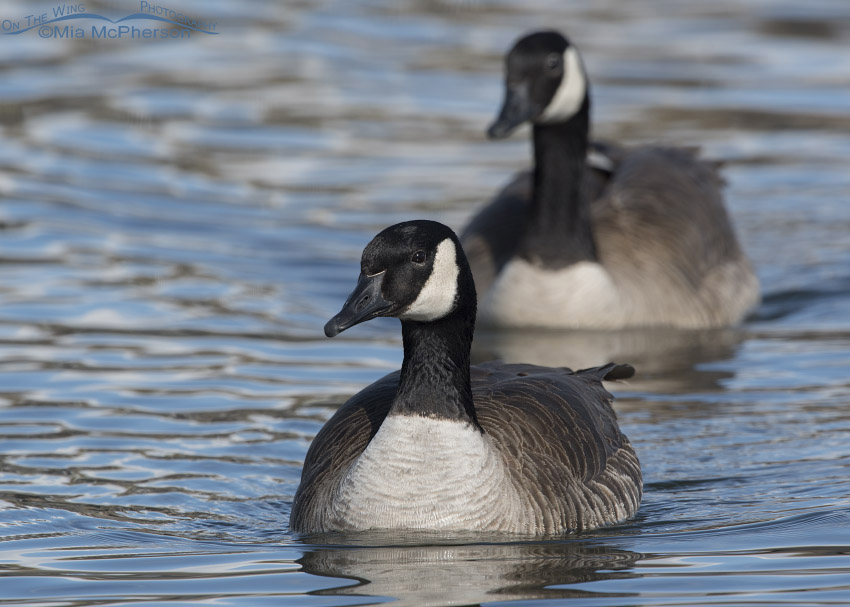
Because they are very common in most North America Canada Geese are often overlooked as subjects by some bird photographers.

Mallards form pairs in the fall and courtship can seen during the winter and seeing them mating in February isn't all that unusual.
Early in January I photographed an American Coot being chased by two Mallards for the food it carried in its bill.

Several of the Gadwalls were tipping their heads under the water to feed when this drake started to flap his wings before settling back down on the water.
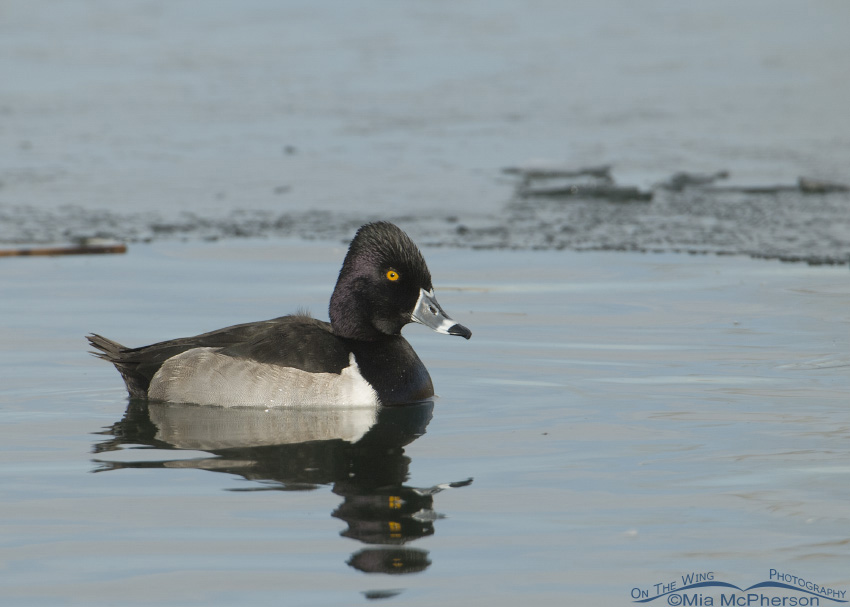
In 2017 one of the proposals submitted to the AOS is to rename Ring-necked Ducks to Ring-billed Ducks and I personally am all for the name change!
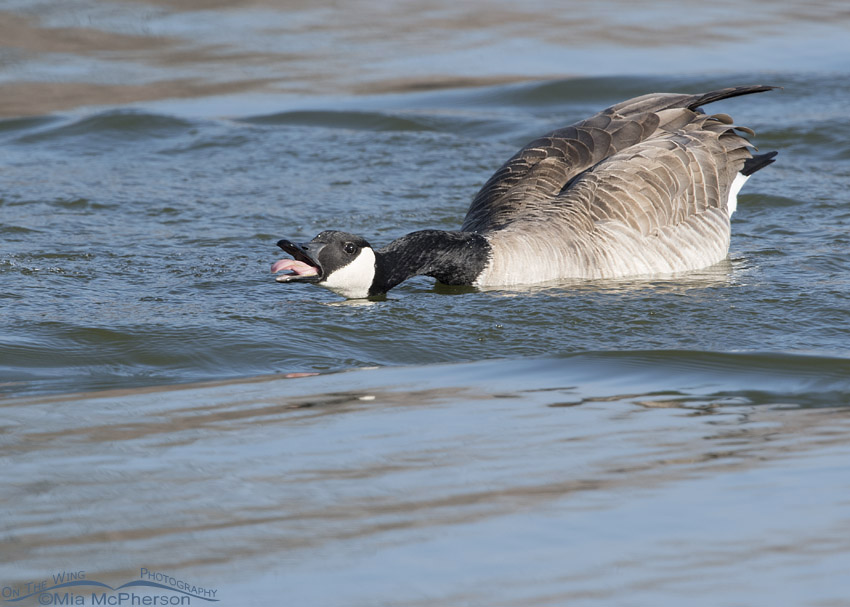
That morning the Canada Geese were the most lively of the subjects I photographed, bathing, mating and exhibiting threat displays.
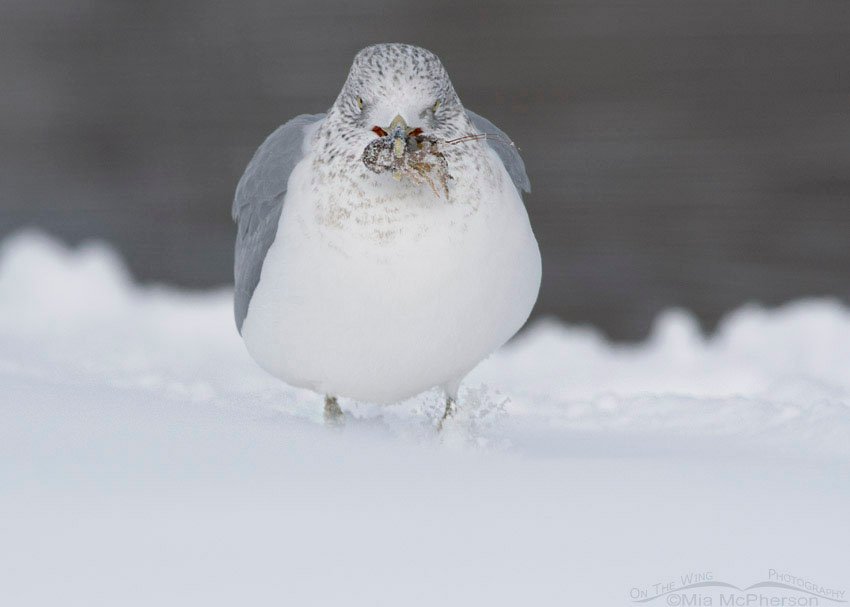
Last week while I was photographing birds at the local pond I saw a Ring-billed Gull catch a crayfish at the shoreline then it gobbled it up quickly before the rest of the gulls realized it had food.

The Ring-billed Gulls up close to me were bathing frequently so I focused on them for a bit to catch them splashing and dipping their heads and bodies into the water.

I'm seeing plenty of goldeneyes around right now and I have also begun to see the male Common Goldeneyes performing their courtship displays.
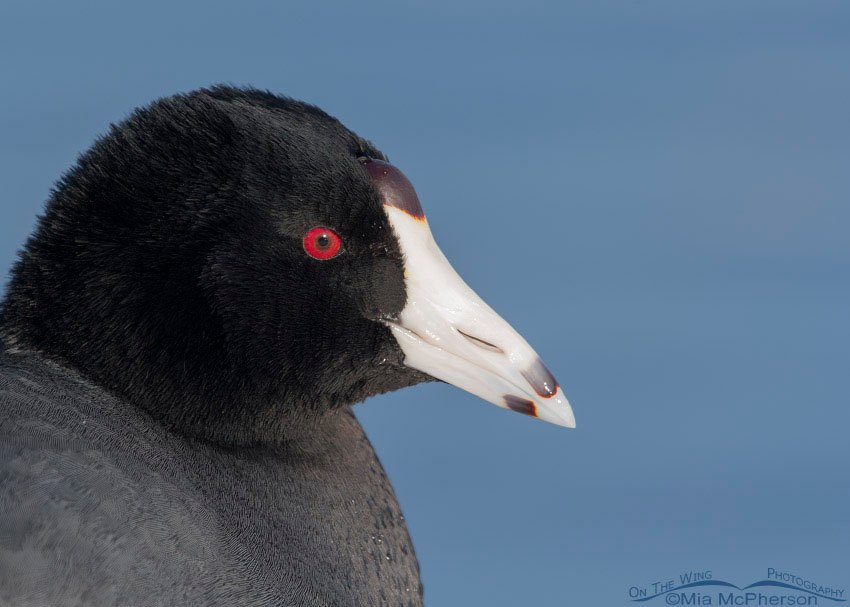
When the birds settled back down on the pond this American Coot walked up onto the shore with the open water behind it and I couldn't resist taking portraits of it.