Oh…Poop!
Yes, poop happens. If there are birds there is poop. That is the straight poop... I mean scoop!



Yes, poop happens. If there are birds there is poop. That is the straight poop... I mean scoop!

Getting "Down & Dirty" is a way of being at eye level with your subject which brings the viewer into the bird's world and it can make the image feel more intimate too. Achieving those low angle perspectives can be quite messy and/or uncomfortable depending on the habitat.

Willets have returned to Utah, on the causeway to Antelope Island hundreds of them can be seen in the shallow water. They seem to spend some time there fattening up after migration before they get down to the serious business of mating and rearing their young.

Last week I photographed a Killdeer bathing at Farmington Bay Waterfowl Management Area in Davis County, Utah.
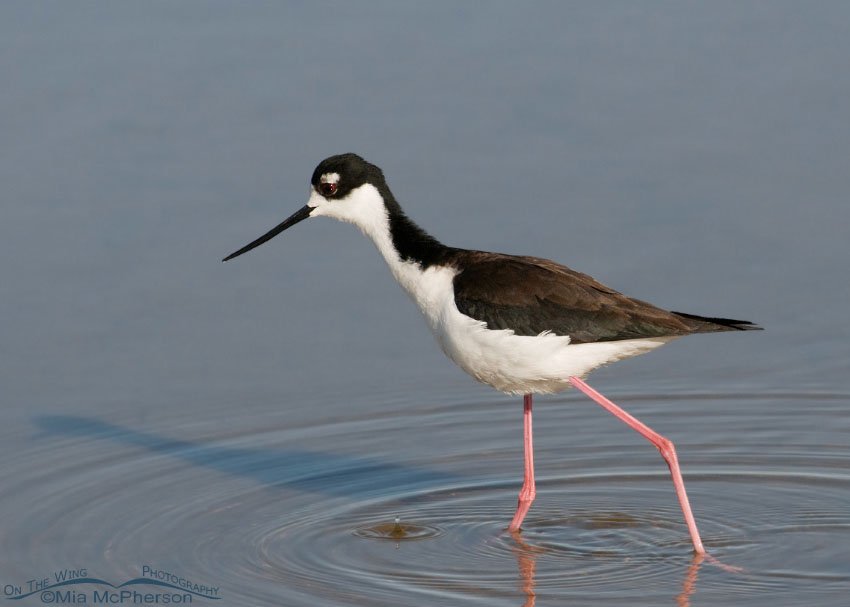
Black-necked Stilts have returned from their wintering grounds to Bear River Migratory Bird Refuge and other locations in Utah. Black-necked Stilts are black and white shorebirds with long pink to reddish legs, thin black bills and lovely red eyes.

As much as I like to compose images that are full frame I find that I often allow myself a touch of extra space around my subject so I can recompose in post processing by making different crops.

Last week I wrote about Long-billed Curlews having a Territorial Encounter but earlier that same morning I had another wonderful photographic encounter thanks to a scruffy looking, rain soaked Coyote waking up at the top of a ridge.

Short-billed Dowitchers feed on insects, crustaceans and aquatic mollusks. Quite often when I lived in Florida I would see them feeding on Coquinas which are small bivalves or tiny Fiddler Crabs.

Yesterday on Antelope Island State Park I witnessed and photographed a territorial encounter between two Long-billed Curlew (Numenius americanus) males that occurred while a female was nearby.

These two photos are of the same adult American Oystercatcher (Haematopus palliatus) in sequential order taken at Fort De Soto County Park in Florida. I was laying in the sand while I created the images to get a low angle and the bird was on a ridge elevated slightly higher than my location.
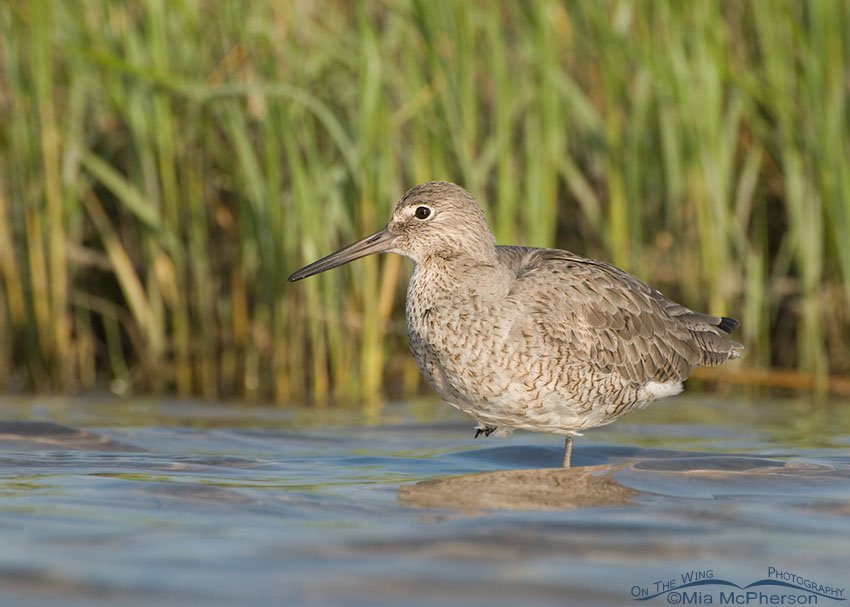
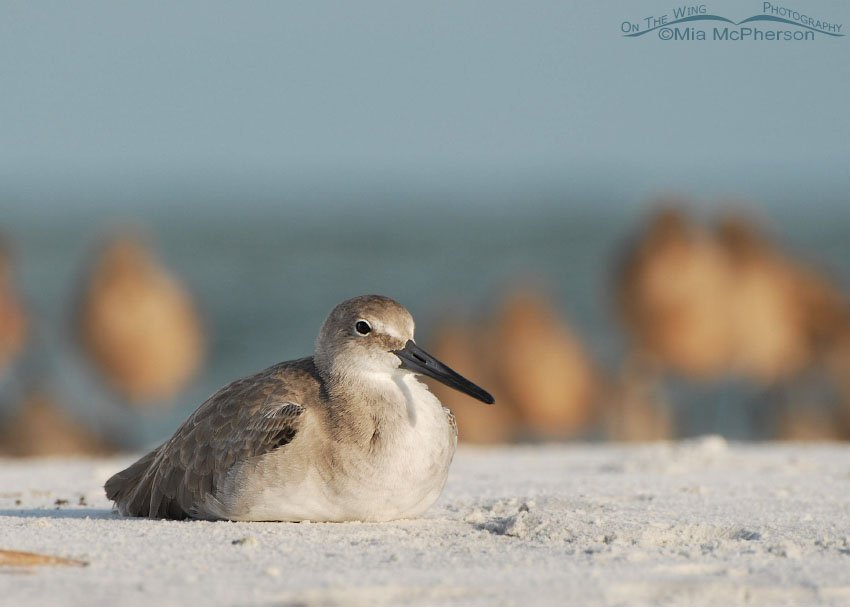
The image above was taken at Fort De Soto on Florida's Gulf coast. The Willets there are habituated to people and because they are it is easier to approach them than it is here in Utah.

The Long-billed Curlews (Numenius americanus) have returned to their breeding grounds! I would have jumped for joy but when you are inside a vehicle that can lead to a severe headache after hitting your skull on the roof. :-)

When I photographed Semipalmated Plovers in Florida I found that if I got down to their level and laid still they would approach me very closely. That takes patience but the effort is well worth it.

I've always liked this photo because it shows how this American Oystercatcher (Haematopus palliatus) is using its long bill to pry open a shell.

A few days ago I read that a Long-billed Curlew had been spotted on Antelope Island State Park and that got me excited. I've waited to see them again since they left last fall and I simply can not wait to hear their mysterious and hauntingly beautiful call.

Piping Plovers nest in shallow scrapes in sand, gravel, salt flats or dunes which leaves their nests vulnerable to predators and in danger of being accidentally stepped on.
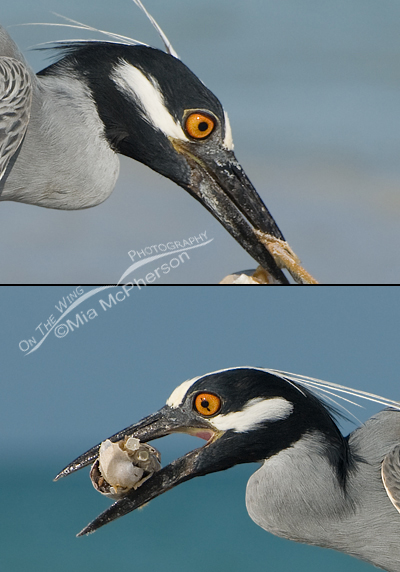
I recently read about a congenital condition in humans called "iris colobomas" which is also found in other mammals and birds and have begun to wonder if that might not be the cause of the abnormal pupils I see in some species of birds instead of an injury to the eye.

I was right on the ID and saw not just one but two of American Avocets in flying along the causeway. Wow, more "spring birds"!

I was laying down in the wet sand with my lens about an inch from the surface of the beach when I photographed these shorebirds, one needs to watch out for those rogue waves because they don't only wash away the bird's prey... they can soak your lens & camera too!

This American Oystercatcher image was taken nearly three years ago, it seems difficult to believe that is has been that long but I like it as much today as the morning I photographed it.

As 2011 comes to a close and 2012 is just hours away , I wanted to do one more blog post for the year.

When I am out in the field I take a large amount of photos and there are times I don't get around to processing them until much later, these are two such images taken at Fort DeSoto, Florida in 2008.

It didn't take long for me to check my ISO, my aperture and other techs as I dropped onto my knees before laying flat on my belly to photograph the flock of 20 or so Hudsonian Whimbrels.

Sanderlings can be a challenge to photograph because they move erratically at a very fast pace but creating images of them at their level is well worth the trouble of getting dirty and being exhausted by trying to follow the movements of these tiny dynamos.
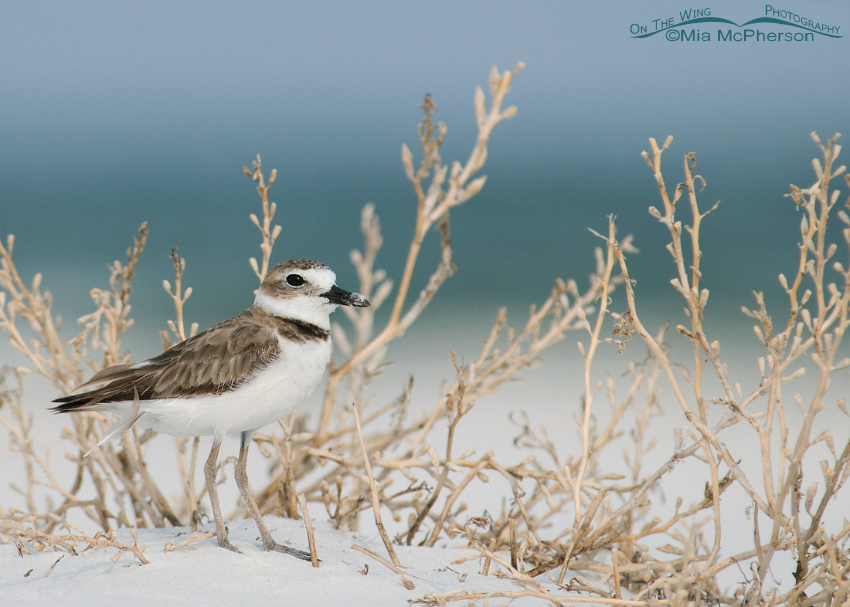
This Friday's Photo is that of a Wilson's Plover, a species I very much enjoyed photographing while I lived in Florida.
There are images that I have created that as soon as I see them on my monitor become listed as one of my favorites.

I watched this American Oystercatcher juvenile and its sibling from the time they were just tiny chicks beginning the day after they had hatched.

Yesterday I observed an adult Willet defending its young from a group of Black-billed Magpies that were near the Willet's chicks.

I spotted this plover resting near the wrack line near the Gulf of Mexico during the winter and sand-crawled up close to it to get a low angle in the beautiful light.

Red Knots are on the edge of extinction and without further regulation of Horseshoe Crab harvesting in North America plus additional protection and conservation measures for Red Knots they may well disappear in our lifetime.