It has been too warm here in Utah to be called “Winter” yet, the snow that we have had hasn’t lasted long and even most of the mornings have been above freezing but the weather forecasters say that is going to change this weekend. Well, weather forecasters are often wrong so I won’t be holding my breath but it does give me a little hope.
Three years ago today though the ground was covered in drifts of snow, the temps were below freezing, there was ice on the ponds & lakes and there was a sharp briskness to the air that can only be found in winter. These are a few of the images I took that morning at a pond a few blocks from where I live.
American Coot wing flapping – Nikon D200, tripod mounted, f7.1, 1/640, ISO 320, Nikkor 200-400mm VR with 1.4x TC at 400mm, natural light
We have tons of American Coots here in the winter until the water freezes solid and then the coots move to find open water. Coots aren’t the most colorful of birds but they are amusing to watch and photograph and they are a challenge because of the high contrasts between the whites and the darks.
Mallard drake – Nikon D200, tripod mounted, f8, 1/500, ISO 250, Nikkor 200-400mm VR with 1.4x TC at 400mm, natural light
We also have plenty of Mallards too, domestic, wild and hybrids. Behind this drake this there is a sheet of ice on the pond. By the time I took this image my hands were getting cold even with gloves on and a heat pack tucked into them.
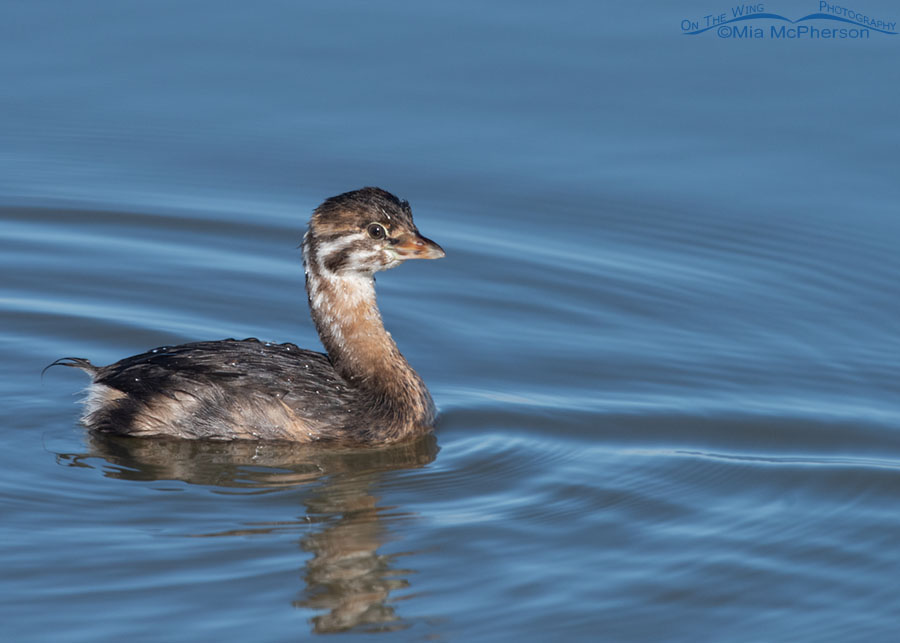
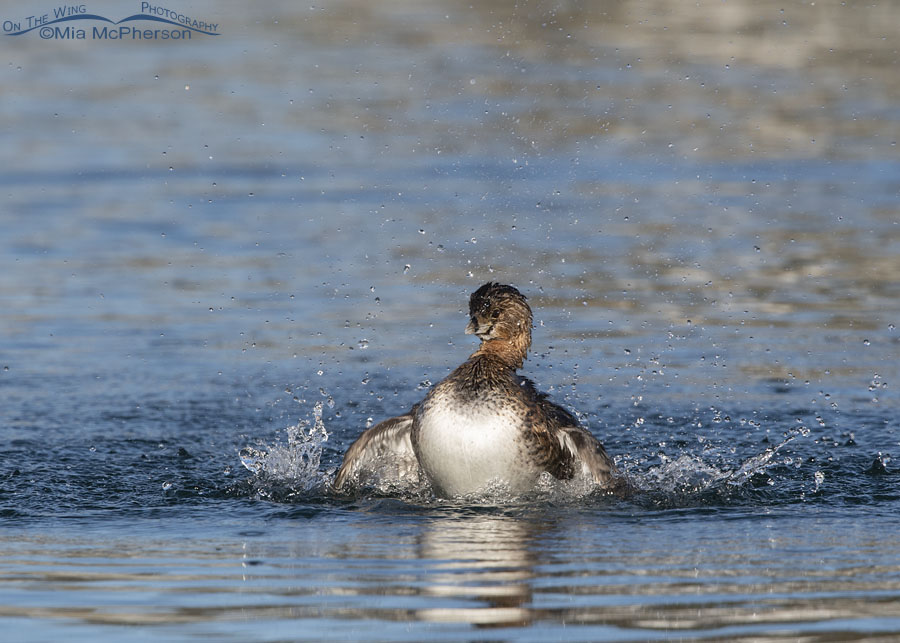
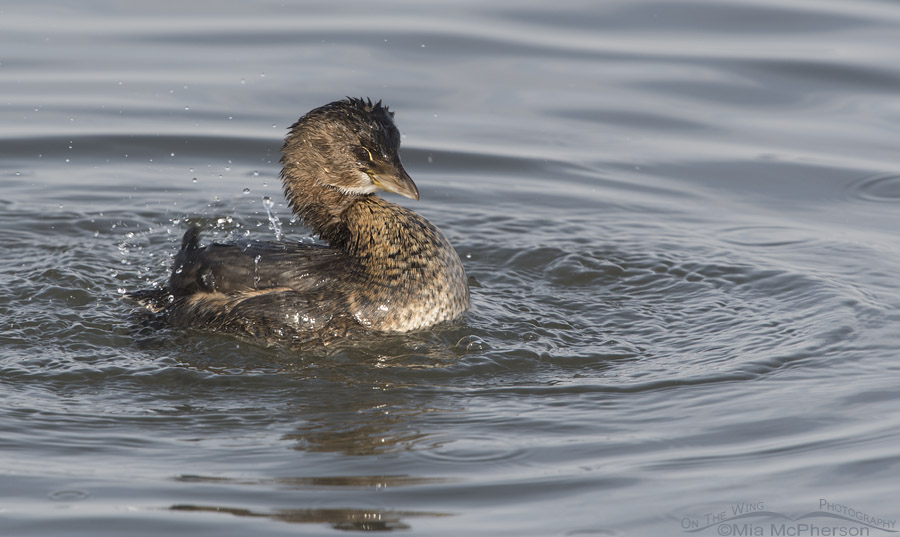
Juvenile Pied-billed Grebe in an icy pond – Nikon D200, tripod mounted, f7.1, 1/350, ISO 250, Nikkor 200-400mm VR with 1.4x TC at 400mm, natural light
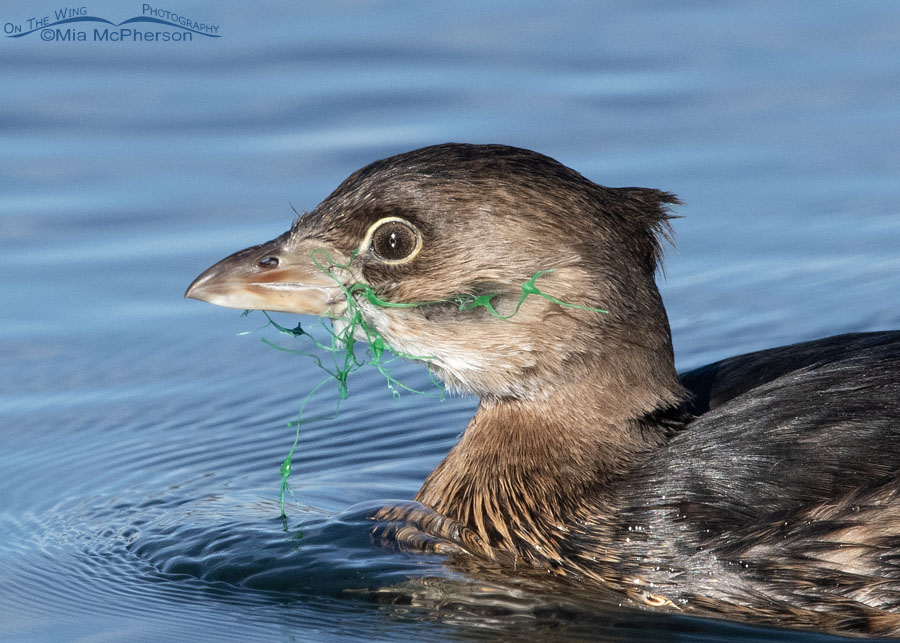
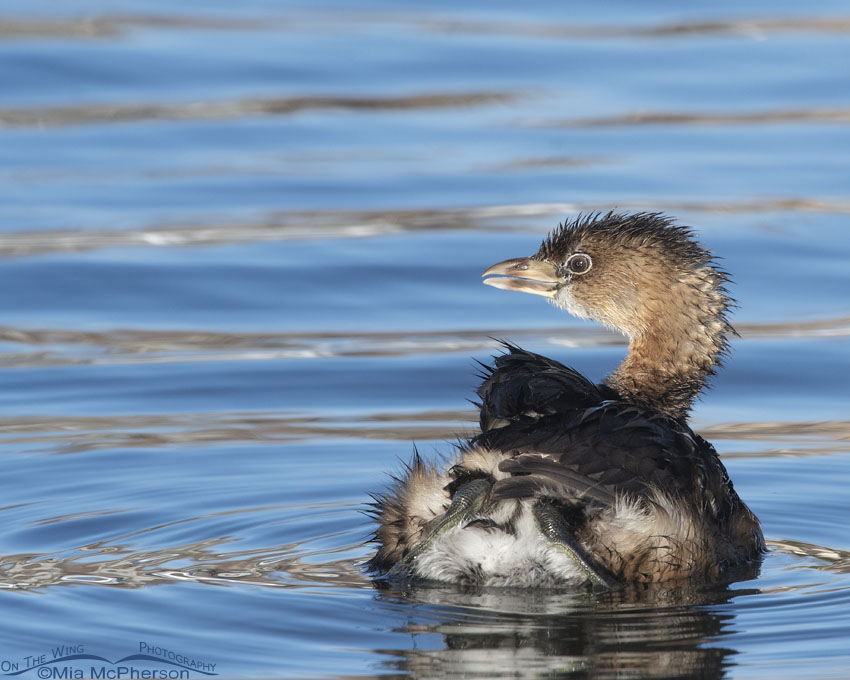
Pied-billed Grebes are another species that will be on my local pond until it freezes over and they are great fun to photograph because they are feisty little characters. This one was a hatch year bird when I photographed it as it still shows evidence of the striped head that juvenile Pied-billed Grebes have in their first year.
American Coot in pre-attack pose – Nikon D300, tripod mounted, f7.1, 1/500, ISO 250, Nikkor 200-400mm VR with 1.4x TC at 400mm, natural light,
The coots squabble and fight a lot amongst each other, this coot was getting ready to chase another one across the icy pond.
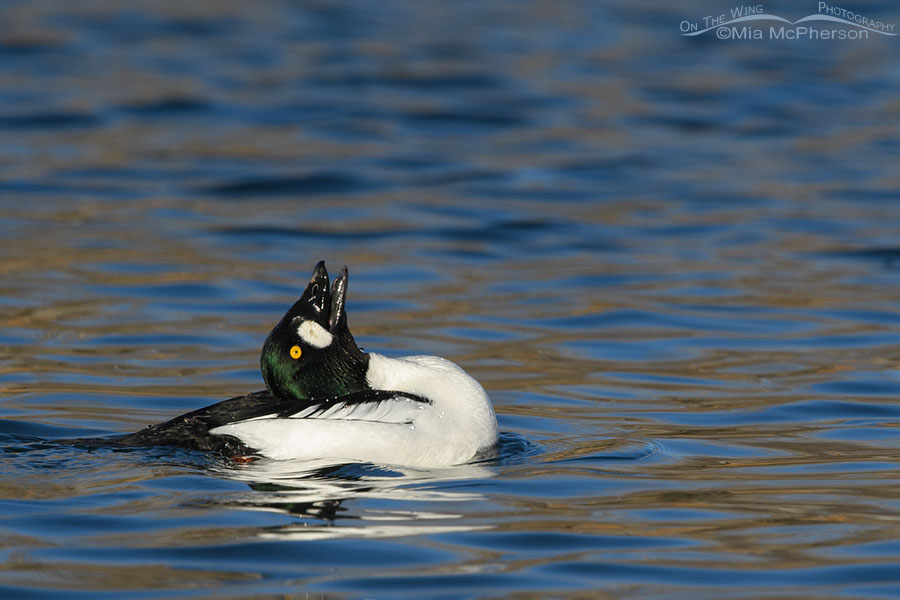
Common Goldeneye female – Nikon D200, tripod mounted, f7.1, 1/400, ISO 250, Nikkor 200-400mm VR with 1.4x TC at 400mm, natural light
There are times we get other duck species including Common Goldeneyes but they never seem to stick around long. This female Common Goldeneye was gone the next time I visited the pond a few days later.
Ring-billed Gull on the edge of ice – Nikon D200, tripod mounted, f7.1, 1/1250, ISO 250, Nikkor 200-400mm VR with 1.4x TC at 400mm, natural light
There are also California and Ring-billed Gulls at my local pond during the winter. This Ring-billed Gull had walked too close to the edge of the thin ice and nearly fell in, it was walking back from where one of its feet cracked through the ice and it was using its wings to regain its balance.
Snow is supposed to arrive this Saturday, I hope it does, it is time for winter!
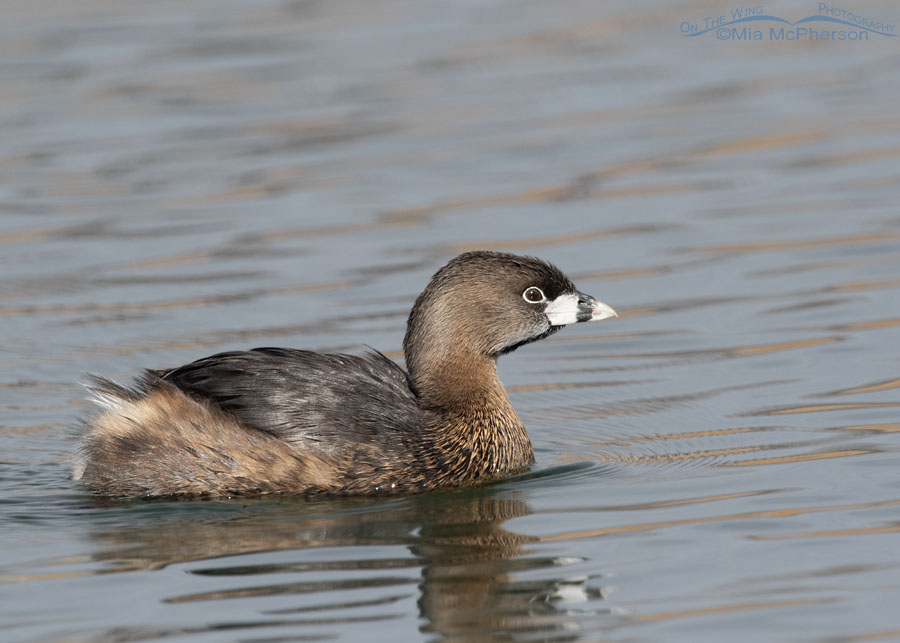
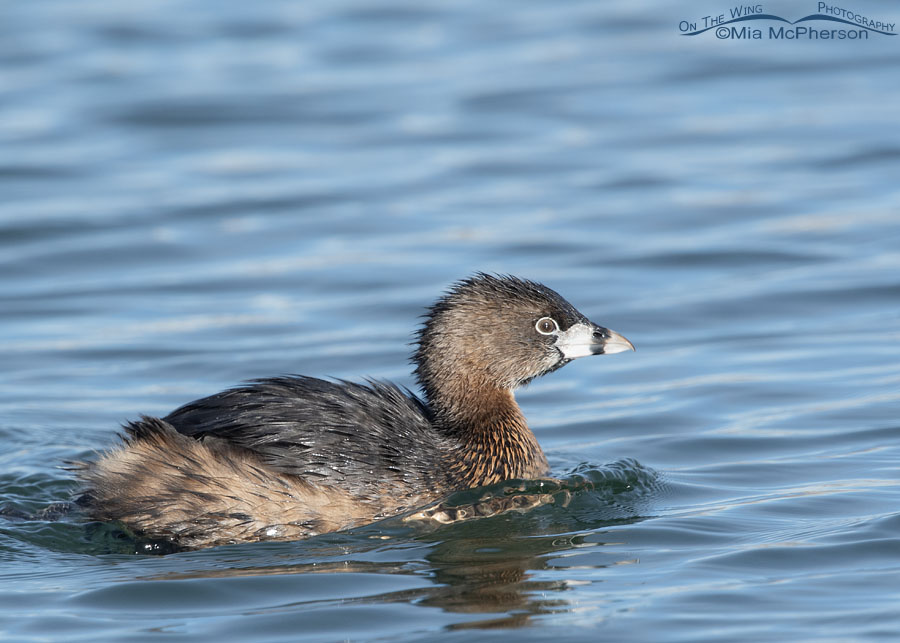
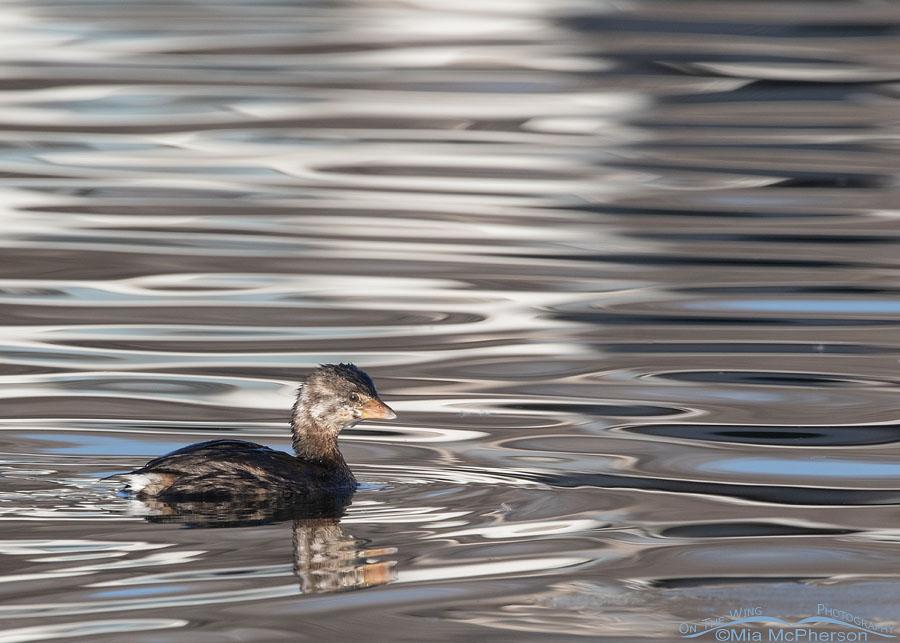
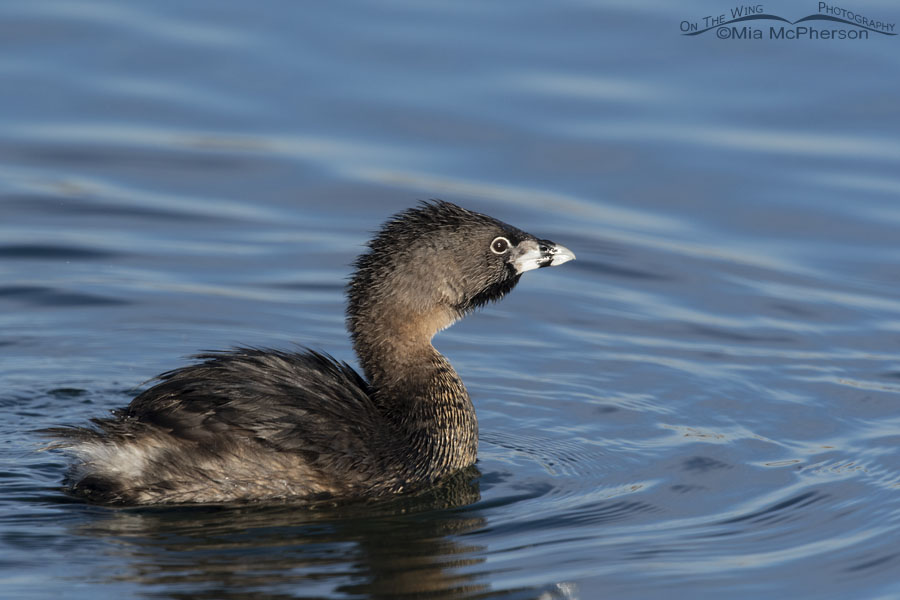
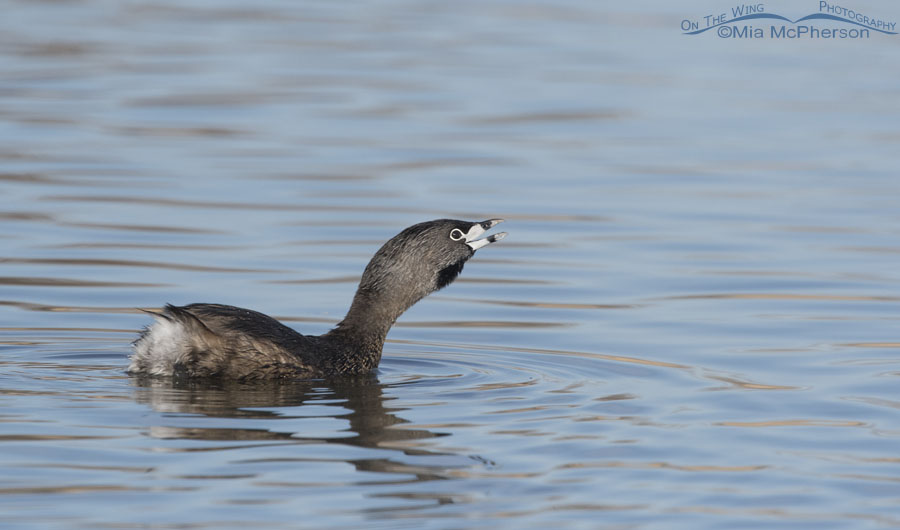
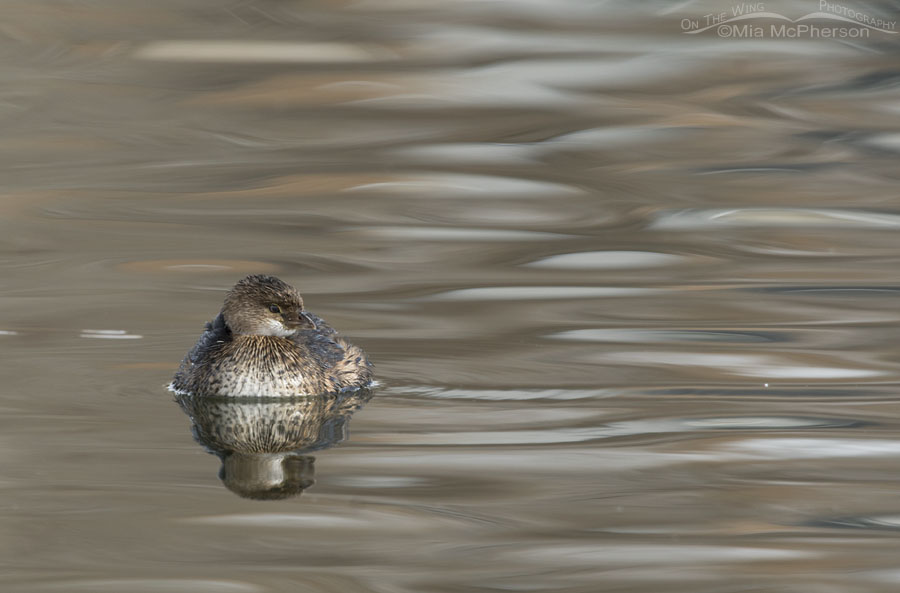
This is how we normally see Pied-billed Grebes (Podilymbus podiceps) - floating on the water. This adult in breeding plumage was photographed near where I live at a local pond in December of 2009.
Juvenile Pied-billed Grebe in duckweed
I photographed this juvenile Pied-billed Grebe at Farmington Bay Waterfowl Management Area on a visit to Utah in October of 2008 before I moved here. The Duckweed just about covered the whole surface of the pond.
Because of the posterior placement of the legs and feet Grebes have a very difficult time standing or walking on solid ground.
Adult Pied-billed Grebe out of the water
On September 21, 2009 I saw several Pied-billed Grebes out of the water and standing on solid ground while photographing birds at Farmington Bay Waterfowl Management Area. Doesn’t this grebe look barrel-chested? We don’t normally get a view of a Pied-billed Grebe like this one.
Adult Pied-billed Grebe flapping its wings while standing
This image was taken the same day as the one above and it is the same grebe flapping its wings as it moved towards the water.
Three Pied-billed Grebes out of the water
On the same date we saw several Pied-billed Grebes out of the water, some of them were resting (far left and right) while others were actively walking or flapping their wings while standing in an upright position.
Standing Pied-billed Grebe adult
Three days later, September 24, 2009, at the same pond at Farmington Bay WMA there were more Pied-billed Grebes standing on the shoreline while a few others floated on the water’s surface.
Adult Pied-billed Grebe flapping its wings
I think this image shows how far the legs and feet of Pied-billed Grebes are placed at the back of their bodies very well.
Around the time period these standing grebe images were taken there was an outbreak of Avian botulism that was killing grebes, ducks and other water birds in the Salt Lake Valley.
“Avian botulism is a naturally occurring toxin in marshes, activated by warm temperatures and a lack of oxygen in the water. Outbreaks generally happen every August along the Great Salt Lake marshes.” – Salt Lake Tribune (click here to read the article)
I’m not a scientist or a wildlife biologist, I am just a bird photographer who studies my subjects as I photograph them in the field but I did wonder if these Pied-billed Grebes instinctively knew that being in the water during the avian botulism outbreak of 2009 was a risk to their health and if that was why they were resting and standing on the shoreline of the pond. I suppose a biologist who studies Pied-billed Grebes might know the answer to that.
It was an unusual experience to see these Pied-billed Grebes standing upright and walking on the edge of this pond, some might even consider it rare. I know I haven’t seen or photographed them standing since the 24th of September in 2009. You just never know what you might see while out in nature.
Mia
Bob Zeller’s recent post Pied-Billed Grebes – Cuties of the lakes at Texas Tweeties reminded me that I have meant to do this post for sometime, today is as good a day as any other!
This Pied-billed Grebe; photographed at Farmington Bay Waterfowl Management Area in northern Utah, is a tease. Really, it is.
Pied-billed Grebe Wing Lift – Nikon D200, f8, 1/640, ISO 320, Nikkor 200-400mm VR with 1.4x TC at 400mm, natural light
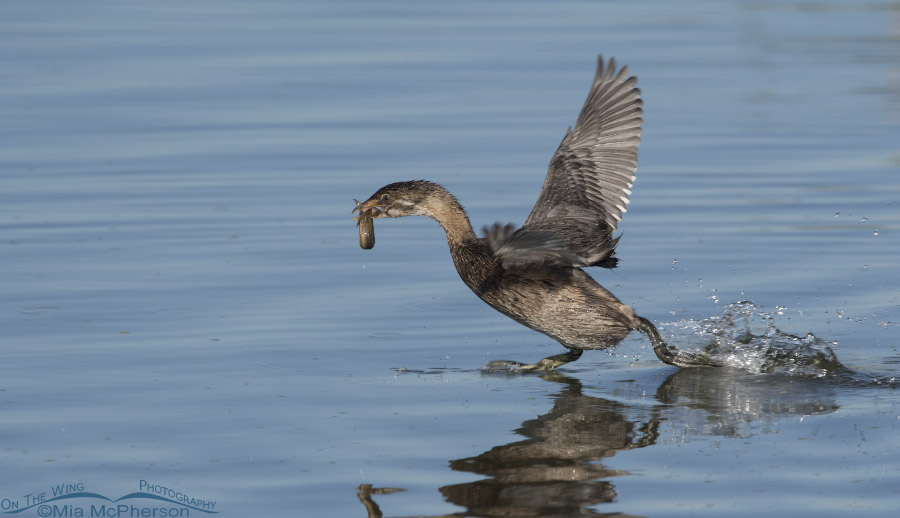
Look at those raised wings, how long they look compared to the stout body of the Pied-billed Grebe (Podilymbus podiceps), how strong they appear. How those wings make me wonder what this grebe would look like in flight.
Why is this bird a tease?
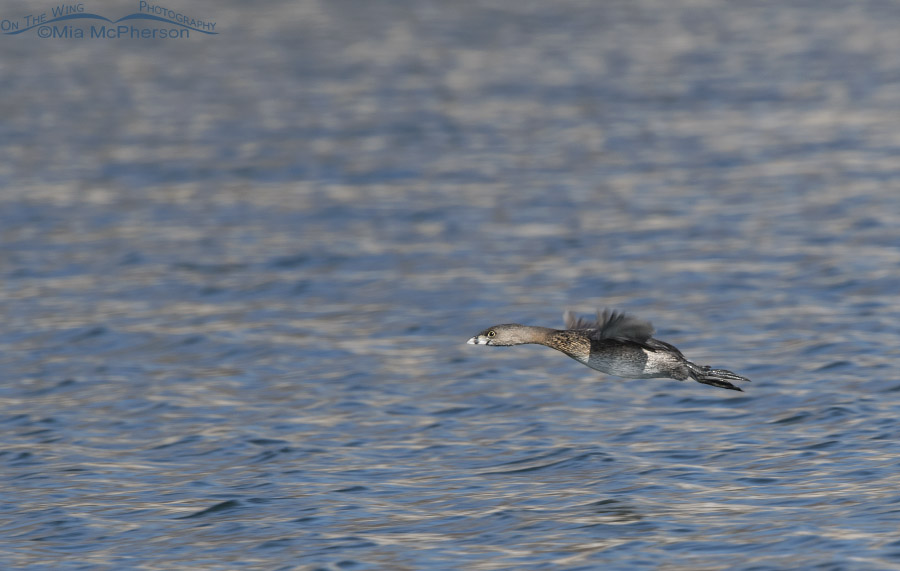
Because Pied-billed Grebes only ever fly at night. I’ll never see one in flight during migration. Or photograph as it wings it way south.
I’ll just have to imagine what Pied-billed Grebes look like in flight.
*I am away for a few days, please feel free to share this post with your friends and family. I’ll catch up on everyone’s great blogs when I get back!
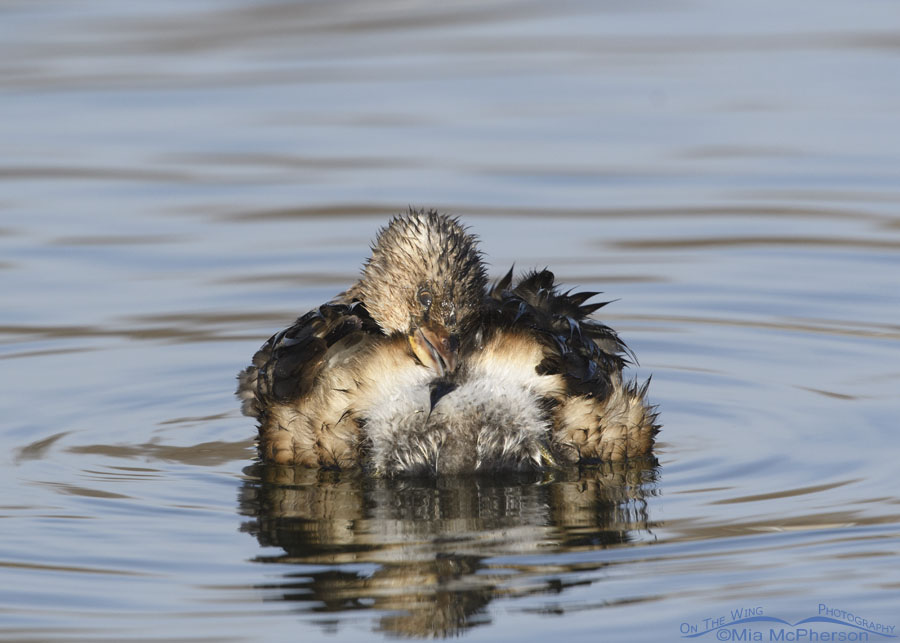
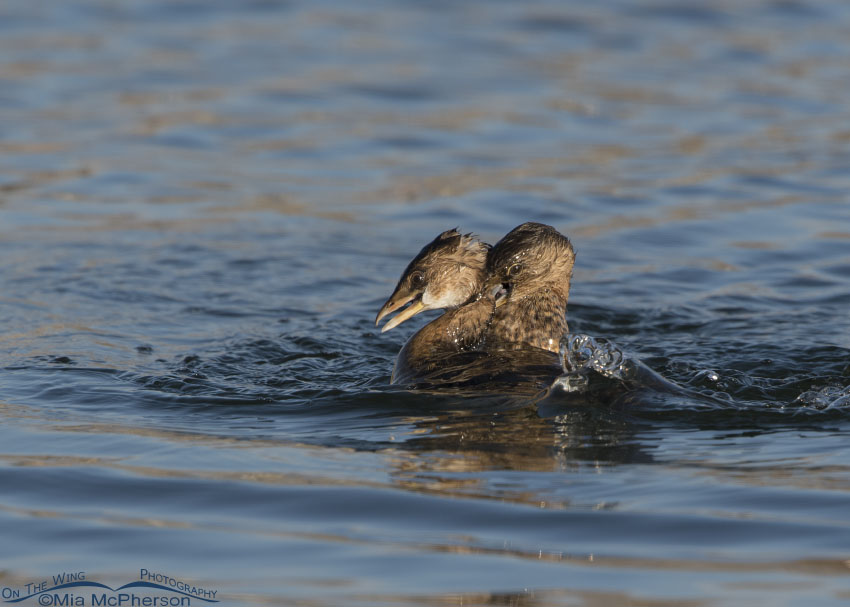
I’ve posted adult Pied-billed Grebes (Podilymbus podiceps) before but hadn’t posted any images of their young on my blog yet so I am posting a few images of one of them today. These images were created at Farmington Bay Waterfowl Management Area, just to the north of Salt Lake City, Utah.
Juvenile Pied-billed Grebe in morning light – Nikon D300, f7.1, 1/1000, ISO 500, Nikkor 200-400mm VR with 1.4x TC at 400mm, natural light
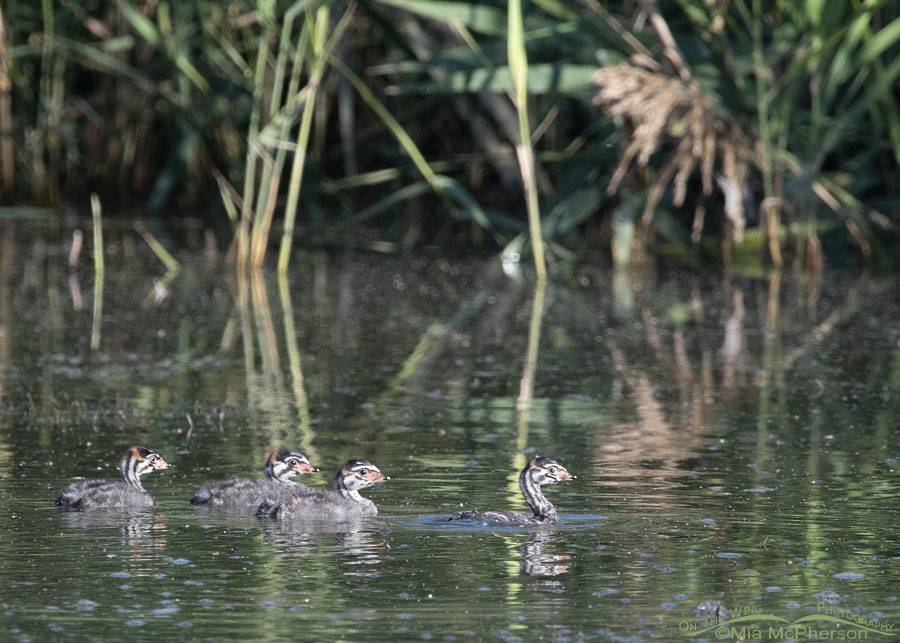
This is a hatch year Pied-billed Grebe and it still shows some of the camouflage that the immature birds have to help them hide from predators. This bird is in the “Stripe-head stage” but it is not nearly as striped as younger Pied-billed Grebes are.
Juvenile Pied-billed Grebe stretching – Nikon D300, f7.1, 1/1000, ISO 500, Nikkor 200-400mm VR with 1.4x TC at 400mm, natural light
As I observed and photographed this immature Pied-billed Grebe it preened some, did a few stretches and fluffed up it feathers. The image above shows the lobed foot of the bird.
Juvenile Pied-billed Grebe – Nikon D300, f7.1, 1/1000, ISO 500, Nikkor 200-400mm VR with 1.4x TC at 400mm, natural light
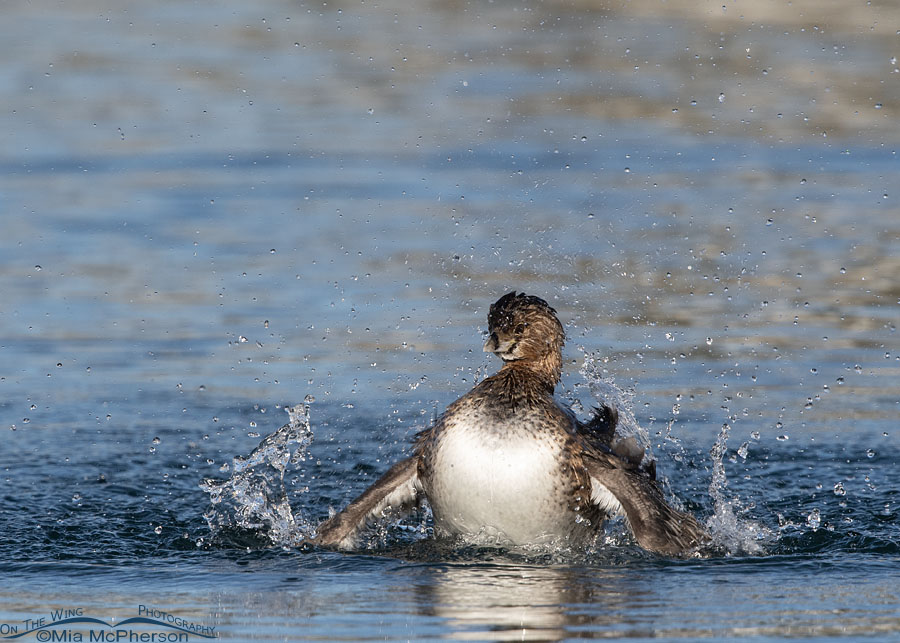
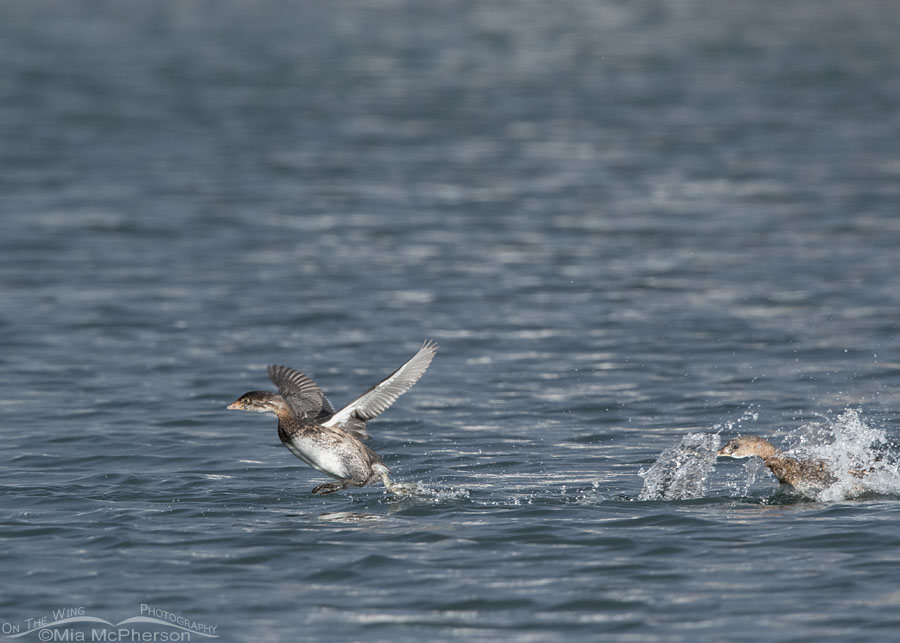
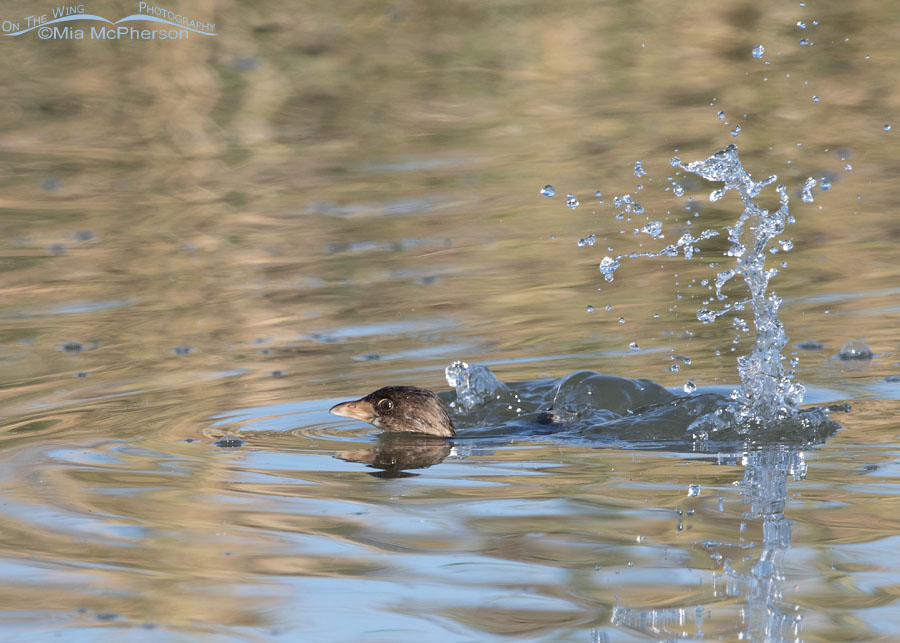
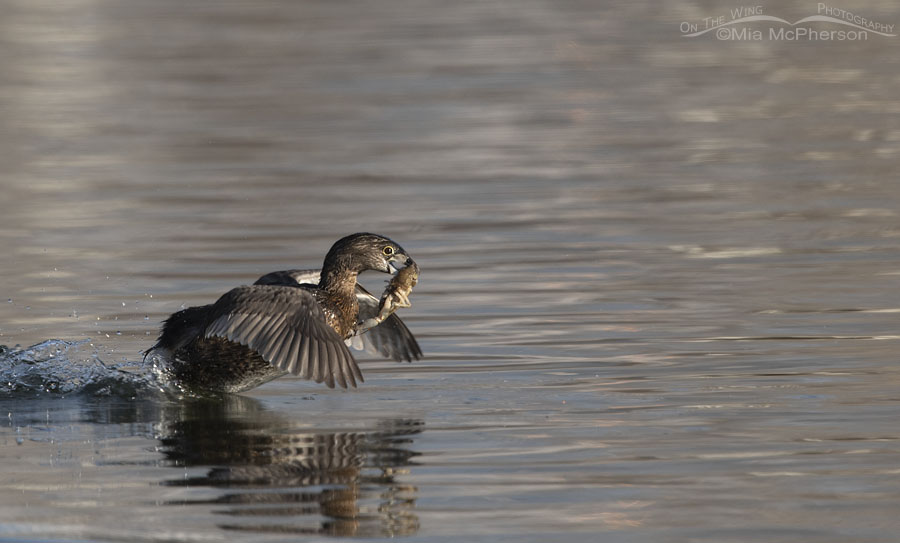
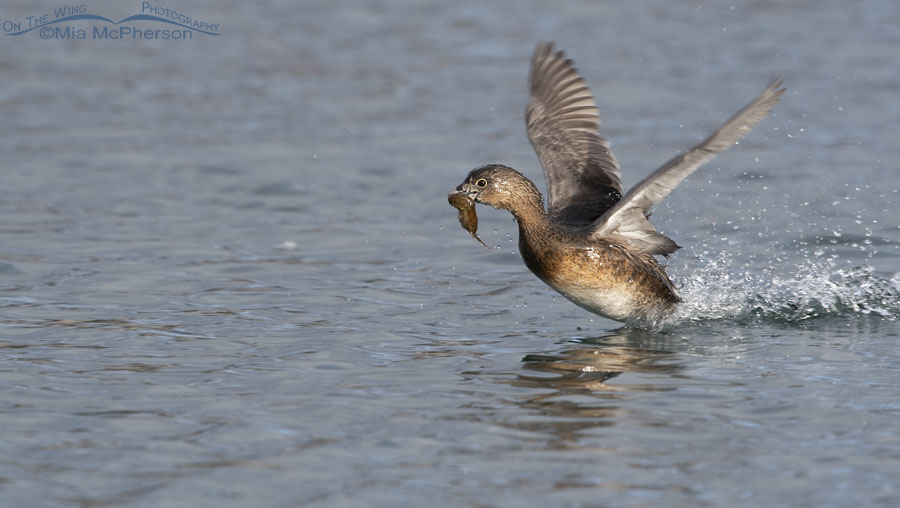
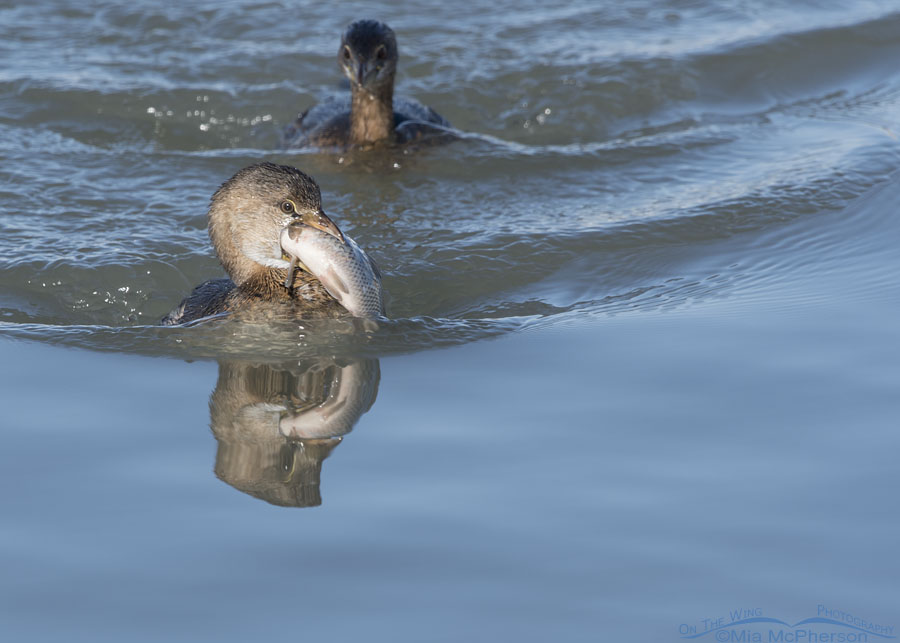
Personally, I think that Pied-billed Grebes (of any age) are fun to photograph because they are so feisty with each other, they often chase each other around when one of them catches a fish in an effort to steal it away.
Pied-billed Grebe juvenile – Nikon D300, f7.1, 1/800, ISO 500, Nikkor 200-400mm VR with 1.4x TC at 400mm, natural light
Pied-billed Grebes can live to be at least 3 years old, if not longer. They are rarely seen in flight because they migrate at night. They are capable of long distance flights, some Pied-billed Grebes have flown to Europe, the Azores and the Canary Islands. ¹
Fluffed up juvenile Pied-billed Grebe – Nikon D300, f7.1, 1/640, ISO 500, Nikkor 200-400mm VR with 1.4x TC at 400mm, natural light
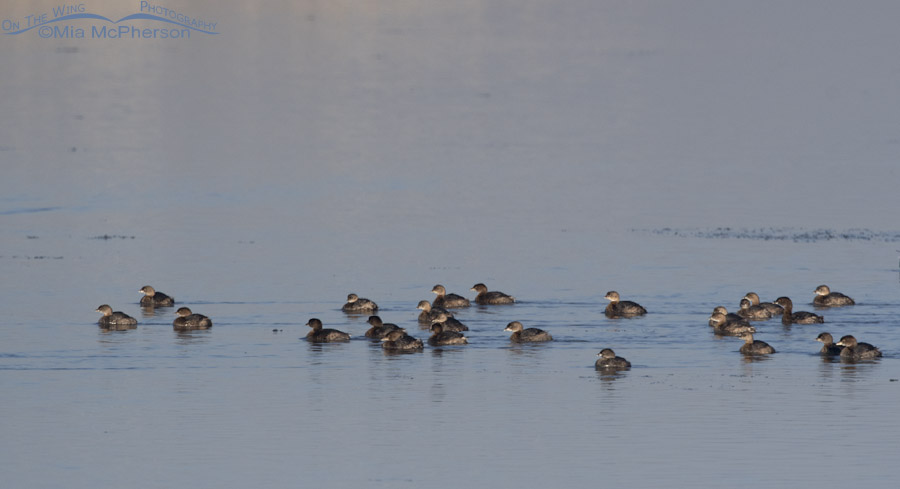
It won’t be long before the adult Pied-billed Grebes in this area begin the nesting season and more of these young grebes will be seen floating on the water near the adults, begging for food or chasing after each other.
Many beginning photographers dream of taking images in far off places of exotic birds, and there is nothing wrong with that. But we shouldn’t overlook the benefits of photographing birds closer to home.
When you photograph species local to your area you can spend time learning about the behavior of the birds, the habitats they prefer and when and where to find them in the best light. You’ll also learn to anticipate certain actions of the birds as well.
When you photograph close to home you have ample opportunities to hone your techniques, learn your cameras settings as well as the strengths and limitations of your equipment.
You will begin to see the seasonal patterns of migration for birds and will be able to anticipate when those species will be arriving in your locale.
Male Ring-necked Duck on a winter day Salt Lake County, Utah D200, tripod mounted, f8,1/800, ISO 250, 200-400mm VR with 1.4x TC at 400mm, natural light.
The Ring-necked Duck(Aythya collaris) photo above was taken at a city park pond a few blocks from where I live on a cold but sunny winter day. The duck was closer to the shoreline than it would be in summer because of the ice in the center of the pond. I’ll know this coming winter to look to see when the ice forms and will be able to anticipate that the ducks and grebes may be closer to shore.
Another reason to photograph birds closer to home are the resources that you can tap into to locate good birding spots.
Join or access the website for your local Audubon Chapter. You will find a wealth of information about the birds and quite often they write about great locations to find them.
Find the local bird listserve or online bird listing sites, you will be up to date with which birds are being seen where.
If there is a local website (like UtahBirds.org here) you can find information on locations to see & photograph birds there too.
Male Red-breasted Merganser Salt Lake County, Utah D200, tripod mounted, 1/800, ISO 400, 200-400mm VR with 1.4x TC at 400mm, natural light
The Male Red-breasted Merganser(Mergus serrator) photograph above was also taken at the pond near where I live, in fact all of the images you will see on this post were taken there.
This merganser stayed at the pond for several weeks allowing me plenty of time to practice my exposure settings for this species in breeding plumage. The high contrast of blacks, whites and reds make it a challenge to expose correctly. Because of my close proximity to this location I was able to spend quite a few mornings photographing this bird. I didn’t have to travel far plus I could sit and sip my coffee while I waited for it to get closer.
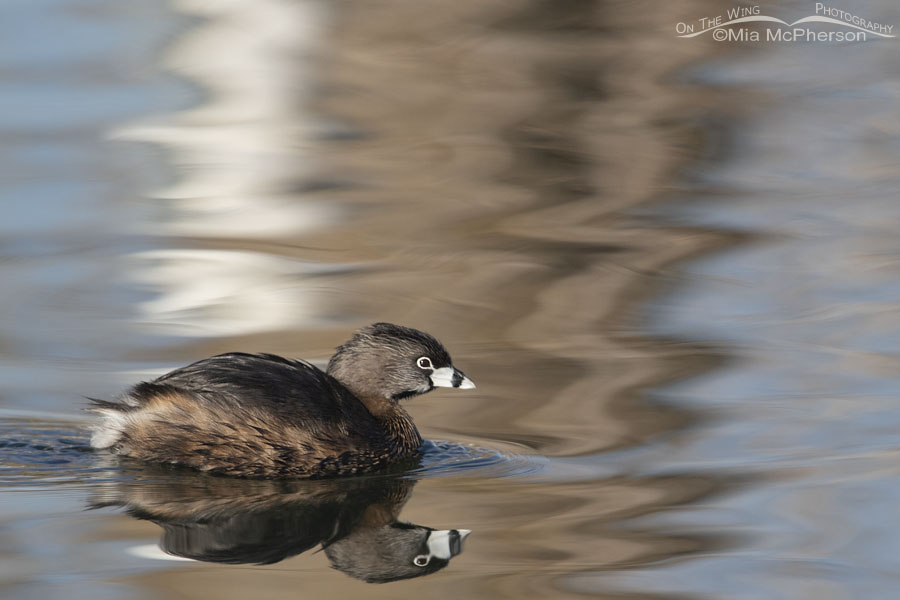
Pied-billed Grebe look back Salt Lake County, Utah D200, tripod mounted, f7.1, 1/640, ISO 250, 200-400mm VR with 1.4x TC at 400mm, natural light
I took this Pied-billed Grebe(Podilymbus podiceps)photo above because when I looked through my viewfinder I loved the golden tones of the water caused by the reflection of a stand of dried Phragmites along the shoreline and was very pleased with the pose of the grebe in this image.
I don’t believe that you need to go to exotic locations to create beautiful and compelling images, you can most likely accomplish that within less than 10 -15 miles from where you live. Even a town dump might be a fine location if you watch the background!
Look for “greenspaces” within your community. These areas can offer food, water and shelter, birds may live there all year long or migrate through.
Look for small city or county parks and visit them at different times of the day and through the year, you might be surprised by what might show up.
American White Pelican about to lift off Salt Lake County, Utah D200, tripod mounted, f7.1, 1/2000, ISO 250, 200-400mm VR with 1.4x TC at 400mm, natural light
A flock of American White Pelicans(Pelecanus erythrorhynchos) flew down to the pond on the day I took the image above. I liked the pose this one took and how the feathers on the top of the head lifted up with a slight breeze.
Get to know the managers, caretakers and visitors to your local parks, greenspaces and other areas, you will be surprised at how much you can learn from talking to people. Quite often a big lens is enough to encourage strangers to speak to you and they might share another location you might not be aware of.
American Coot and reflections Salt Lake County, Utah D200, tripod mounted, f7.1, 1/500, ISO 250, 200-400mm VR with 1.4x TC at 400mm, natural light.
American Coots (Fulica americana) can be challenging to photograph because of their dark plumage and by photographing close to home you will have time to learn how to expose them correctly.
By knowing your photographic locations well, learning what species of birds are present and at which time of the year, knowing the lighting in those locales at different times of the day and becoming knowledgeable about the subjects you want to photograph you can produce images that rival or surpass those taken in exotic locations.
And you won’t have to take out a second mortgage to do it.