It has been a very weird winter here in Utah, there hasn’t been much snow at all in the Salt Lake Valley and temperatures have been warmer than normal. For a few weeks it has felt like spring. This week I saw a report of butterflies already flitting around and the trees I see have buds that look like they are ready to burst open.
Birds that I normally expect to photograph in the winter have been scarce, for instance the Bald Eagles at Farmington Bay Waterfowl Management Area where last year I could count hundreds on any given day in February and this year I’ve been lucky to see more than 4 at a time.
So I’ve found myself wishing for the arrival of “spring birds” on more than one occasion because bird photography has been rather slow the last few weeks.
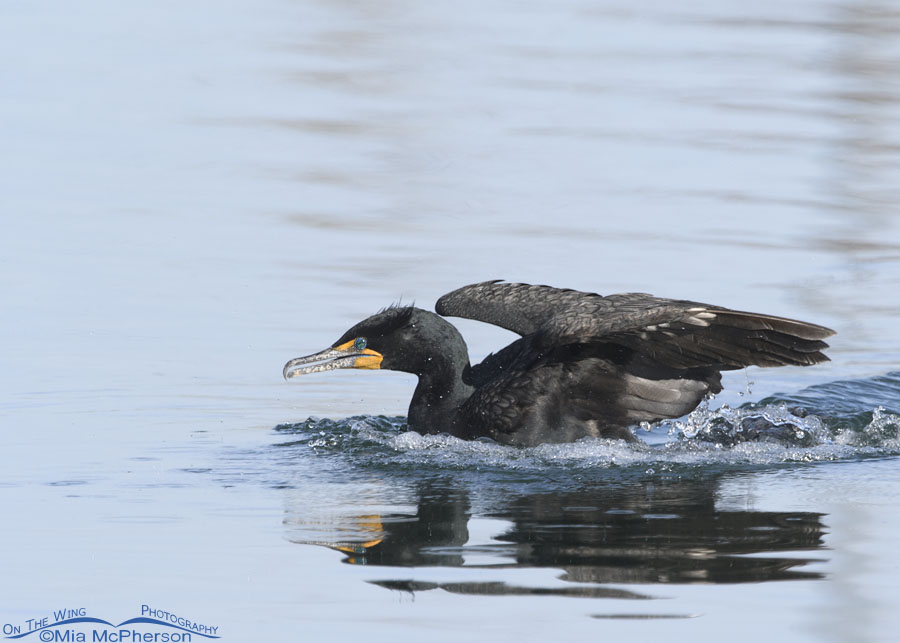
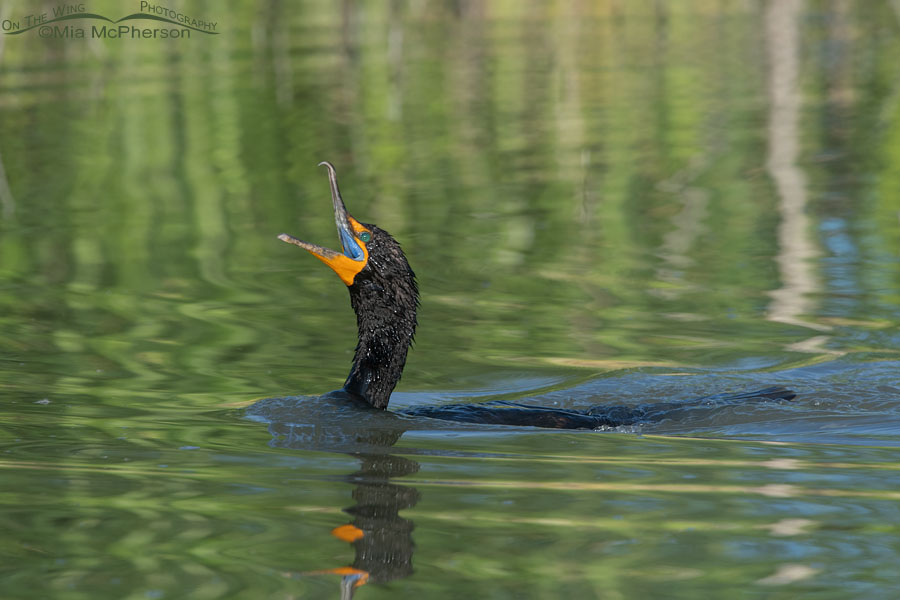
Swimming Double-crested Cormorant (Phalacrocorax auritus) ~ Salt Lake County, Utah Nikon D200, f6.3, 1/640, ISO 400, +0.7 EV, Nikkor 200-400mm with 1.4x TC at 400mm, natural light
Today I went out to Antelope Island State Park not expecting much because it has been very slow out there for bird photography lately and for the most part I was correct. But at the marina I saw some dark shapes in the sky flying very rapidly. I realized they were Cormorants as soon as my lens could focus on them! My FOY (first of the year) Double-crested Cormorants! There were four of them and they were too far away to get decent images but I felt like dancing because in my mind they are “spring birds“. Hooray!
American Avocet (Recurvirostra americana) in flight ~ Farmington Bay Waterfowl Management Area, Utah Nikon D200, f8, 1/2000, ISO 400, +0.3 EV, Nikkor 200-400mm VR with 1.4x TC at 400mm, natural light
Just about a mile away from the park entrance I caught sight of a bird in flight and wondered what it was. My first instinct was “American Avocet” but it seems a little early for them. But I was right on the ID and saw not just one but two of them in flying along the causeway. Wow, more “spring birds“!
I see and photograph the most incredible birds and wildlife often and it brings me much joy but there is a flip side to my photography that is saddening, maddening and very disheartening. I don’t always see beauty, sometimes I see pain, suffering and death.
Laughing Gull with fish hook in bill and legs too tangled to walk
I recall vividly the morning I spotted this Laughing Gull that it wasn’t acting like the other gulls on the beach nearby so I focused on the bird and felt my stomach twist into a knot as it became clear to me that the gull had a fish hook imbedded in its throat and bill. It couldn’t close its bill. Then I noticed that its feet were entangled with monofilament fishing line so badly that it could barely walk. About all it could do was shuffle its feet. I wanted to get help for the Laughing Gull but at the time I didn’t have a smart phone, I had no access to the internet and I didn’t have the number to the park’s headquarters. Plus I couldn’t capture the bird to take to a rescue group because it could still fly. And when it did fly off the knot in my gut worsened because I knew that without help the gull would soon die. That is such a helpless feeling.
Fishing Lures left on a snag in a tidal lagoon
Monofilament fishing line, lures, hooks, metal leads and weights present huge dangers to birds and wildlife when they are not properly disposed of. Monofilament lines can tangle around the bills, feet, wings, legs and necks of birds which can result in death, amputations of feet, legs and wings and when the line is around the neck the possibility of a slow, painful strangulation.
After photographing these lures I removed them from the snag and disposed of them properly. The snag wasn’t in deep water, it only came to my knees and I don’t understand why the fishermen didn’t wade out and remove it. I can’t understand.
White Ibis with foot tangled in fishing line
I can not count the times I have encountered a bird with missing feet or partial amputations of their legs. I have just seen that many.
The fishing line is tangled around the foot so tight of this White Ibis that the foot is extremely swollen and it appeared obviously painful to the bird because it did not place that foot on the ground while I observed it, instead it hopped on the other leg to move on the ground. The Ibis flew off before I could call the Suncoast Seabird Sanctuary in St. Petersburg to ask for help. Once again I wondered about the fate of this beautiful bird.
After my experience with the Laughing Gull tangled in fishing line I had placed the phone numbers for the Suncoast Seabird Sanctuary and the park headquarters in my contacts list in my cell phone.
Fishing lure
Quite often fishing lures resemble fish, shrimp or other food items for the fishermen’s intended targets, the problem is that these lures often look enticing to birds, mammals and sea creatures. I found this lure while walking along a sandy beach and not only could it have become an item to kill birds or wildlife it could have gotten stuck in the soles of a child’s foot who then may not have only been in pain but might have been subjected to Tetanus injections or have developed an infection.
I picked the lure up, placed it in this tree to photograph it and then carried it to a trash receptacle to dispose of it. A pretty simple way of protecting wildlife and people from the dangers of this lure, I wish it were done more often.
Laughing Gull with fishing line & lure in bill
This Laughing Gull had obviously swallowed a hook or a lure and had a long strand of the fishing line hanging from its bill the evening that I photographed it. I was heart broken that before I could call for help a person walked close enough to make the gull fly away. If I could have reached the park rangers or the rescue group they may have been able to throw a net over the bird to capture it, remove the hook and release it.
Used fishing line container
Many parks and recreation areas have now installed used fishing line containers within easy walking distance to fishing areas where fishing line, weights, leads, hooks and lures can be properly and safely disposed of. I find it sad that even in locations with these containers that I still find fishing line and hooks on the ground presenting dangers to birds, wildlife and people. Is there an excuse for not walking a few feet to get rid of these items in a safe manner? I don’t think so.
Double-crested Cormorant in danger
I have been able to aid in the rescue of several birds including the Double-crested Cormorant shown above. I was photographing birds near the Gulf Pier at Fort De Soto when I noticed this bird sitting on the beach. I could see the hook in the bill without using my lens so I knelt down, focused on the bird and could see a metal leader and a lead weight. I could also see that the dull color of this bird’s eyes indicated that it was growing weaker. I was able to call Jim Wilson at park headquarters who said he’d be there quickly. I stood guard over the bird so that if people approached it I could ask them to stay far enough away that the bird would not take flight or enter the water. Jim and a few other rangers showed up, captured the Cormorant and got it to the Suncoast Seabird Sanctuary where the hook was removed and when the bird was healthy again it was released into the wild.
If you are a fishermen, please dispose of used line, hooks, lures and lead weights properly if at all possible. You could be saving the lives of birds and wildlife and looking after the environment.
They belong on this planet as much as we humans do.
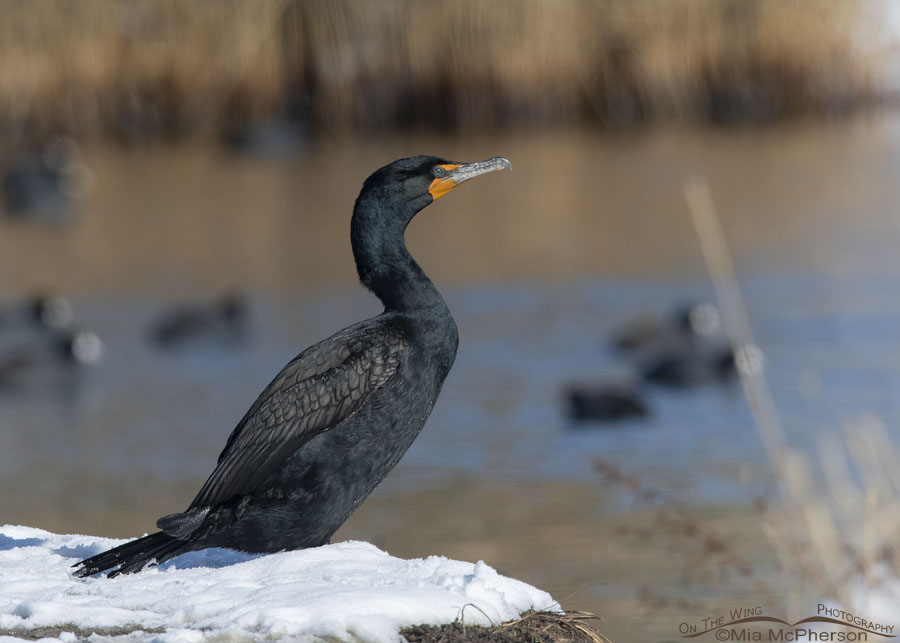
Double-crested Cormorant (Phalacrocorax auritus) on the shore of the Gulf of Mexico, Florida Nikon D200, handheld, f7.1, 1/500, ISO 160, Nikkor 80-400mm VR at 300mm, natural light
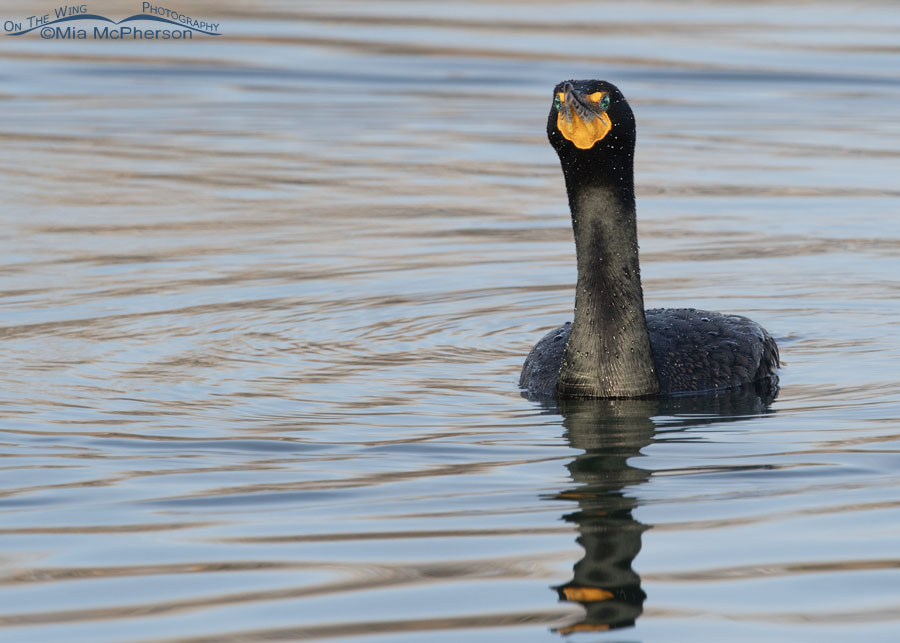
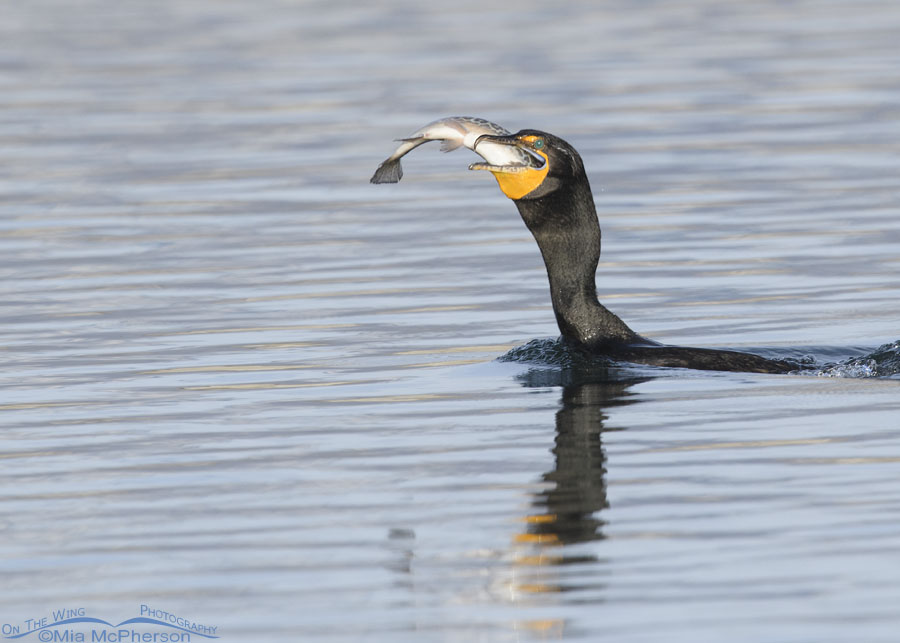
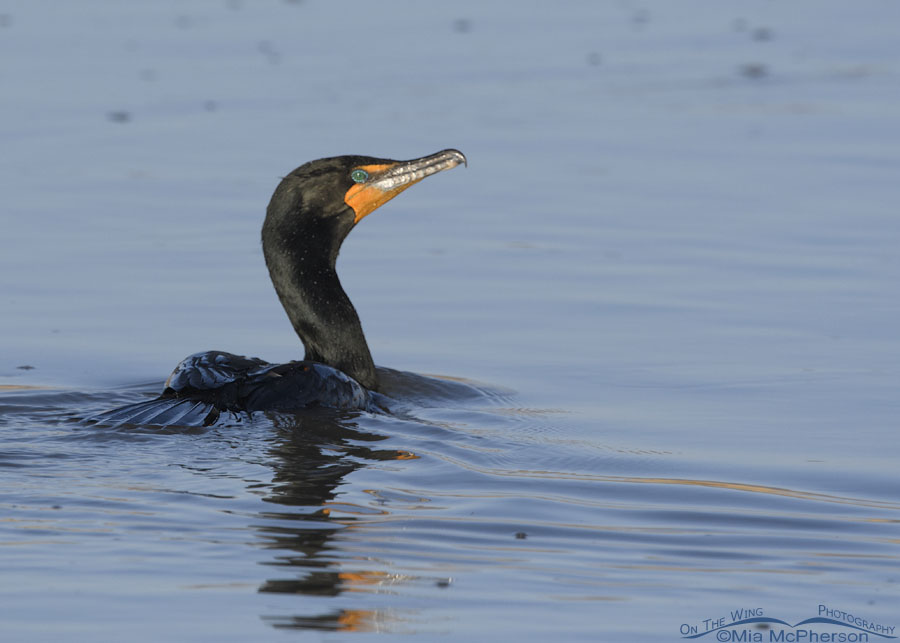
Double-crested Cormorants are the most widespread of North American cormorants where they are found in salt and freshwater habitats. Double-crested Cormorants pursue fish under the water and because of their webbed feet they can swim rapidly. They can live up to 18 years and their status is secure. I love how their dark plumage sets of the beautiful blue eyes and orangish colored facial skin.
Clark’s Grebe (Aechmorphus clarkii) adult Salt Lake County, Utah Nikon D200, f6.3, 1/2000, ISO 400, -0.7 EV, Nikkor 200-400mm VR with 1.4x TC at 400, natural light
I’ve written before about my addiction to bird photography and today I am beginning to have serious withdrawls. For days it has been raining (sometimes hailing), cloudy and a miserable gray here in the Salt Lake Valley though it seems like two weeks to this bird photographer. It has only been four days since I was out to photograph birds.
Oh sure, there have been sucker holes where the blue sky and fluffy white clouds can be seen. For about 10 minutes. When the sucker holes happen I’m tempted to hop into my Jeep and head anywhere there are birds even if it means I only get to shoot 5 minutes before the rain starts again. That probably sounds very odd to a non-bird photographer. But it is what it is.
Northern Rough-winged Swallow (Stelgidopteryx serripennis) adult in defensive posture Jordan River Trail, Salt Lake County, Utah Nikon D200, f6.3, 1/640, ISO 400, Nikkor 200-400mm VR with 1.4x TC at 400mm, natural light
The withdrawl symptoms are setting in, my shutter button finger is twitching, when I see a bird outside the window my pulse races, I keep looking longingly at my camera mounted on the tripod in the corner of the living room wondering how long it will be before a fine coating of dust settles on it for lack of use.
I’ve been working my tail feathers off trying to keep my mind occupied. It isn’t helping. I’ve also been reading a book but the author keeps mentioning birds in the story and I can’t seem to focus (sorry for the pun). Sure, the rotten weather is giving me time at my desk to edit and cull the images I have already taken though that just seems make this withdrawl affect me more.
Adult Double-crested Cormorant (Phalacrocorax auritus) in flight Salt Lake County, Utah Nikon D200, f6.3, 1/1000, ISO 400, +0.3 EV, 200-400mm VR with 1.4x TC at 400mm, natural light
I looked at the 10 day weather forecast earlier and saw that this gloomy weather may last until Thursday of next week. That is awful!
Sandhill Cranes courting on the shore of the Great Salt Lake Antelope Island State Park, Davis County, Utah Nikon D200, f6.3, 1/640, ISO 400, +0.7, Nikkor 200-400mm VR with 1.4x TC at 400mm, natural light
Spring releases: If you have gotten bored with watching the same old movies during the cold days of winter be sure to look at these previews of the spring season.
The starring role of the picture above belong to the tall, svelte Sandhill Cranes (Grus canadensis). They love to dance, are flashy in appearance, they make sure that you know they are around with their exuberant voices and the camera loves them. They love to travel in the spring and fall and really rack up the frequent flyer miles. During the winter they fly south like some of the wealthy “snowbirds” where they put on shows for large audiences and the paparazzi. They never disappoint whether they are in the wilds of southern North America or when performing for smaller audiences of the north. Have I mentioned the camera loves them? Rumor has it that they will soon be making their first 2011 appearances in Utah.
American Avocets yearly sequel Davis County, Utah Nikon D200, f7.1, 1/800, ISO 400, +0.3, Nikkor 200-400mm VR with 1.4x TC at 500mm, natural light.
Having spent the cold months gowned in white American Avocets (Recurvirostra americana) develop a lovely delicate apricot blush prior to their first spring sequel. They have enchanting curves, long willowy legs which combined with their graceful ballet style movements makes them show stoppers. Although they prefer to perform on the shores of inland lakes and marshes during the summer they do occasionally like to stroll and play in the shallow water. They prefer to perform during daylight hours when the natural light shows them at their best and by nature they are not “night owls”.
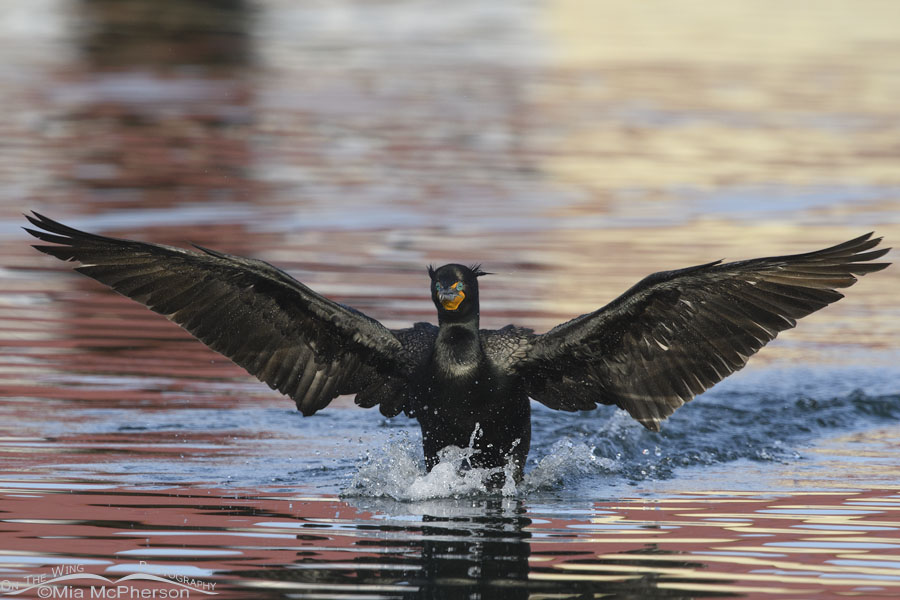
Dramatic Double-crested Cormorant Salt Lake County, Utah Nikon D200, f9,1/320, ISO 320, +1.3 EV, Nikkor 200-400mm VR with 1.4x TC at 400mm, natural light
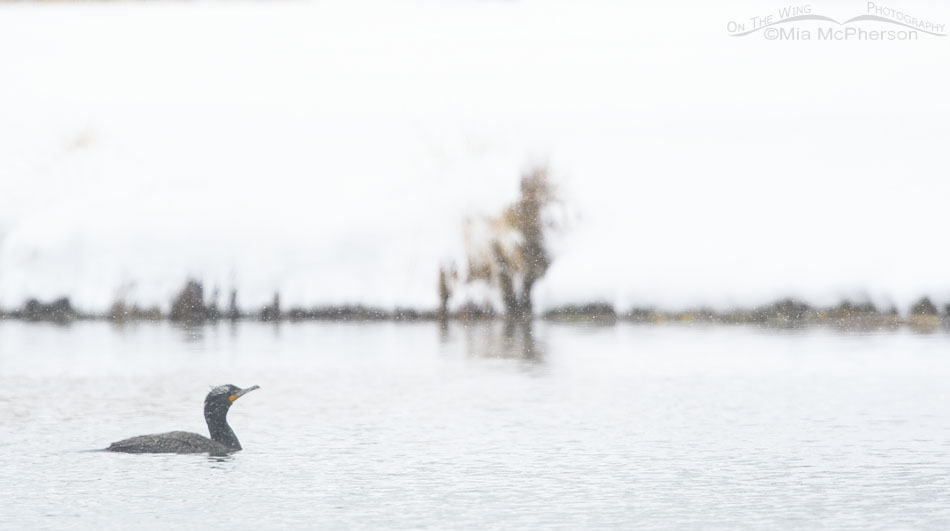
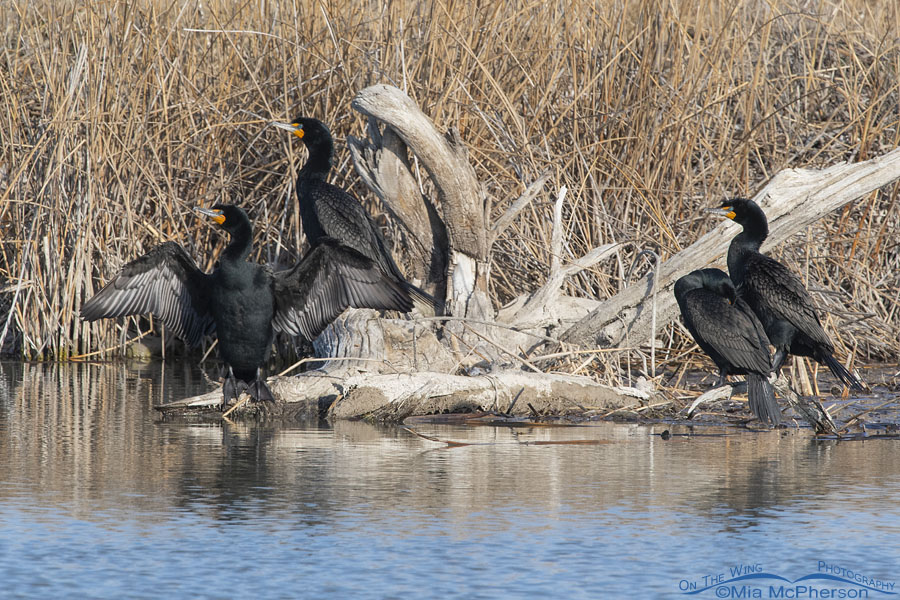
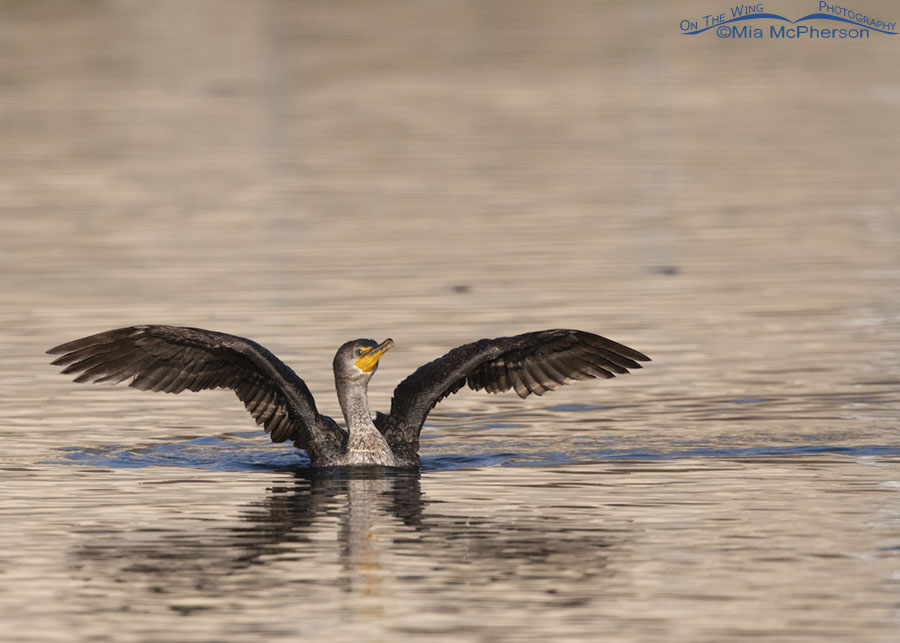
Dark, dramatic and powerful with piercing eyes Double-crested Cormorants (Phalacrocorax auritus) take the center stage of lakes and ponds in early spring. Often cast in the role of a villain because of their intense gaze, their moody looks and the way they spread their wings like Dracula’s cape. Personally I find their actions extremely interesting and they strike some fascinating poses.
Young male Long-billed Curlew in flight Antelope Island State Park, Davis County, Utah Nikon D200, f5.6, 1/640, ISO 400, Nikkor 200-400mm VR with 1.4x TC at 400mm, natural light
The aerial performances of the Long-billed Curlews (Numenius americanus) spring time courtship displays start at sunrise in the open grasslands of Utah. Their whistling call is hauntingly beautiful and the flashes of cinnamon under their wings are eye catching. Our largest shorebird in North America, they are graceful and uniquely interesting. Their acts combine breathtaking acrobatic dives and fluid aerial movements at speeds that make the Cirque du Soleil pale in comparison. I’m anxiously awaiting the premier of the beauties this spring and they always get a “two thumbs up” from this audience member.
American White Pelican during lift off Salt Lake County, Utah Nikon D200, tripod mounted, f7.1, 1/1500, ISO 250, +0.7 EV, Nikkor 200-400mm VR with 1.4x TC at 205mm, natural light
While large, ungainly and lumbering on land American White Pelicans (Pelecanus erythrorhynchos) are very adept at synchronized swimming in large groups and their dinner matinees are great to see. They love to soar in the sky too by forming large circular groups whirling up towards the clouds on the thermals, higher and higher until they disappear from sight. Landings and take offs are exciting to see. Their black and white plumage makes them easy to spot from long distances and this wanna be paparazzi can not resist clicking the shutter button when they arrive in town.
Loggerhead Shrike Antelope Island State Park, Davis County, Utah Nikon D200, f7.1, 1/1000, ISO 400, +0.3 EV, Nikkor 200-400mm VR with 1.4x TC at 400mm, natural light
Small but pugnacious Loggerhead Shrikes (Lanius ludovicianus) are quick to voice their displeasure if the audience is too close, I sure wouldn’t want them to chew my ear off. They are rough, tough and don’t care much about their appearance if the leftovers on their bills are any indication. Though their size is the equivalent of a welter-weight these shrikes show that they have the spirit of a much larger and stronger competitor and do not hesitate to get right in the face of anyone infringing on what they call their territory. They will get right into your face if you cross the line. They are; however, a delight to see in action and I wouldn’t want to miss many of their lofty performances.
These are just a small selection of the cast and characters of the upcoming Spring Season in Utah, there will be many more of our fine feathered friends making apperances who will fascinate, delight, titilate and amuse us. Stay tuned for the best shows on earth, Nature Unleashed
Mia
Nothing that Hollywood produces is as exceptional as the show we are about to see!