Images of Christmas Past – Happy Holidays

The port of Burnie, Tasmania - Christmas Eve 2007

The port of Burnie, Tasmania – Christmas Eve day 2007

Yesterday I took a stroll down memory lane, actually I looked for images I have taken either on Christmas Eve or Christmas Day in my files but in a way that is taking a stroll down memory lane.

In 2007 I was onboard a cruise ship crossing Bass Straight from Melbourne Australia to dock in Burnie, Tasmania. Even though it is summer during Christmas in the Southern Hemisphere Tasmania is far enough south for it to be cool. The water was such a deep royal blue that I wanted to jump ship just to feel it on my skin. I went inland from Burnie on Christmas Eve to visit a rehab facility for animals and birds, many of them were native but a few exotics stuck out, like Water Buffalo, Camels and different types of deer.

I loved seeing Tasmanian Devils, Quolls, Black Swans, Wallaby, Wombat,  Kangaroos and Emus. Ok, maybe not the Emus so much but that was because when I was taking a photo of a Wallaby an Emu snuck up and pecked the UV filter on my lens and scared the snot out of me. Imagine all of a sudden seeing a huge beak and two big eyes through your viewfinder as the beak crashes into the glass!  I am just glad I had the UV filter attached otherwise it would have been expensive glass that got beaked.

After getting back on board ship we headed out to make the crossing to the South Island of New Zealand across the Tasman Sea and spent Christmas Day on the open water.

A foggy Christmas Day 2008

A foggy Christmas Day 2008 – Roseate Spoonbill

Christmas Day of 2007 started off very foggy at Fort De Soto County Park’s north beach. Fort De Soto is open on Christmas day which I adored because quite often I would have the north beach to myself. It was a time to soak in the beauty, to relax and reflect on the year that was coming to a close. The friends I had made. The sights I had seen. And the birds of Florida that enchanted me.

The light wasn’t the best when I photographed this Roseate Spoonbill foraging in the tidal lagoon north of the foot bridge but I kept the file any way as a reminder of Christmas all by myself sitting in the waters of the lagoon surrounded by Wood Storks and Roseates.

Snow (sand) Man - Florida Style 2008

Snow (sand) Man – Florida Style 2008

Floridians don’t let the lack of snow stop them from creating the Florida Snowman out of the white sugary sand found at Fort De Soto. This one is decorated with a Sea Urchin on its head, a Mangrove seed pod as a staff and a Leopard Crab as pet. Ingenuity, yes, that is what it is.

Six months after Christmas I made my mind up to leave Florida and move back out west, the west had called to me softly for years while I lived in Florida. The mountains, the big sky, four seasons, snow, fall colors and wide open spaces. After Christmas the western U.S. wasn’t calling to me softly, it was talking long and loud.

A Regal Bald Eagle - Christmas Day 2009

A Regal Bald Eagle – Christmas Day 2009

Christmas of 2009 found me in the state of Utah. I had mountains, 4 seasons, plenty of birds, big skies, deserts, plains, gorges, marshes, lakes, rivers, valleys and plenty of Red Rocks. AND I had the Great Salt Lake close by!

I made new friends and felt a wonderful peace wash over me. I was back where I belong. In the west. Because of my photography I have met the most fascinating people in real life and those who have become friends over the internet that share my interests in nature, birds and photography.

Christmas Day 2009 started foggy at Farmington Bay Waterfowl Management Area in Davis County, Utah. The sun wouldn’t give up though and it broke through the fog to allow me to get close up images of a majestic 4-year-old Bald Eagle perched on an old post.

Spending time with a best friend in nature is the best Christmas present to me.

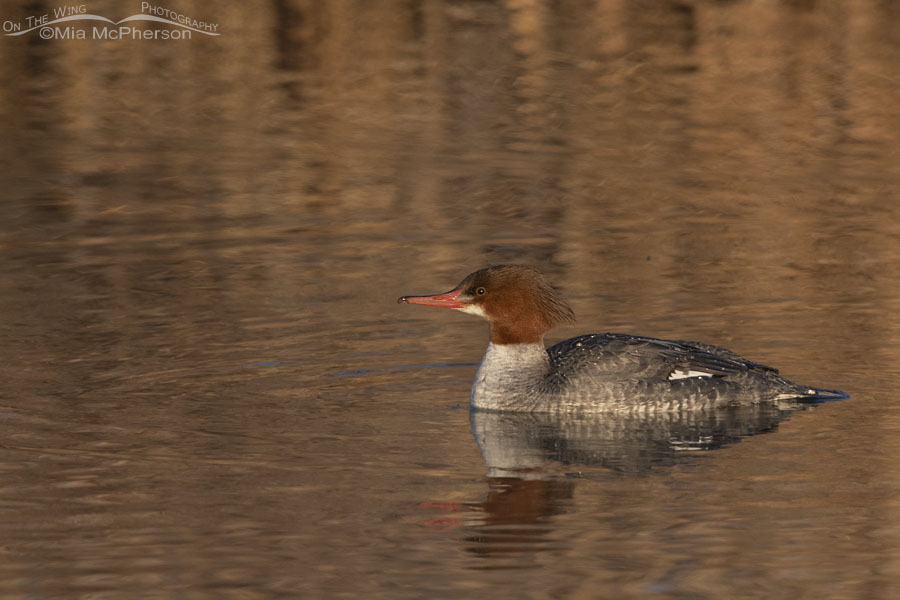
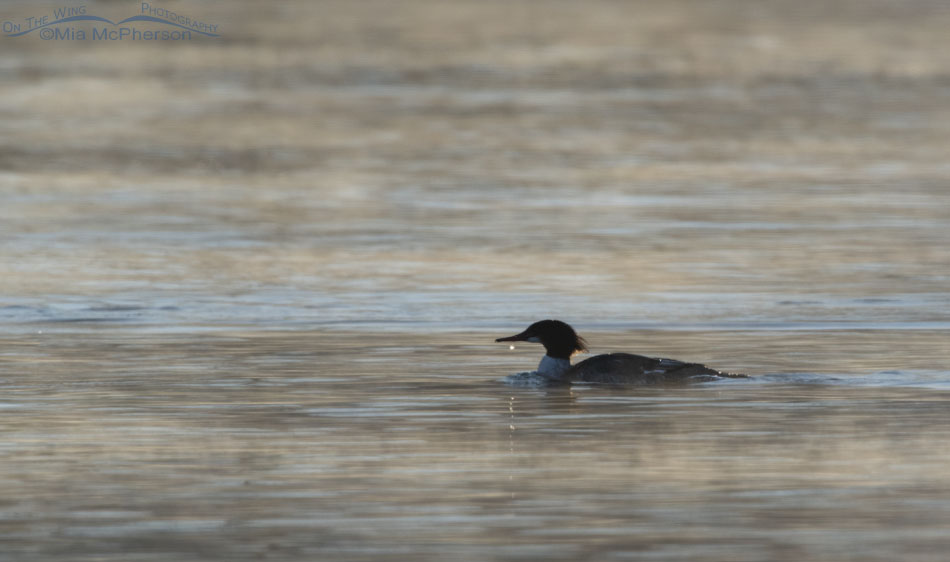
Common Merganser - Christmas day 2010

Common Merganser – Christmas day 2010

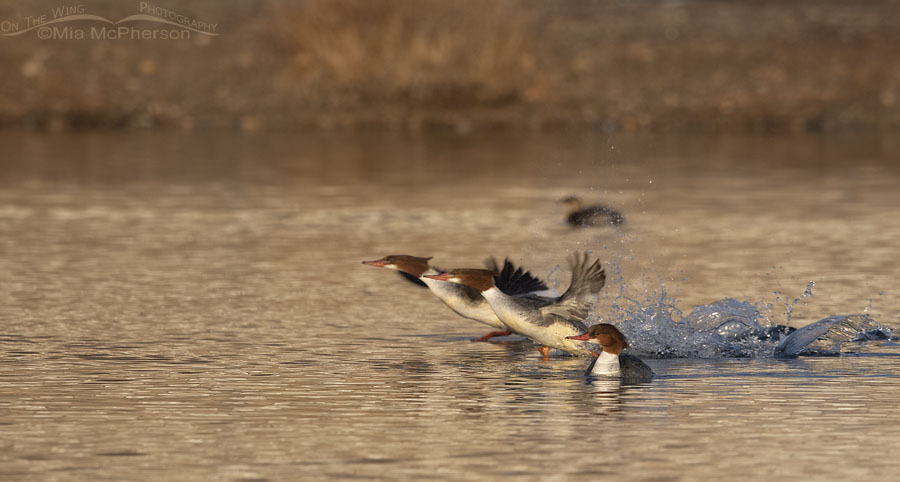
Christmas Day of 2010 came and it was spent again at Farmington Bay Waterfowl Management Area photographing Pied-billed Grebes, Ruddy Ducks and this Common Merganser. The water looked golden because the dried stalks of Phragmites were reflected on it. We pretty much had the place to ourselves for the first few hours. Yes, that is Peace on Earth to me.

Male Northern Harrier in flight - Christmas Eve 2011

Male Northern Harrier in flight – Christmas Eve day 2011

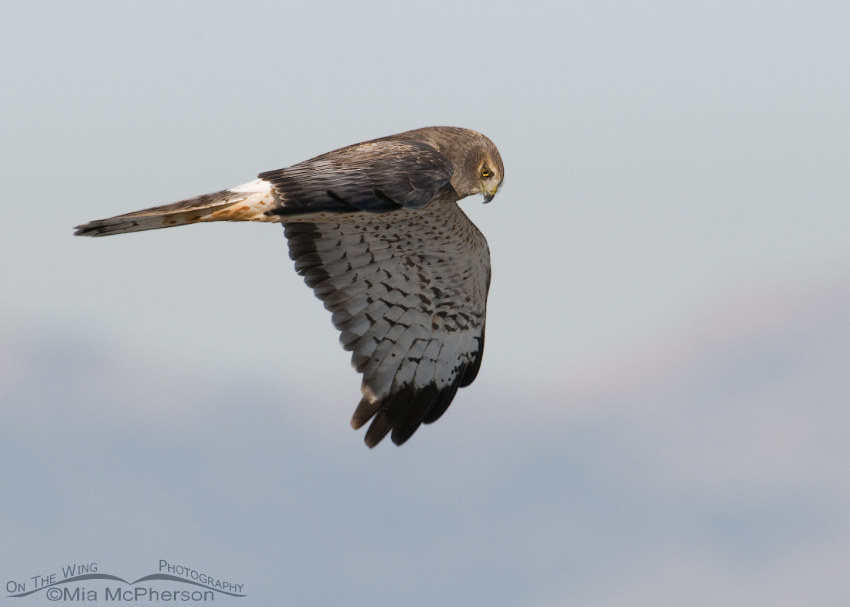
Christmas Eve day of 2011 was spent on Antelope Island State Park  and while the island wasn’t all that birdy or critter the causeway had some Northern Harrier action going on as we went to leave. The “Gray Ghost” was hunting near the shoreline of the Great Salt Lake with the snow-covered Wasatch Mountain Range in the background.

What will Christmas Day 2012 bring? I don’t know for sure but it is going to be a white one and I’ll be spending time in nature enjoying the companionship of a best friend. I can’t ask for a better gift. So while other people are just starting their day and opening their presents I’ll already be enjoying mine.

Mia

Facebook Twitter

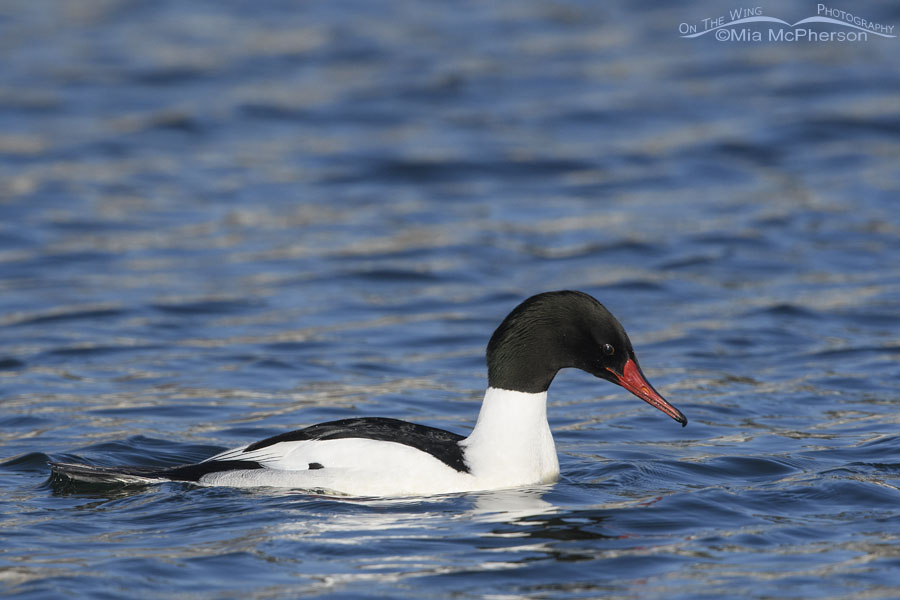
Male Common Merganser in nonbreeding plumage

Common Merganser male in nonbreeding plumage

Common Merganser male in nonbreeding plumage – Nikon D200, f6.3, 1/1250, ISO 320, Nikkor 200-400mm VR with 1.4x TC at 400mm, natural light

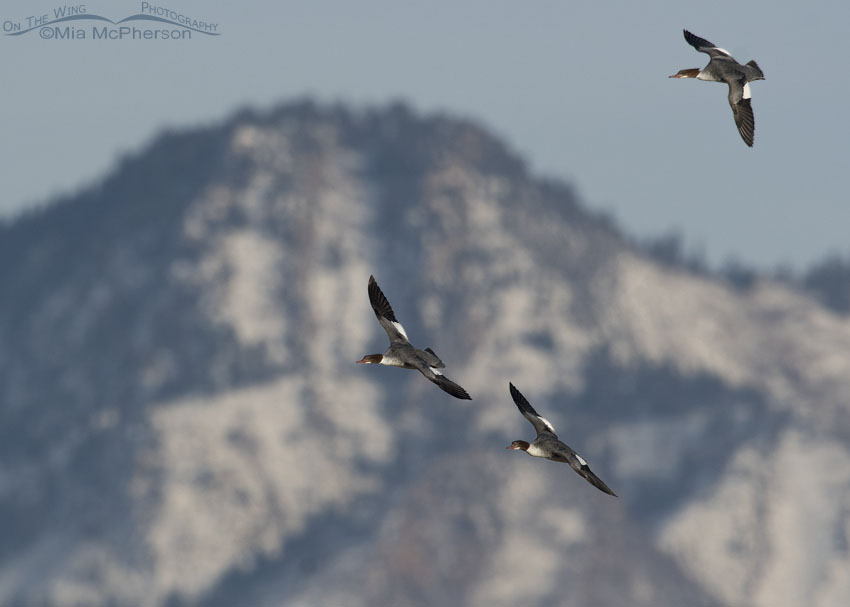
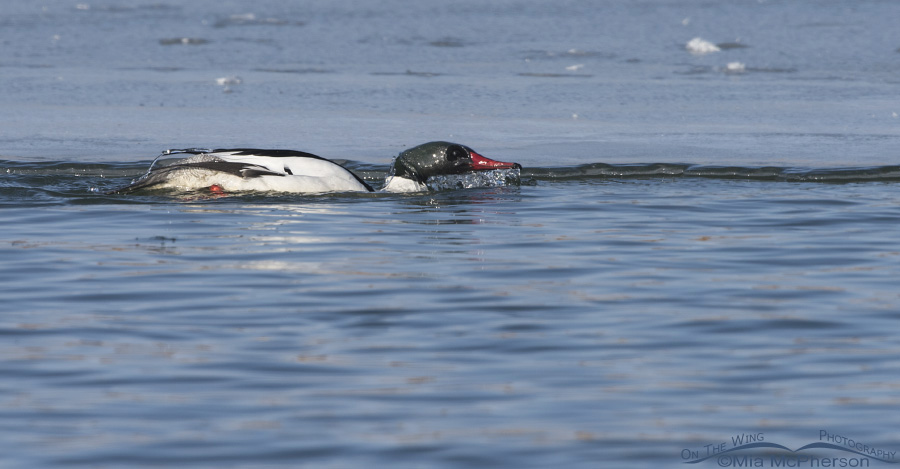
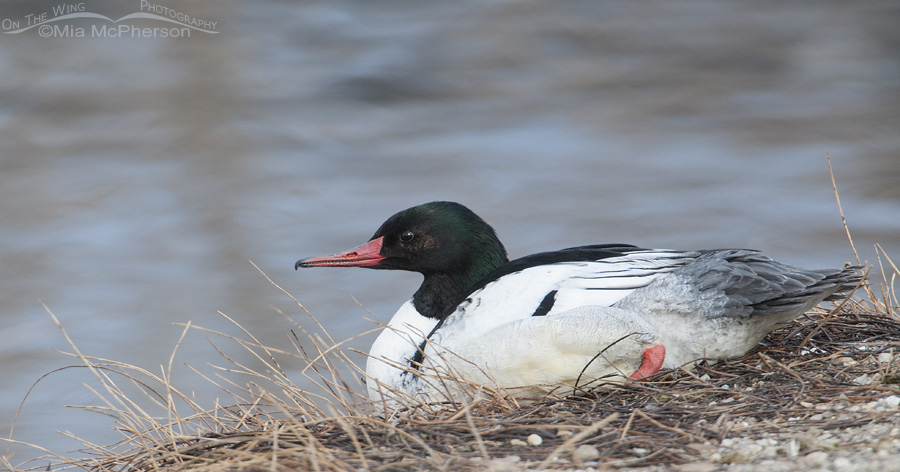
Last week I saw quite a few Common Mergansers at Bear River Migratory Bird Refuge but I wasn’t able to get close enough to them to get any quality images but they reminded me of images I had been able to take of Common Mergansers several years ago at Farmington Bay Waterfowl Management Area.

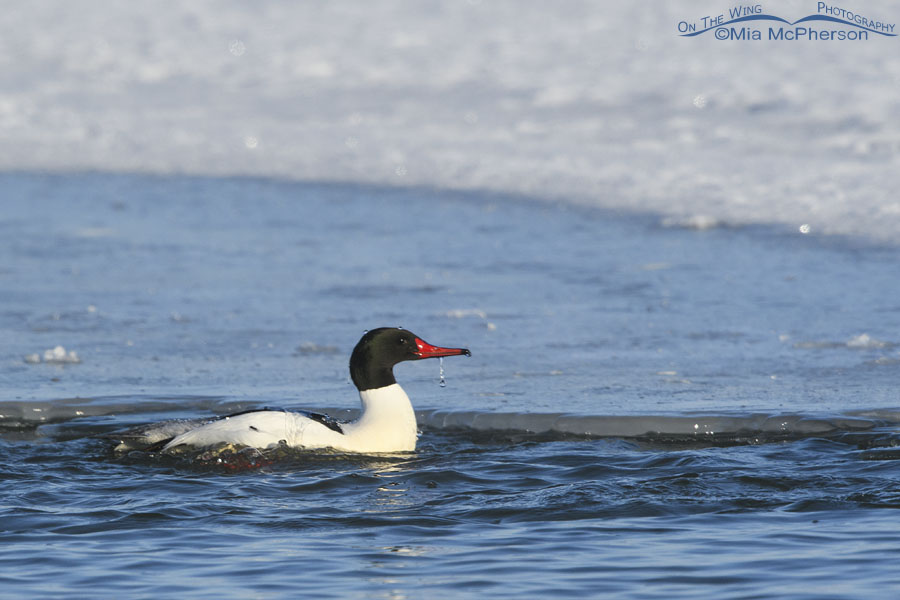
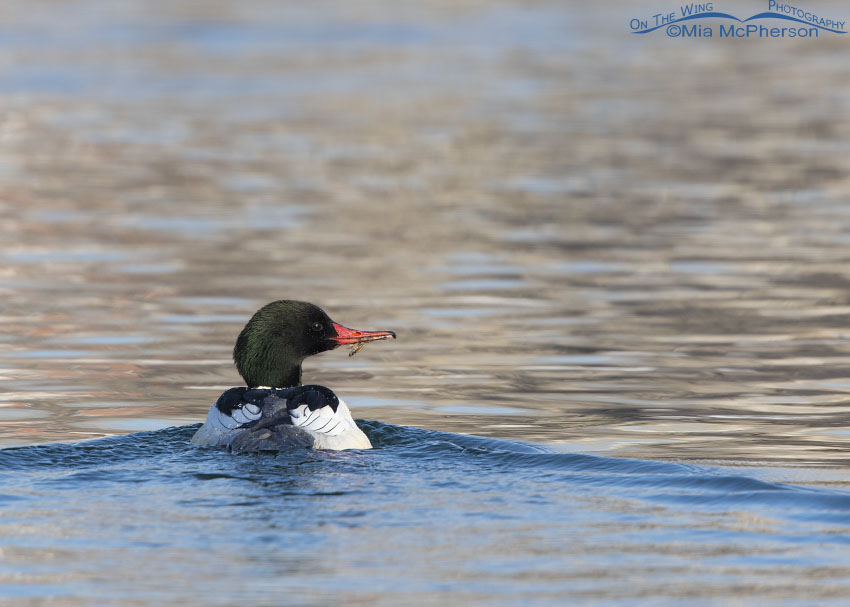
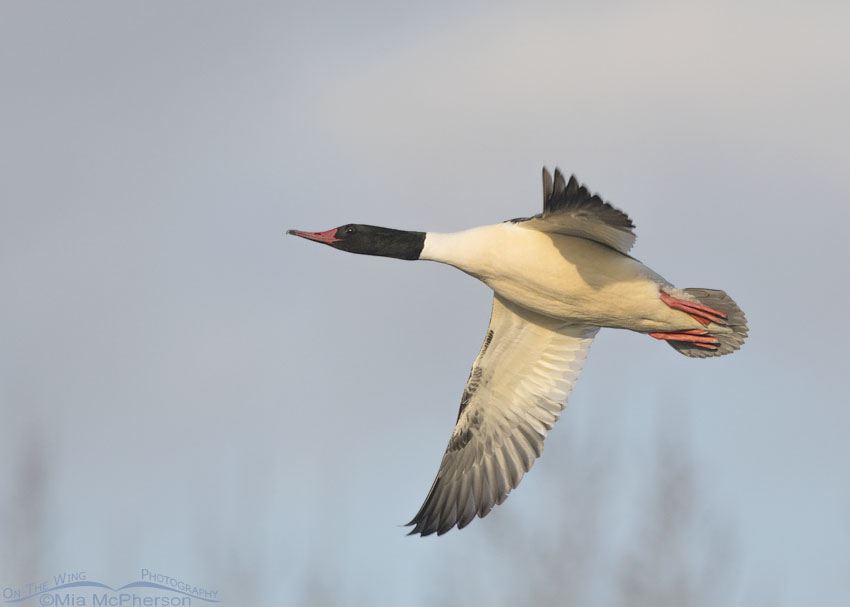
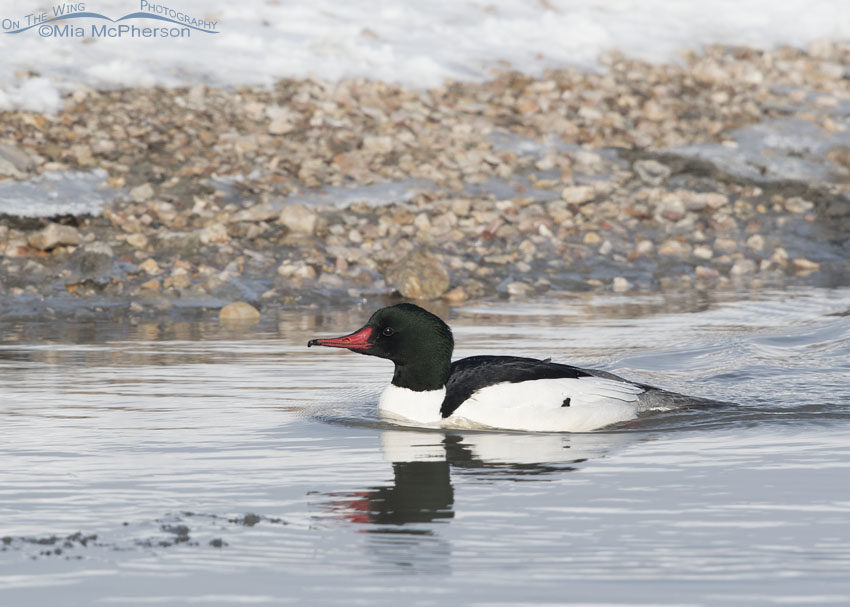
This is a male Common Merganser in nonbreeding plumage, if he were in breeding plumage his sides would be nearly all white and his head a very dark green.

Mia

Facebook Twitter

Things are getting Ducky in Utah!

BuffleheadBufflehead (Bucephala albeola)
Farmington Bay Waterfowl Management Area, Davis County, Utah
Nikon D200, f7.1, 1/1250, ISO 400, -0.3 EV, Nikkor 200-400mm VR with 1.4x TC at 400mm, natural light

You wouldn’t know it by the recent daytime high temperatures that fall has arrived here in Utah but I can see the changes. Higher up than the valley the leaves have begun to change to bright yellows, rust red and oranges while the grasses have gotten that pale golden look I associate with this season.

Another wonderful change that I have been seeing is that a variety of duck species have been arriving at the Great Salt Lake and the freshwater marshes, lakes and ponds in the Salt Lake Valley.

Mallard
Mallard (Anas platyrhynchos)
Salt Lake County, Utah
Nikon D200, f8, 1/640, ISO 320, Nikkor 200-400mm VR with 1.4x Tc at 400mm, natural light

Mallards like the one shown above are present in the valley pretty much all year long but even the mallard population does seem to increase when autumn arrives. I know a lot of people who say they take them for granted because they are common throughout North America but I sure find the rich colors of the males appealing and the more subtle colors of the females equally so.

I was laying on a small rug of a snowy shoreline when I took the image above with my tripod as close to the ground as I was able to adjust it to get this low angle. The duck was eyeing me cautiously.

Cinnamon Teal

Cinnamon Teal (Anas cyanoptera)
Farmington Bay Waterfowl Management Area, Davis County, Utah
Nikon D200, f8, 1/400, ISO 250, Nikkor 200-400mm VR with 1.4x TC at 400mm, natural light

Not only I am seeing ever increasing numbers of ducks along the causeway to Antelope Island State Park, I am also seeing more ducks in flight. Duck hunting season starts today in Utah so the ducks will be even more wary than usual and will require well-developed stalking skills to photograph them,  a blind; either fixed, portable or using a vehicle as a mobile blind, can help with the skittishness of the waterfowl during this period of time.

I love the brilliant red eye of male Cinnamon Teals combined with the rich, bronzey-red of their plumage.

Gadwall
Gadwall (Anas strepera)
Salt Lake County, Utah
Nikon d200, f7.1, 1/500, ISO 250, Nikkor 200-400mm with 1.4x TC at 400mm, natural light

Some of the ducks that frequent ponds and lakes in the city parks are less skittish and will allow a closer approach than those in more “wild” areas. The Gadwall photo above was taken at a city park pond near where I live and was a very cooperative subject. I’m quite fond of the silvery tertials against the black rump of this species.

Greater ScaupGreater Scaup (Aythya marila)
Farmington Bay Waterfowl Management Area, Davis County, Utah
Nikon D200, f6.3, 1/1000, ISO 400, +0.7 EV, Nikkor 200-400mm VR with 1.4x TC at 400mm, natural light

Greater Scaups are a duck species I do not see or photograph as often as I would like, the bird above was warming itself on a sunlit; albeit muddy, bank along a stream of water, well away from the larger inpoundments where hunting is allowed.

The angle I used was a bit on the steep side, I had to aim my lens downward to photograph this scaup because it was about 6 – 8 feet lower than where I was located in a mobile blind. If I had so much as cracked the door open to get out to take a shot this duck would have been long gone before I could set up my tripod and mount the camera.

Common GoldeneyeCommon Goldeneye (Bucephala clangula)
Salt Lake County, Utah
Nikon D200, f7.1, 1/640, ISO 250, Nikkor 200-400mm VR with 1.4x TC at 400mm, natural light

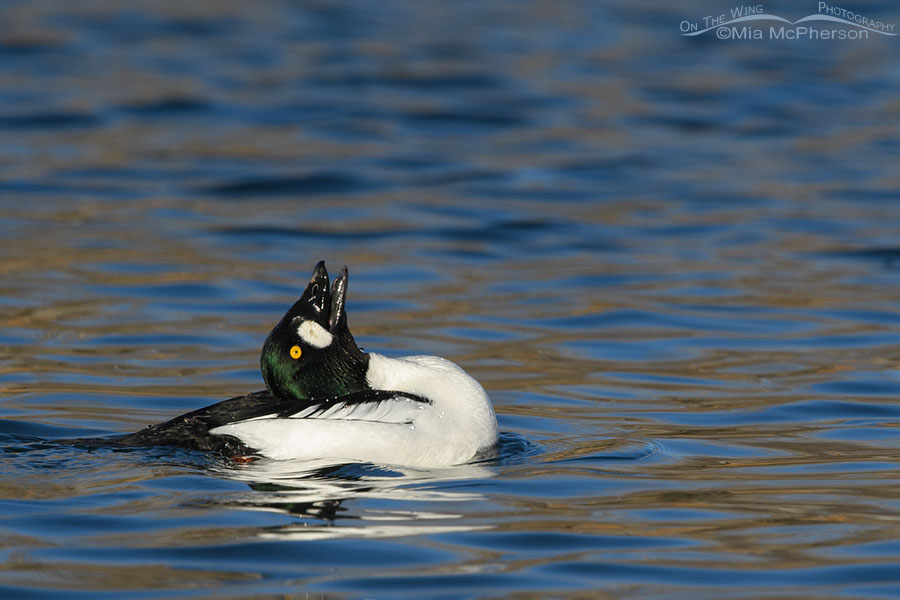
I have yet to have the pleasure of photographing any Barrow’s Goldeneyes but have found a few cooperative Common Goldeneyes near where I live and at other locations in the Salt Lake Valley. This beautiful bird was a bit more wary of me than the Gadwall I posted earlier and stayed hugged close to the edge of the cattails which are seen reflecting on the water’s surface. I’d love the opportunity to photograph the males in breeding plumage though they breed well north of here.

Northern ShovelerNorthern Shoveler (Anas clypeata)
Farmington Bay Waterfowl Management Area, Davis County, Utah
Nikon D200, f7.1, 1/1250, ISO 400, +0.7 EV, Nikkor 200-400mm VR with 1.4x TC at 400mm, natural light

Another species that are seen in the Salt Lake valley in large numbers are Northern Shovelers. Huge flocks of shovelers can be found along the Antelope Island causeway and in the fresh water areas of the valley. The bills of the male and female shovelers are quite distinctive because of the length. I often think that the shiny black bill of the males remind me of black patent leather because they are shiny and look slick. Even from long distances; both in the water and in flight, Northern Shovelers are easy to identify because of their bills.

Ring-necked Duck

 Ring-necked Duck (Aythya collaris)
Salt Lake County, Utah
Nikon D200, f7.1, 1/750, ISO 250, Nikkor 200-400mm VR with 1.4x TC at 400mm, natural light

This male Ring-necked Duck was a visitor at the pond near my home, when I photographed it the middle of the pond was partially frozen and open nearer the shore. I have a feeling that this duck would have liked to have been a bit further away from where I was photographing it but in order to do that it would have had to get out of the water and walk on the thin ice. For the most part it stayed close to where the water met the ice. It was preening just before I took this frame and was flapping its wings to settle its feather back in place. There is a bit of the reddish color showing of the “ring” around its neck.

Red-breasted Merganser

 Red-breasted Merganser (Mergus serrator)
Farmington Bay Waterfowl Management Area, Davis County, Utah
Nikon d200, f6.3, 1/640, ISO 400, -0.3 EV, Nikkor 200-400mm VR with 1.4x TC at 400mm, natural light

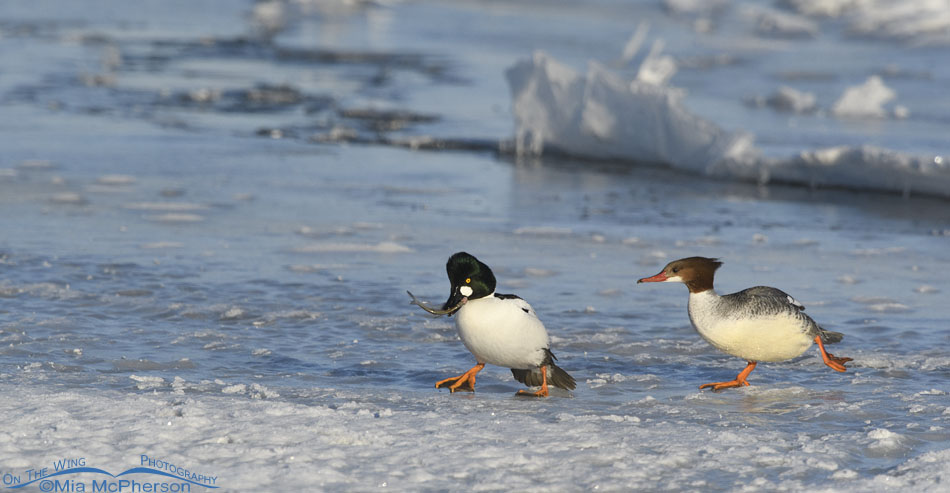
Mergansers don’t have “paddle shaped” bill that other ducks have, their bills are relatively thin in width and all merganser species in North America have serrated (saw like) bills that aid them in catching and maintaining a grip on their prey. The two large mergansers; the Red-breasted and Common, are long bodied, diving ducks.

The bird shown in the image above had been preening its belly when it struck this pose while giving me great eye contact. The bills of Red-breasted Merganser are more orange than the bills of the Common Mergansers whose bills are more reddish toned.

Common Merganser

Common Merganser (Mergus merganser)
Farmington Bay Waterfowl Management Area, Davis County, Utah
Nikon D200, f7.1, 1/1500, ISO 500, -0.7 EV, Nikkor 200-400mm VR with 1.4x TC at 400mm, natural light

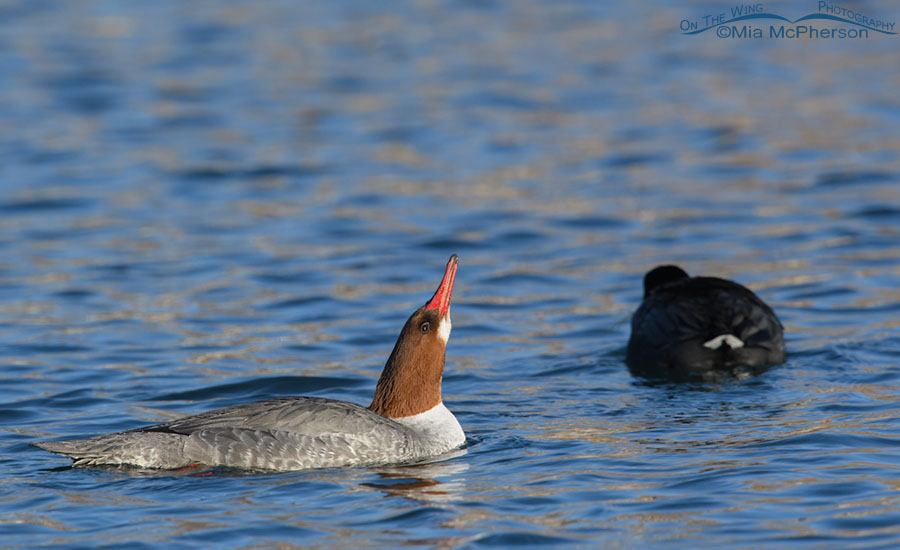
Common Mergansers also have dark eyes while the eyes of Red-breasted Mergansers are lighter and somewhat reddish in coloration.

I love to watch both of these mergansers hunting for prey, they move very quickly under the water and just below its surface. They amuse and delight me. Photographing them can be a challenge because the whites of their speculums are easy to blow out. I usually have to dial in some negative exposure compensation to prevent that from happening.

Northern Pintails

Northern Pintails (Anas acuta)
Farmington Bay Waterfowl Management Area, Davis County, Utah
Nikon D200, f6.3, 1/1600, ISO 320, Nikkor 200-400mm VR with 1.4x TC at 400mm, natural light

It is my opinion that Northern Pintails are one of the most beautiful ducks I have ever seen, I sure hope to have more chances to photograph them while they are here.

The ducks that I have shown in this post are just some of the ducks species that have or will soon descend onto the lakes, marshes and ponds in Utah, filling the air with their calls or the sounds of their wings as they fly by.

Yes, things are getting Ducky in Utah and for awhile they are just going to get even duckier!

Mia

More of my Duck images

*PS, I spent last week photographing at Flaming Gorge National Recreation Area, stay tuned for images from there!

Facebook Twitter

Common and Red-breasted Mergansers

Close up of a Red-breasted Merganser in Florida

Close up of a Red-breasted Merganser (Mergus serrator) in Florida
Fort De Soto County Park, Pinellas County, Florida
Nikon D200, handheld, f7.1, 1/320, ISO 200, Nikkor 80-400mm VR at 400mm, natural light

Mergansers are considered “diving ducks” and one of the things the three species of mergansers found in North America all have in common are their serrated bills. They all eat fish and their serrated bills must make it easier for them to grab on and hold fish after catching them.

The close up image of the nonbreeding, male Red-breasted Merganser (Mergus serrator) above shows the serrated bill. A nick name for these diving ducks is “Saw-bill” and I can certainly understand why.

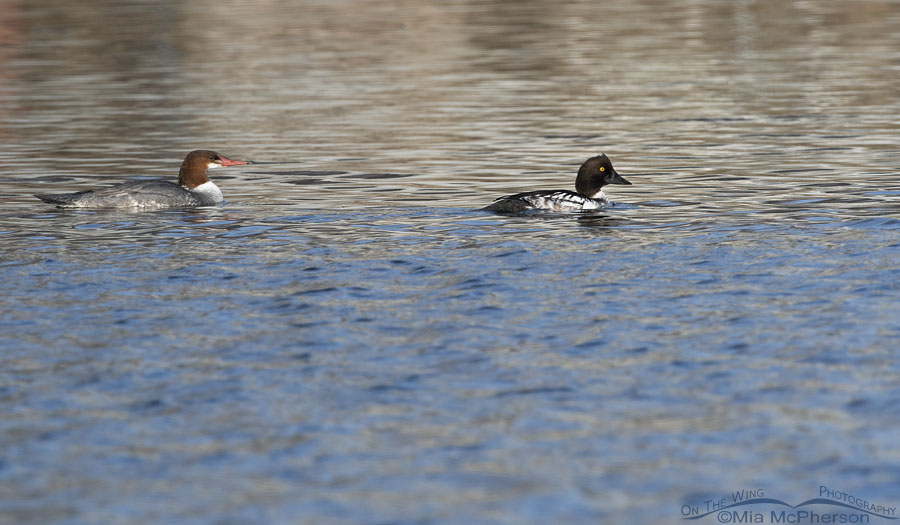
Two species of mergansers that can be confused when making ID are the Common and Red-breasted Mergansers. Both are larger than Hooded Mergansers with Common Mergansers being larger than Red-breasted Mergansers.

Common Merganser in Utah

Adult nonbreeding Common Merganser (Mergus merganser) in Utah
Davis County, Utah
Nikon D200, f7.1, ISO 500, -0.7 EV, Nikkor 200-400mm VR with 1.4x TC at 400mm, natural light

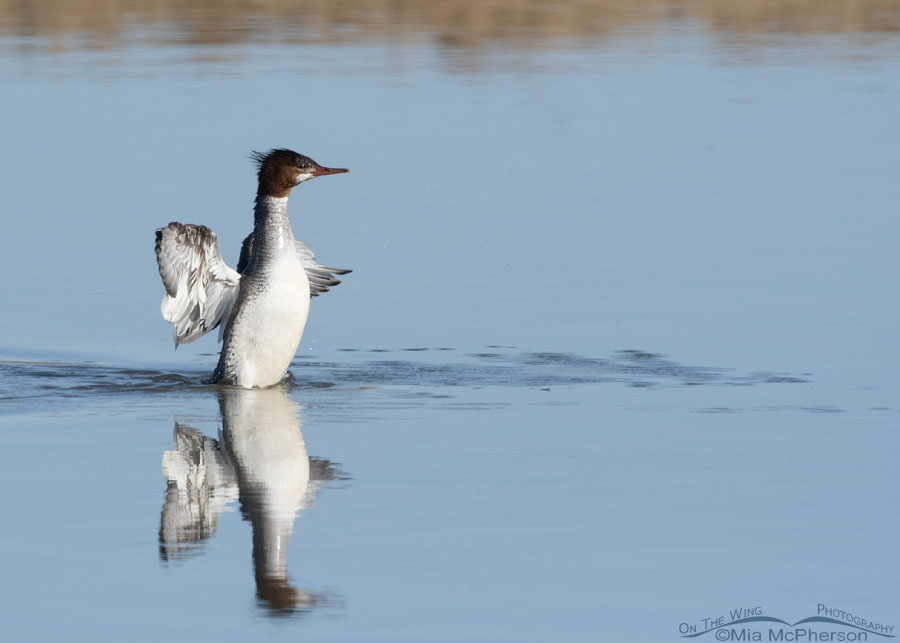
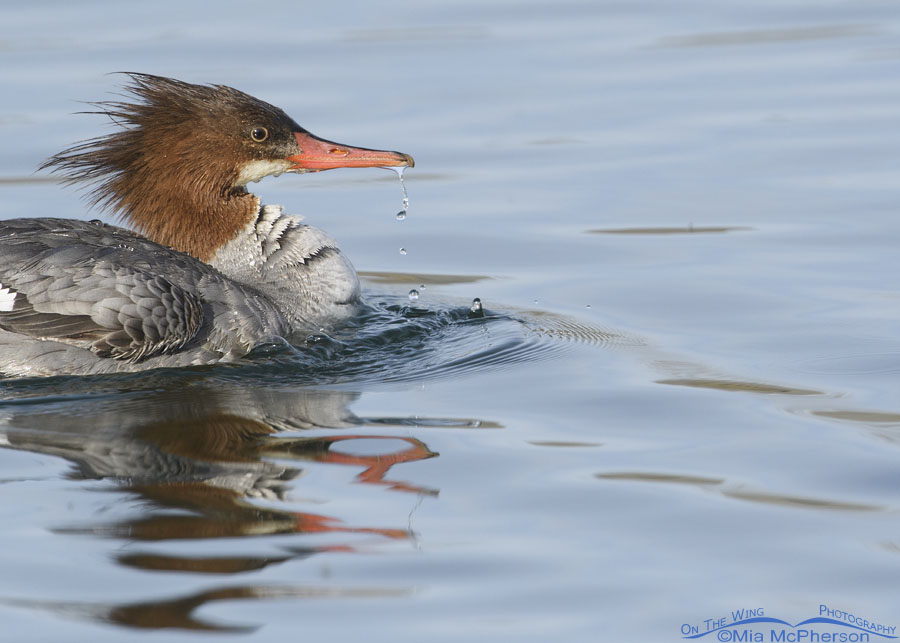
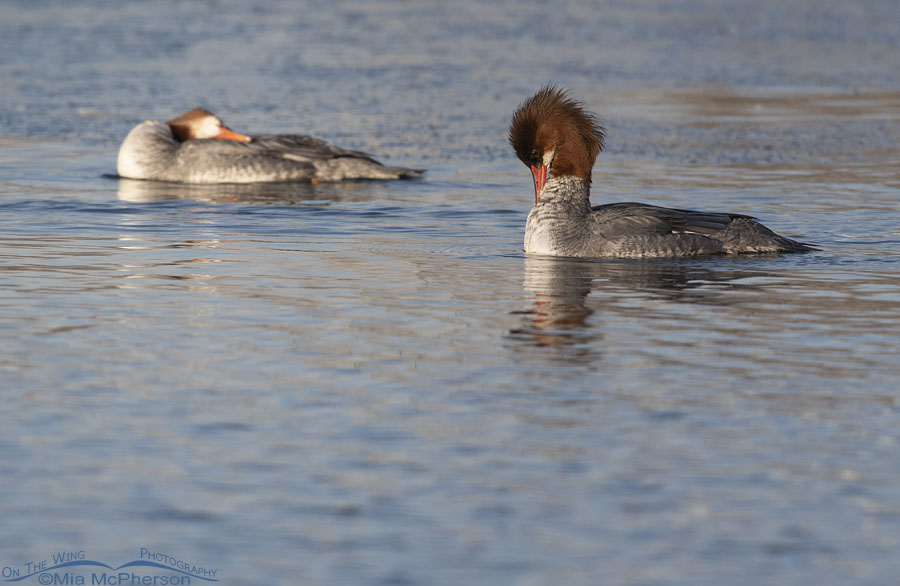
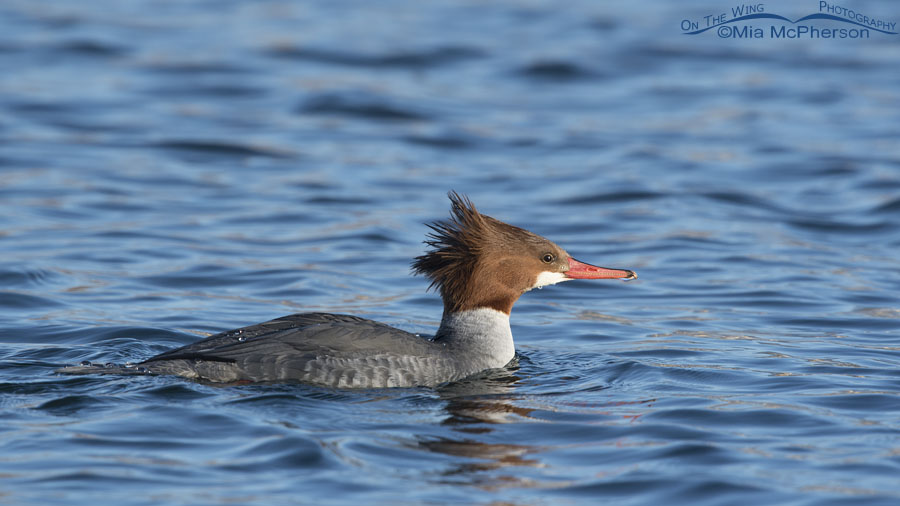
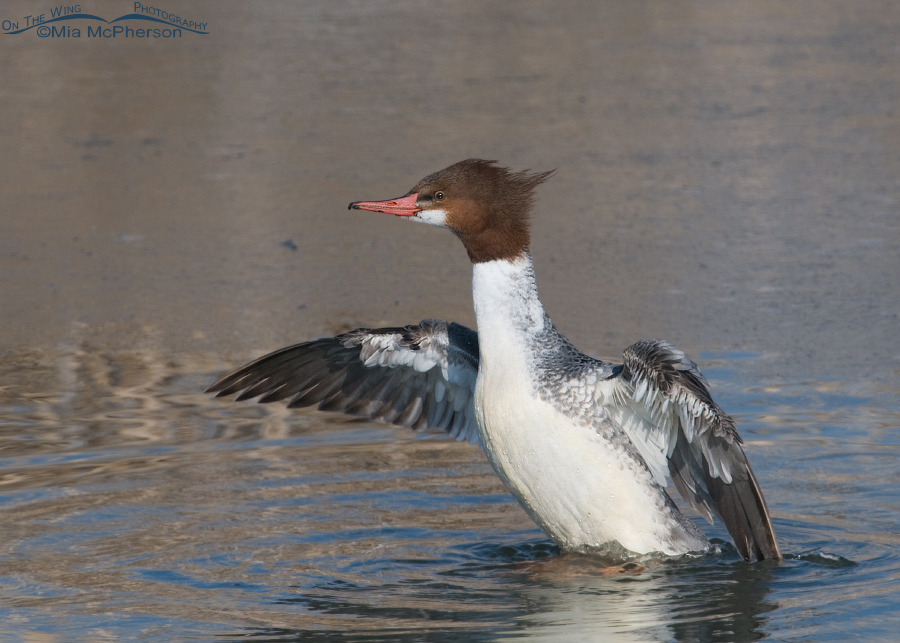
The Common Merganser (Mergus merganser) in the image above has a rustier colored head and crest than the Red-brested Mergansers do in nonbreeding plumage, they have a deeper bill which often appears to be redder than the bill of the red-breasted. Common Mergansers have dark eyes and in nonbreeding plumage both sexes show a cresent shaped white patch on the chin.

Red-breasted Merganser in Utah

Adult female nonbreeding Red-breasted Merganser in Utah
Davis County, Utah
Nikon D200, f6.3, 1/320, ISO 400, -0.3 EV, Nikkor 200-400mm VR with 1.4x TC at 400mm, natural light

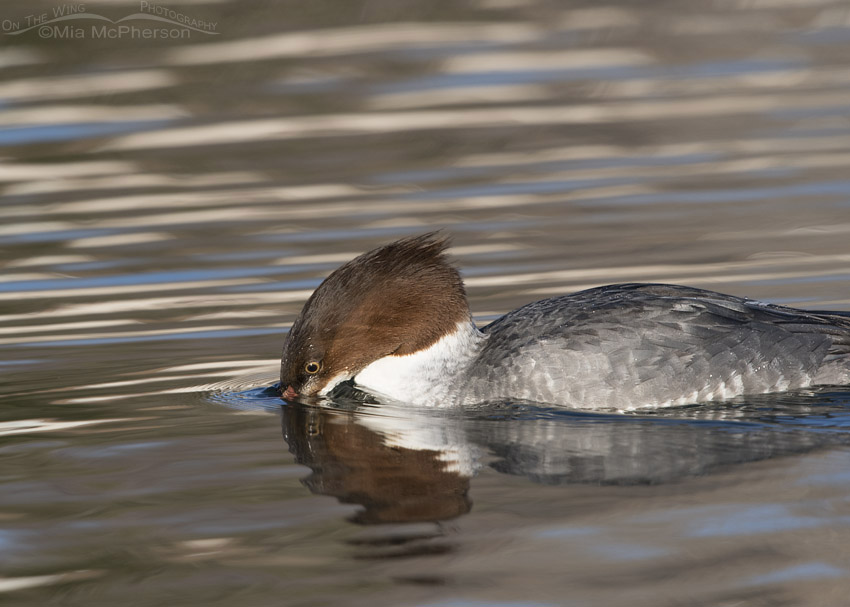
The crests on Red-breasted Mergansers (Mergus serrator) always appear more wispy than the crests on Common Mergansers. The bill has a more orange cast to it than the bills of the Common Mergansers and it is also thin and more slender. Both sexes of the Red-breasted Merganser have red colored eyes.

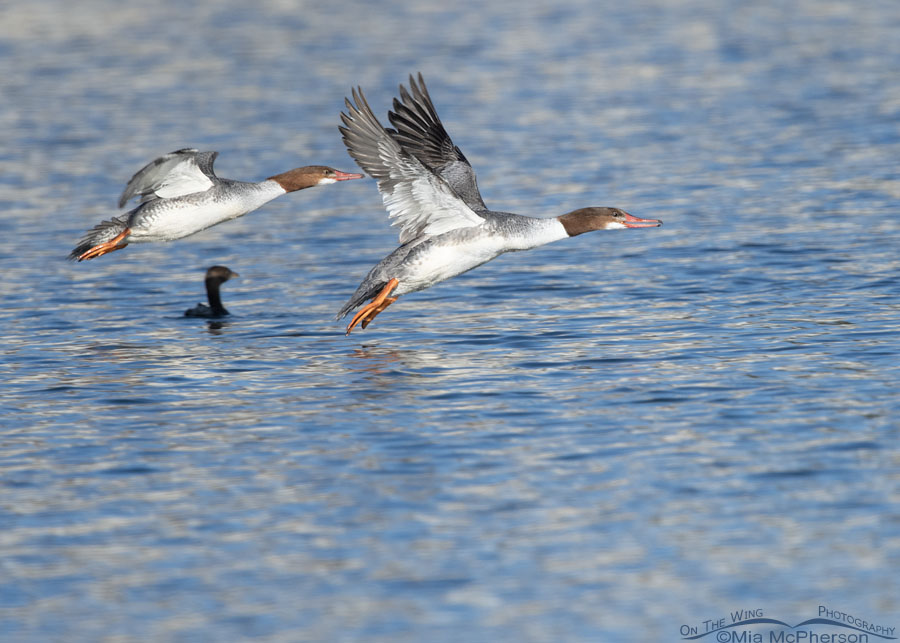
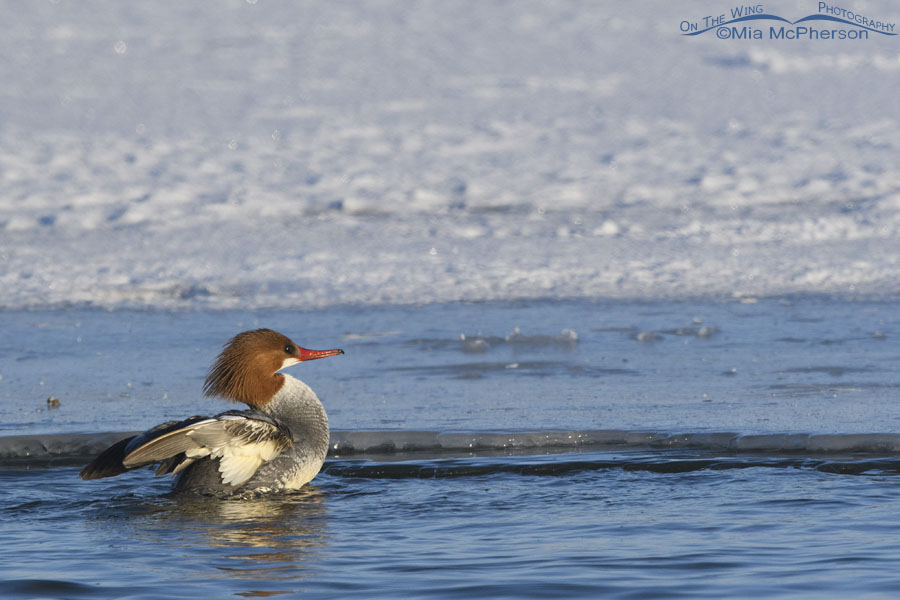
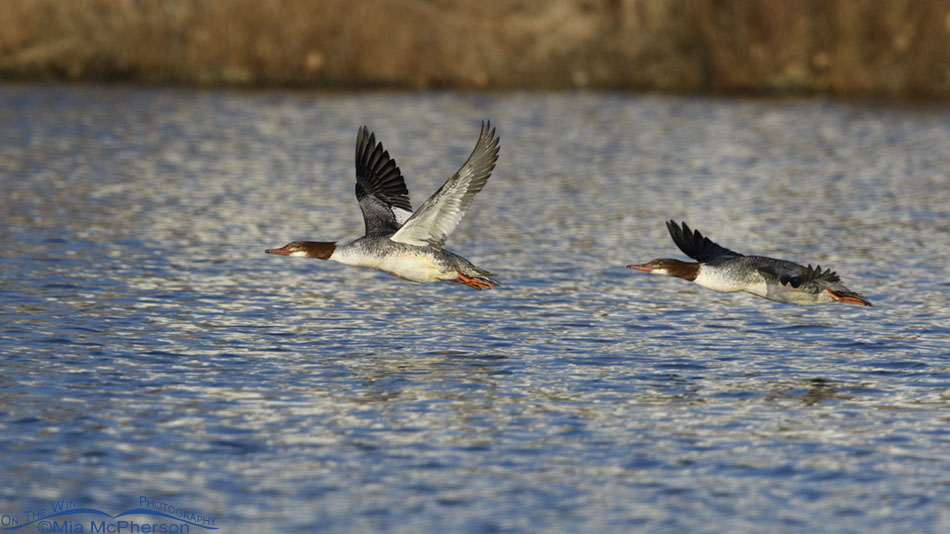
Breeding grounds for both the Common and Red-breasted species overlap in some areas though Red-breasted Mergansers nest on the ground and Common Mergansers are cavity nesters who infrequently nest on the ground. Red-breasted Mergansers have the most northerly range extending into the Artic Circle and they also winter further south than the other two merganser species found in North America. Common Mergansers being a very hardy species will stay further north as long as the water remains open for them to fish.

Watching either the Common or Red-breasted Mergansers fish is a real treat which is exciting to view and photograph. Soon I should be seeing the males and females in eclipse or breeding plumage coming through where I live in Utah. I can’t wait to photograph them!

Mia

More Common Merganser and Red-breasted Merganser images

Facebook Twitter