Juvenile Mourning Dove in Morning Light in Southwestern Montana
The juvenile and out of focus adult Mourning Doves were perched on a lichen encrusted, slightly frosted fence rail near the road in the southern part of the Centennial Valley.



The juvenile and out of focus adult Mourning Doves were perched on a lichen encrusted, slightly frosted fence rail near the road in the southern part of the Centennial Valley.
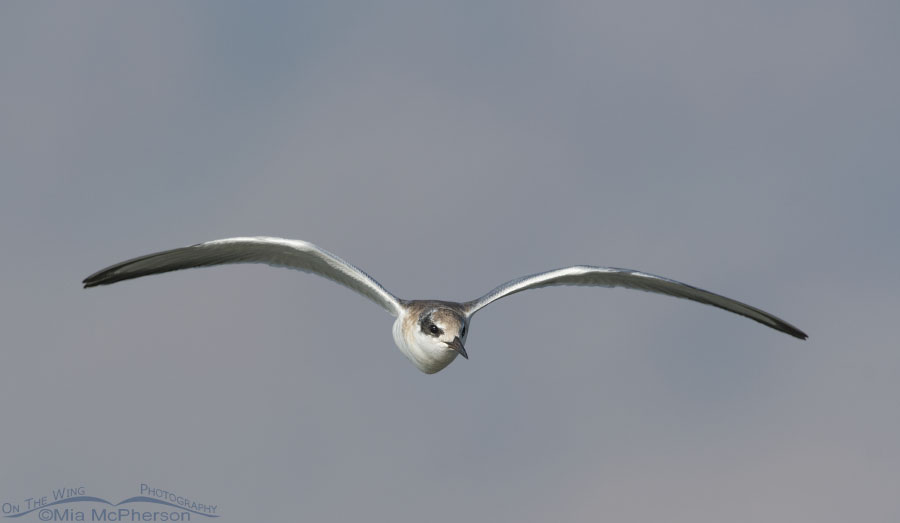
Right now these terns at the refuge are busy feeding their young although some of the juvenile Forster's Terns have already learned how to capture prey on their own.

When the young American White Pelicans are old enough to leave the island they fly to areas like Bear River Migratory Bird Refuge to learn how to catch fish on their own before they migrate in the fall.
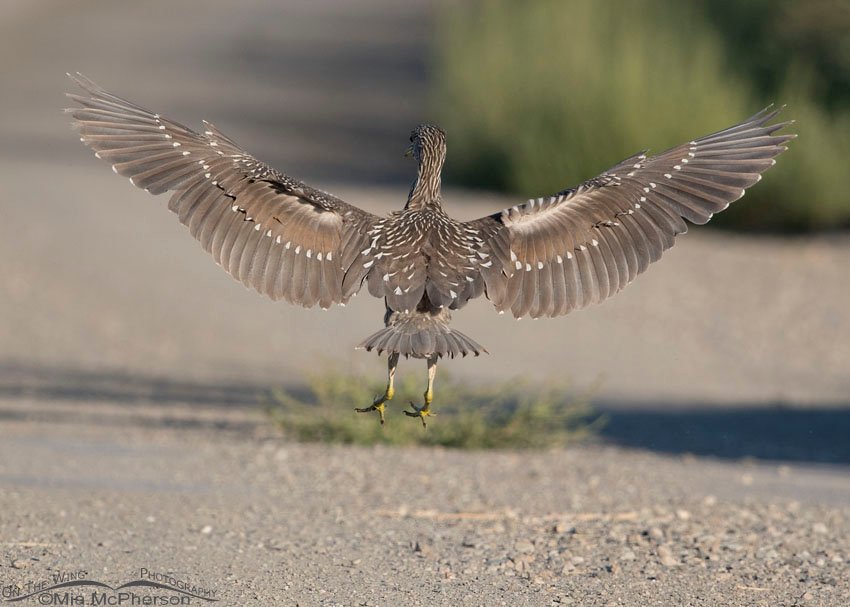
It was a juvenile Black-crowned Night Heron encounter on the auto tour route at the refuge and the resulting photos that made me smile the most when I viewed the images on my monitor at home
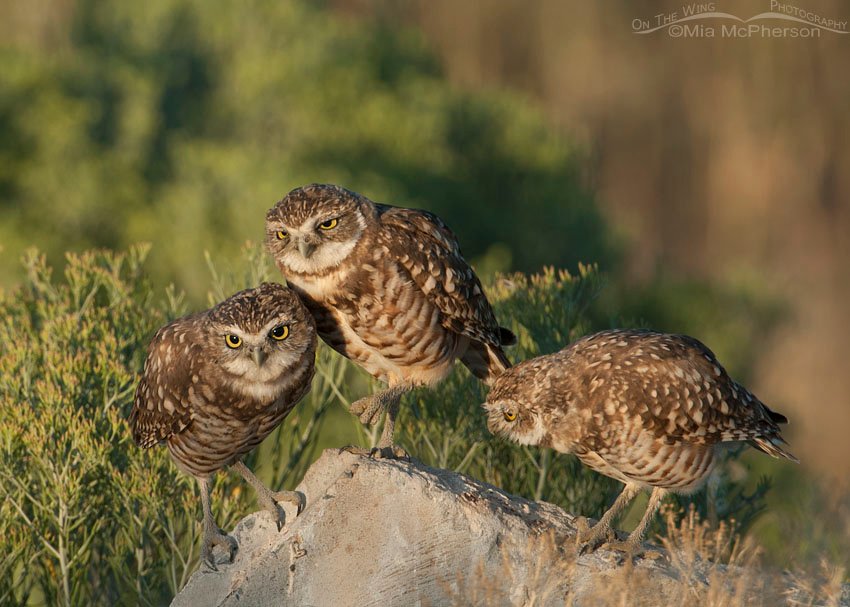
Eight years ago today I didn't know that it would be the last time I'd photograph the Burrowing Owl family together and that a juvenile Peregrine Falcon would have a part in that.

I was delighted to photograph a lovely, little Dark-eyed Junco juvenile perched in a conifer near Washington Lake which is not too far from Trial Lake and the Mirror Lake Highway.
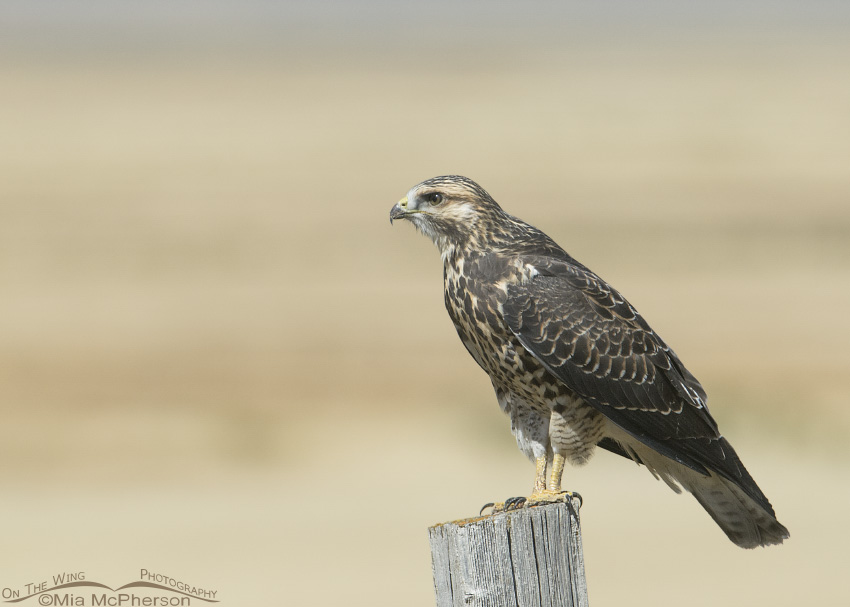
I saw my first juvenile Swainson's Hawk of the year last week and although it didn't give me any opportunities to take better images of it I was happy to see it perched on a power pole.

When I look at this photo of the juvenile Sanderling I see a bird that was so relaxed that it fell asleep while I photographed it because it was comfortable with my presence and I felt honored that it was.

This juvenile Red-tailed Hawk may have looked like it was giving me the eye when I photographed it but it was actually looking for one of its parents to bring it some food.

I have my ears and my eyes to thank for finding the Northern Yellow Warblers and their young foraging near a creek in a canyon.

On the way home I did spot a juvenile Red-tailed Hawk sitting on a power pole near Blue Creek Spring and I put my lens on it because I was hoping it would take flight after it finished preening itself on the pole.

There was a tribe of juvenile Black-billed Magpies on Antelope Island State Park yesterday down near White Rock Bay that were wandering around in the area near the Buffalo Point trailhead

I was pleased and relieved to see the surviving Red-tailed Hawk juvenile perched on a corral close to the edge of the road and looking well fed and healthy.
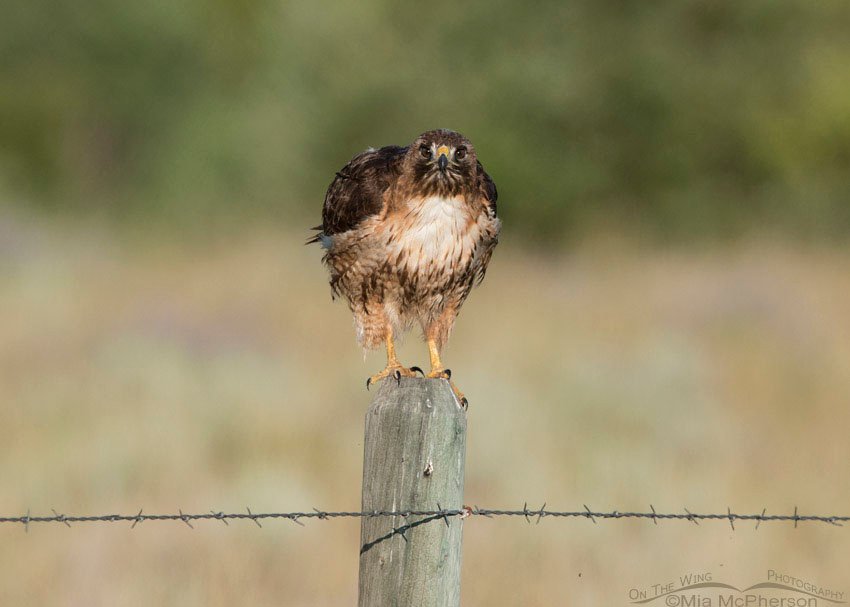
Red-tailed Hawks were my most photographed species yesterday morning in the Centennial Valley of southwestern Montana and I had fun with them.

I needed time out with the birds yesterday and this juvenile Red-tailed Hawk helped me to relax, breathe and remember that things have a way of working out.

I spotted two of the other Red-tailed Hawk chicks that I have been following since early spring and was delighted that they have now fledged and have both learned to fly.

The ranges for these two species of kingbirds overlap here in northern Utah but I see more of the Western Kingbirds than I do the Eastern Kingbirds.

The young Mountain Bluebird turned and snatched the cricket from the male quickly before any of its siblings could reach the branches.

I saw the Red-tailed Hawk chicks near where the nest had been though and I spent less than two minutes with them and took a few images before leaving them alone.

People usually think of American Coot chicks as either cute or ugly, I'm in the cute camp when it comes to these chicks.

Yesterday morning I drove up to Bear River Migratory Bird Refuge to see what birds I could find to photograph and I am glad I did because I had a wonderful juvenile Black-crowned Night Heron close up experience.

Little Blue Herons start off their lives with white plumage, then look piebald with blue and white fathers and finally look more "blue" as adults.

Two years ago in July I photographed this young Burrowing Owl on a post in morning light and I relaxed and let a smile form on my lips.

I'm drawn to and fascinated by these western desert Burrowing Owls because they are beautiful, interesting and animated subjects. And they are pretty darn cute!

Short-eared Owls are nomadic because they follow their main prey which is voles and if the vole population is low the Short-eared Owl density will also be low.

Without science you would not see this Short-eared Owl chick photo. You are here viewing it through a device using an internet connection to connect to a page housed on a server.
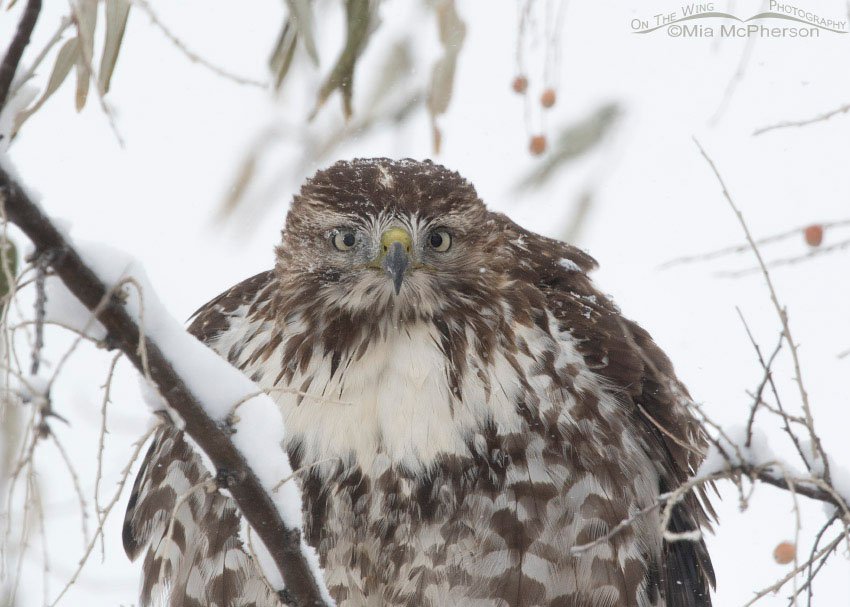
This first year Red-tailed Hawk close up in the snow storm was a reminder of how much our birds and wildlife have to struggle to get through the harsh winter.
The Great Blue Herons here in Utah are dealing with ice, snow and bitter cold temperatures now but the Great Blue Herons in Florida they have started courting and building their nests.

Is it any wonder I feel like the juvenile White-crowned Sparrow in this photo that is hiding its head? My inbox is getting junked up and my delete key is smoking from deleting the Cyber Monday sales pitches.

I photographed this juvenile Roseate Spoonbill in May of 2008 from inside a lagoon at Fort De Soto's north while the immature spoonbill and a few adults preened and rested on the shoreline.