
Early Spring American Tree Sparrow
The last time I wrote about American Tree Sparrows I said that they would be migrating soon and that I hoped I could take a few more photos of them before they migrated and I had that opportunity two days ago.
I miss seeing and photographing Turkey Vultures during the winter and now I am excited that very soon I'll be seeing them roosting on fence posts, rocky outcroppings, cattle gates, trees, corrals and the ground, riding the thermals, thermoregulating and scarfing up road kill all over the place!
This close up of a Western Meadowlark was taken nearly two years ago on Antelope Island State Park while the bird foraged on the ground.
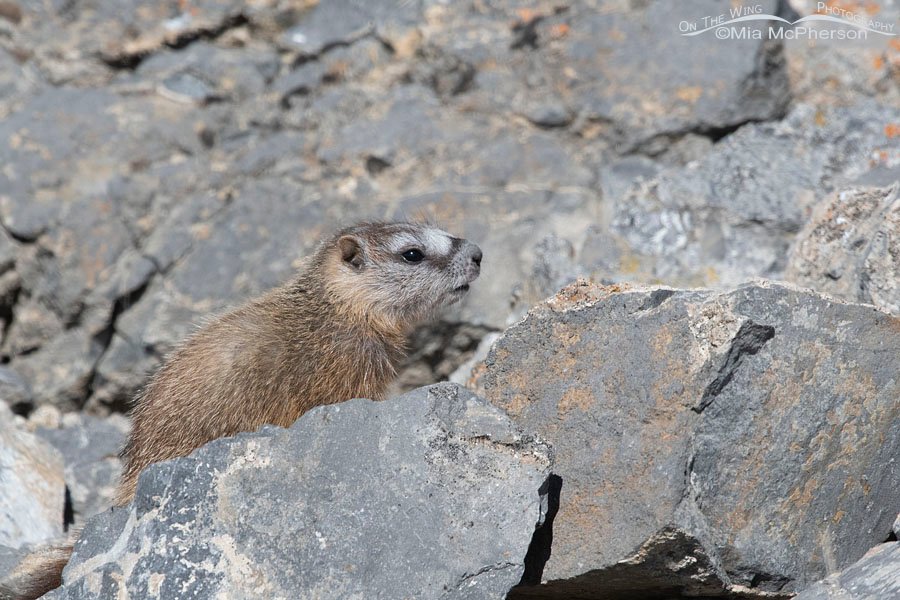
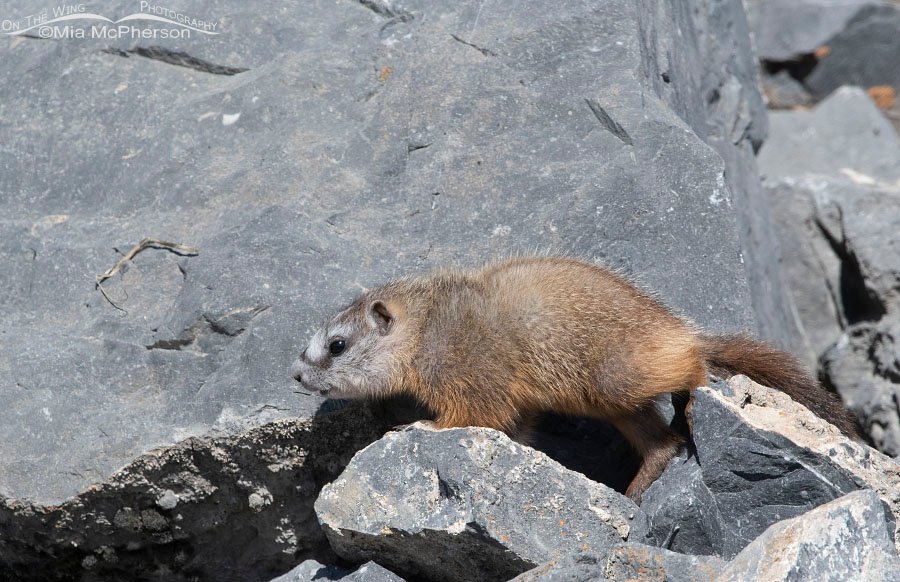
Yellow-bellied Marmots are also called "Whistle Pigs" and "Rock Chucks" so I have to wonder should I call their pups "Whistle Piglets" and "Rock Chucklets" or just call them cute and adorable?
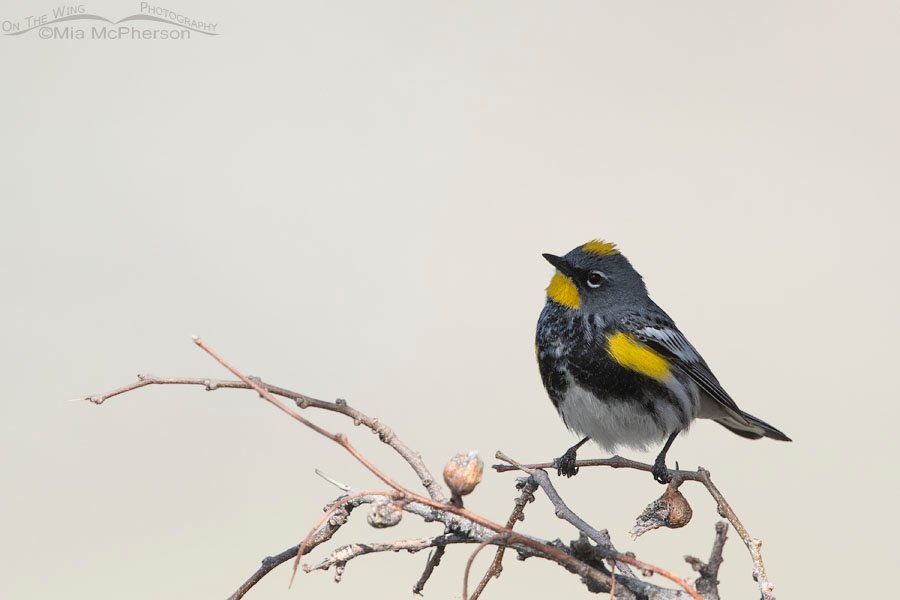
I've had a like - dislike relationship with this male Yellow-rumped Warbler photo since I took it during migration last spring.
I was drawn to this photo because of the light on the Sandhill Crane and the grasses it was foraging in plus how that contrasts with the dark shadows on the mountains behind the bird.
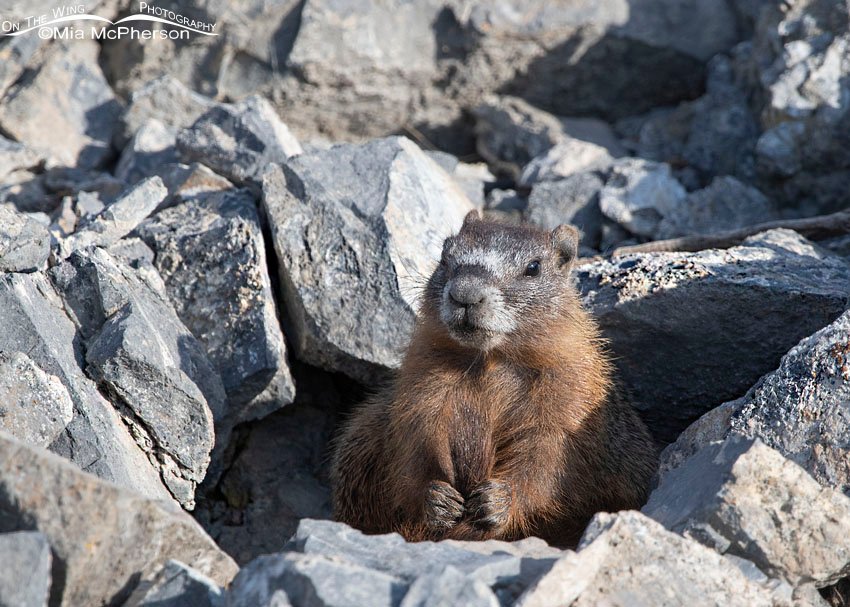
At one of the burrows where I photographed Yellow-bellied Marmot pups in the spring there was one pup of the five that had a paler face than the other four had and I thought that was interesting.
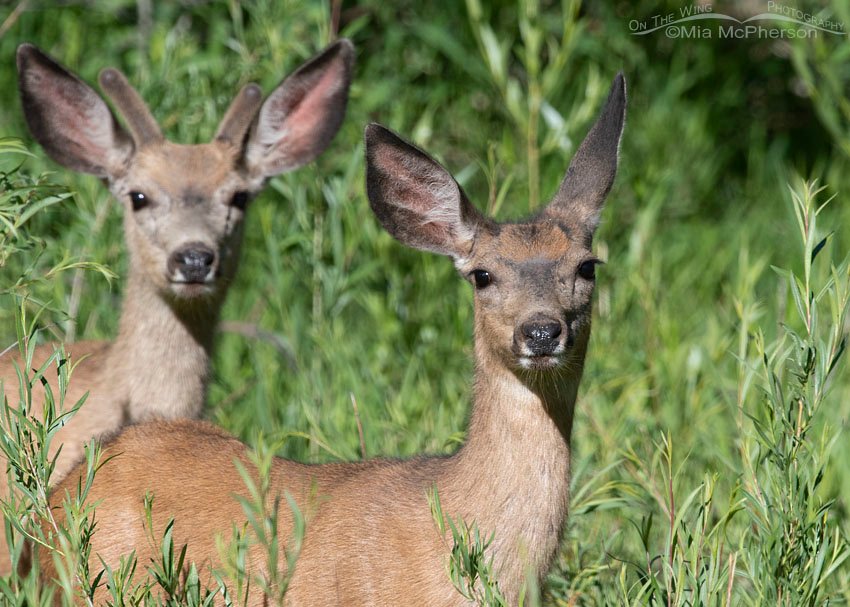
I haven't photographed Mule Deer in a while so when I saw a pair of them in willows next to a creek last week I felt I had to take their photos, especially because of all the lush greenery that surrounded them.
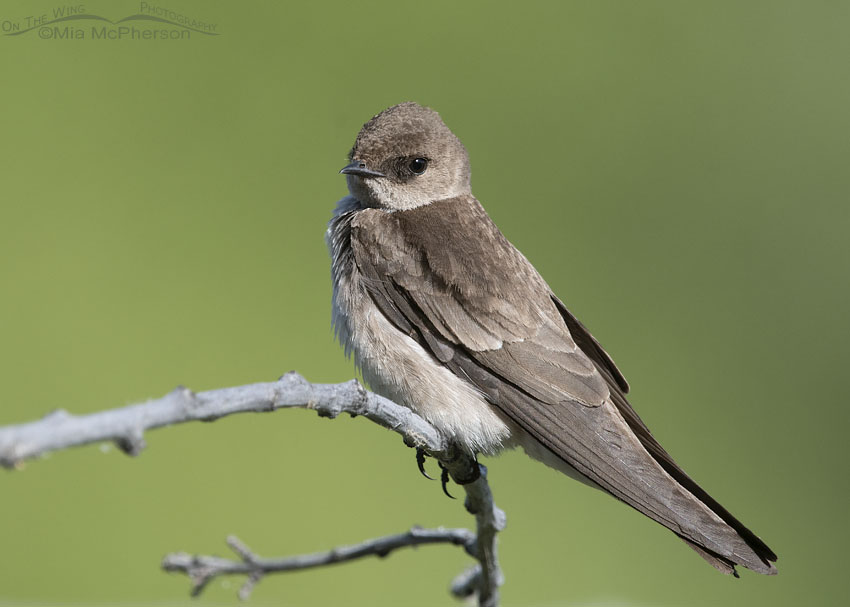
Of the photos that I took that morning I liked this one Rough-winged Swallow the most because I could see its entire body while the other swallow had the out of focus perch in front of the body of the bird.
While photographing some Pine Siskins that were foraging and gathering nesting materials I caught some movement out of the corner of my eye and spotted a Chipping Sparrow with nesting materials in its bill.
That sighting with my Mom made me hope that I would see more Lazuli Buntings in the canyons, yesterday morning that hope was fulfilled when I spotted a first spring male fly into a blooming Chokecherry tree.
I laughed again when I saw this photo on my camera LCD, the Moose was reaching to grab more willow leaves but was also keeping an eye on me in the mobile blind while his "beard" swung like the clapper of a bell.
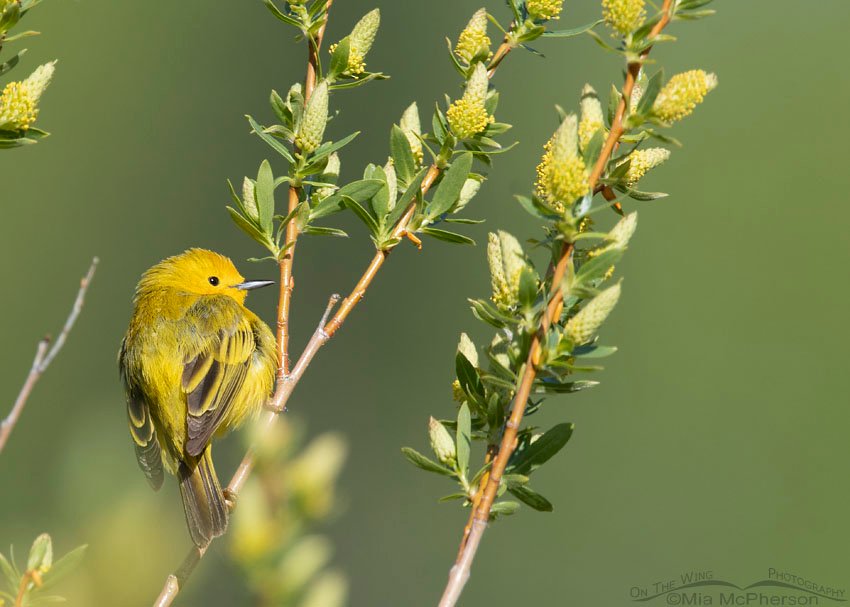
This male Yellow Warbler stayed at the top of a willow for quite some time but I was never able to get a completely clear view of him because a light breeze was moving the out of focus willows in the foreground around.
There are some photographs that I feel I simply have to take when given the opportunity and this photograph of a Yellow-bellied Marmot pup grooming its tail was one of those photos.
I had fun yesterday morning photographing a male Green-tailed Towhee singing in a mountain canyon, this was a bird I heard before I spotted him perched on a flowering branch.
Even though the light yesterday morning wasn't optimal for bird photography I took my Mom to the Farmington Bay WMA area to show her around there, we only made it as far as Glover Pond though.
Last week when I took my Mom to Bear River Migratory Bird Refuge we were fortunate to see and photograph Killdeer mating while on the auto tour route.
I'm sharing two Uinta Ground Squirrel photos taken two days ago a canyon in the Wasatch Mountains, one adult that was wet from the morning dew and one baby that was just outside of its burrow.
Last week I photographed this adult Western Kingbird perched on rusty barbed wire up in northern Utah with spring greenery behind it and I liked the greens, yellows, grays and whites in the photo.
Most often I see the ear tufts of Short-eared Owls when they are on alert, when there is a wind blowing the tufts from behind the owl or when they appear curious about something they can see or hear.
I have been trying to photograph this rufous morph Red-tailed Hawk in good light since the first time I spotted her on the 24th of March in northern Utah, yesterday I finally accomplished that goal.
Photographing Yellow-bellied Marmot pups have delighted me this spring and since they don't stay little for long I have taken photos of them every time I have had the chance.
Barn Swallows are like tiny, feathered brick masons. One pellet by itself is nothing but combined pellets form the nests these birds use to raise their young in.
Green-tailed Towhees are migratory so I don't see them year round in Utah like I do their close relatives the Spotted Towhees. Green-tailed Towhees spend their winters in the southern most parts of the U.S. and in Mexico and I miss seeing a hearing them while they are away.
There are days when one bird can "make" the day great for me as a bird photographer, yesterday that bird was a Cooper's Hawk in a Wasatch Mountain canyon east of Salt Lake City.
White-faced Ibis are abundant at Bear River Migratory Bird Refuge during their breeding season and they can be easily seen from the 12 mile, self-guided auto tour route feeding in the water impoundments or flying in loose flocks overhead.
Yesterday was my first opportunity this year to be able to take quality images of American White Pelicans in Definitive Alternate Plumage or as it is better known, breeding plumage.
My best bird photos yesterday were of a stunning Yellow-rumped Warbler (Audubon's) male in breeding plumage that I photographed as he foraged in tree next to the road.
Three days ago after I photographed the female American Kestrel eating her prey on a lichen-covered rock I was able to take a few photographs of a single adult White-crowned Sparrow that was perched on a budding tree.
The bird that was the most cooperative yesterday morning was a female American Kestrel that I spotted eating her prey on a lichen encrusted rock