Yellow-headed Blackbird and a Midge

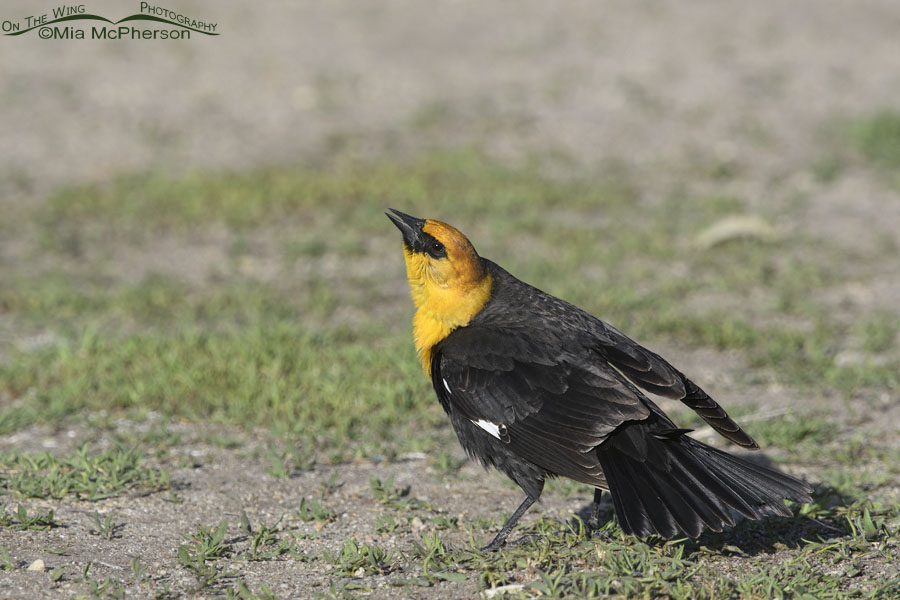
Yellow-headed Blackbird male about to grab a midge from the air

Yellow-headed Blackbird male about to grab a midge from the air - Nikon D300, f6.3, 1/2000, ISO 640, Nikkor 200-400mm VR with 1.4x TC at 400mm, natural light

This image was taken this past Monday at Bear River National Wildlife Refuge in northern Utah. The Midges have hatched and are flying around near the auto tour route. I’ve written about the importance of Midges before in a post titled   Midges and Birds – Food for Thought  .

Yellow-headed Blackbirds (Xanthocephalus xanthocephalus) can perch on cattails, reeds, rushes or mounds of vegetation and snatch Midges right out of the air. Capturing it with my camera was a treat on Monday, that is a midge to the right of the blackbird’s bill.

Mia

More Yellow-headed Blackbird image

Facebook Twitter Stumbleupon Digg Delicious Reddit Posterous Pinterest Email

Share

Yellow-headed Blackbirds – Friday Photos

Female Yellow-headed Blackbird on Curly Dock

Female Yellow-headed Blackbird on Curly Dock - Nikon D200, f6.3, 1/500, ISO 250, Nikkor 200-400mm VR with 1.4x TC at 400mm, natural light

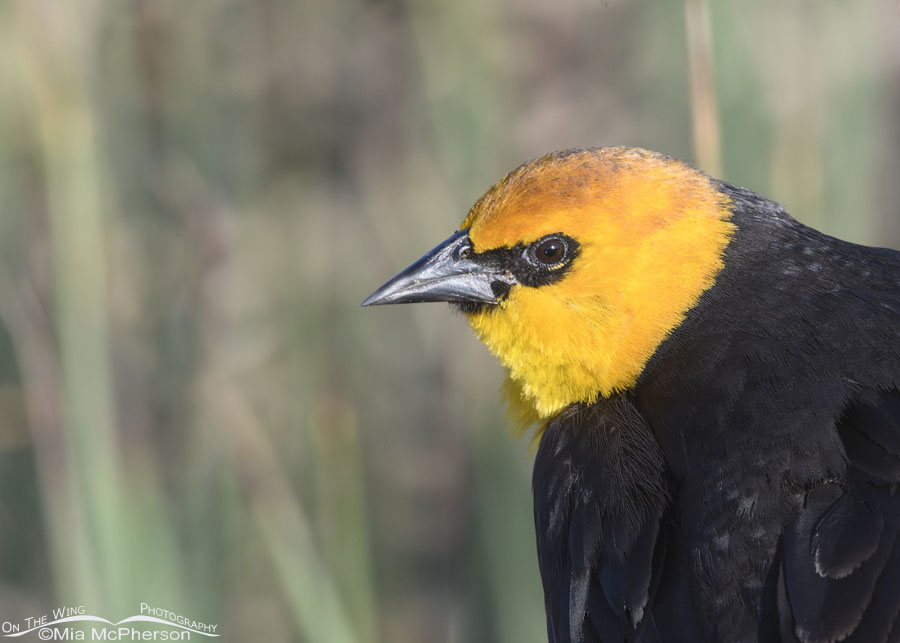
Yellow-headed Blackbirds (Xanthocephalus xanthocephalus) have begun to show up in large numbers in my area of the country. I’m seeing them perched on Cattails, Phragmites and in flight.  The freshwater marshes that surround the Great Salt Lake provide excellent breeding grounds for this species.

Female Yellow-headed Blackbirds are brown and have yellowish throats and facial patches. I photographed the female above perched on Curly Dock at Farmington Bay Wildlife Management Area on the last trip I made to Utah before permanently moving here.

Yellow-headed Blackbird male displaying

Yellow-headed Blackbird male displaying - Nikon D300, f6.3, 1/640, ISO 400, +0.3 EV, Nikkor 200-400mm VR with 1.4x TC at 400mm, natural light

Yellow-headed Blackbird males are black with white primary coverts and have yellow heads, chests and throats. They are easily identifiable and unmistakable. I photographed this displaying male above at Bear River National Wildlife Refuge.

The males are a challenge to expose properly in photographs because of the high contrast between the yellows, blacks and whites. I generally expose for the darks and hope I don’t blow out the white primary coverts if they are shown.

Yellow-headed Blackbirds have a very mechanical sounding call, it can be heard here.

Mia

Facebook Twitter Stumbleupon Digg Delicious Reddit Posterous Pinterest Email

Share

Midges and Birds – Food for thought

Midge "tornado" from a distance
Midge “tornado” from a distance

This is the time of the year that “midges” are as thick as flies on you-know-what at the Bear River Migratory Bird Refuge. They are so thick that they can look like tornadoes along side of the Auto Tour route as seen in the image to the left.
A lot of people mistake midges for mosquitoes; they do look similar, and think that they will be bitten by the swarms of bugs in the air. There are biting and non-biting midges, biting midges are often called “no-see-ums” and truly they are miserable to get into because even though you can barely see them the bites let their presence be known. The midges at Bear River Migratory Bird Refuge along the auto tour route are non-biting midges and they play an important role in the areas eco-system.

Midges have three stages in their lifetime, larval, pupal, and adult. In the larval stage midges are aquatic, they feed on algae, plankton and small aquatic plants. They are a food source in the larval stage for fish an their appearance is similar that that of mosquito larvae.

Midge "tornado" zoomed closer

Midge "tornado" zoomed closer

The female midge lays her eggs either on the water surface or on vegetation near the water. The eggs hatch in approximately 72 hours followed by a two day pupation before rising to the surface as adults.

An important thing to remember is that the flying adult midges do not eat and have a short life span of about 10 days. You can hear a humming sound with that many midges in the air though they do not have the typical “buzz” a mosquito has. Midges over winter in the larval stage in the water.

The midges at Bear River Wildlife Refuge seem to be concentrated along the sides of the dirt road of the auto tour route hovering above the grasses, or on the vegetation along the road or nearby shoreline plants.

They can be a bother when you are driving along with your windows open for birding, bird photography or sightseeing. The outside and inside of the vehicle will literally have hundreds, if not thousands of midges attached to the interior and exterior.

Not to worry though; if you leave the windows open a bit when you reach the paved road and higher speeds most will leave the vehicle.

Midges in flight
Midges in flight

They do tickle if they land on your skin and the sheer numbers of them can feel a bit overwhelming but they don’t bite.

They are; however, an important food source for many of the birds found on the refuge.

The midges at Bear River MBR first appear around April and are often still being seen through June. Many of the shorebirds found at the refuge begin to return about the time the midges are “hatching” in the spring. They are a favorite of Eared Grebes and a few other perching birds.

I have many images where the midges are either present on the water surface or are in flight around the birds I photograph. They can be troublesome to “clean” off the water surface and they can appear to be dust bunnies (aka sensor spots) in an image frame.

Yesterday I could see one walking on my lens through the viewfinder, if that happens to you just blow it out, don’t try to smoosh it or your lens will get dirty!

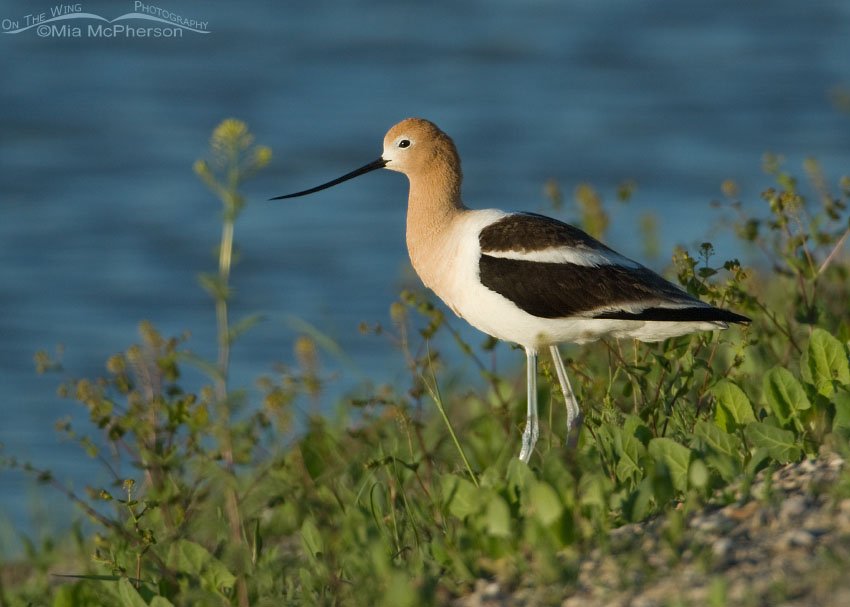
Adult American Avocet

Adult American Avocet (Recurvirostra americana)
Bear River Migratory Bird Refuge, Box Elder County, Utah
Nikon D200, f6.3, 1/640, ISO 400, Nikkor 200-400mm VR with 1.4x TC at 400mm, natural light

American Avocets are elegant, graceful and unique shorebirds found in great numbers in the Bear River MBR. According the BNA  (Birds of North America – a pay site) their freshwater diet includes:

In freshwater wetlands water boatmen (Hemiptera, Corixidae); adult and larval beetles (Coleoptera); fly larvae (Diptera), especially midges (Chironomidae).

I haven’t researched yet to see how many other shorebird species found in the refuge that eat the midges but I’m fairly sure that more of the shorebirds do benefit from the midges being in the refuge.

Male Yellow-headed Blackbird among the midges

Male Yellow-headed Blackbird (Xanthocephalus xanthocephalus) with midges around it
Bear River Migratory Bird Refuge, Box Elder County, Utah
Nikon D200, f6.3, 1/750, ISO 400, +0.3 EV, Nikkor 200-400mm VR with 1.4x TC at 400mm, natural light

Another bird that seems to benefit from midges is the Yellow-headed Blackbird. In the image above you can see a few flying midges in the frame and I have watched these blackbirds snatch the midges right out of the air while they are perched. I’ve also seen the yellow-headed blackbirds feeding on the ground by grabbing the midges off of the vegetation. They probably have to eat a lot of the midges for the calories they need but the blackbirds don’t seem to make a dent in the millions of midges on the refuge.

Cliff Swallow gathering nesting material

Cliff Swallow (Petrochelidon pyrrhonota) gathering nesting material
Bear River Migratory Bird Refuge, Box Elder County, Utah
Nikon D200, f6.3, 1/1250, ISO 400, Nikkor 200-400mm VR with 1.4x TC at 400mm, natural light

Swallows start to show up at the refuge about the time the midges first start flying, I don’t think that is a coincidence since swallows prefer flying insects for their diet. Although I would prefer that swallows ate just the biting insects I won’t begrudge them eating the non-biting midges either.

Marsh Wren calling from cattails

Marsh Wren (Cistothorus palustris) calling from cattails
Bear River Migratory Bird Refuge, Box Elder County, Utah
Nikon D200, f6.3, 1/1250, ISO 400, +0.3 EV, Nikkor 200-400mm VR with 1.4x TC at 400mm, natural light

Yesterday I was fortunate enough along the auto route tour to be able to get close to several Marsh Wrens that were calling in the cattails and I could see quite a few of the nests. I love Wrens in general, they are tiny little birds with big attitudes that are amazingly fast and challenging to photograph. I was quite surprised to see one of them yesterday snatch a midge right out of the air.

Humans may think that midges are a nuisance yet the birds I have mentioned benefit tremendously from the presence of these insects. I have only touched on a few of the bird species that ingest these bugs.

Food for thought on a windy, cloudy and rainy day in Utah.

Mia

Facebook Twitter Stumbleupon Digg Delicious Reddit Posterous Pinterest Email

Share

Bye bye Blackbirds?

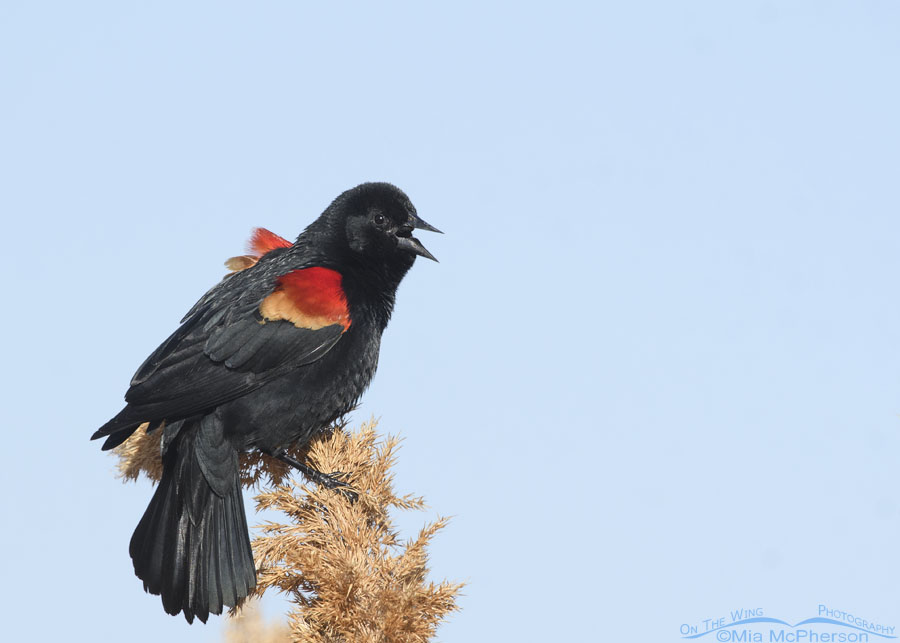
Adult Red-winged Blackbird male singing

Adult Red-winged Blackbird (Agelius phoeniceus) male singing
Pinellas County, Florida
Nikon D200, handheld, f6.3, 1/640, ISO 250, Nikkor 80-400mm VR at 400mm, natural light

In December of 2010 and January of 2011 the national media outlets reported several mass die offs of birds in the United States. On December 31, 2010 over 5000 blackbirds died and fell on the town of Beebee, Arkansas. On January 4, 2011 near Labarre, Louisiana 500 blackbirds and starlings were reported dead.  It was reported that the mass die off in Arkansas was caused by illegal fireworks going off which startled the blackbirds into flying at night, smashing into objects because of their poor night vision.

Recently the USDA accepted responsibility for a smaller die off in South Dakota which brought to light a little known program called “Bye bye Blackbird” which uses DRC-1339, a poison that is also called an avicide. I didn’t see this program brought to national attention in the evening news.

Adult European Starling

Adult European Starling (Sturnus vulgaris)
Salt Lake County, Utah
Nikon D200, f5.6, 1/1000, ISO 400, +0.3 EV, Nikkor 200-400mm with 1.4x TC at 260mm, natural light

Target species of the “Bye bye Blackbird” USDA program are blackbirds, starlings, grackles, cowbirds, and pigeons.

A bit about European Starlings: Few people in North America like European Starlings, my thoughts on that are not to blame the bird but to place the blame where it belongs with the people who introduced this species in 1890 – 1891 in New York’s Central Park.

It only took 60 years for European starlings to make their way from the Atlantic coast all the way to the Pacific and a mere 100 birds has now been estimated at over 200 million. They do compete with native species for food and nesting cavities.

Brewer's Blackbird male singing

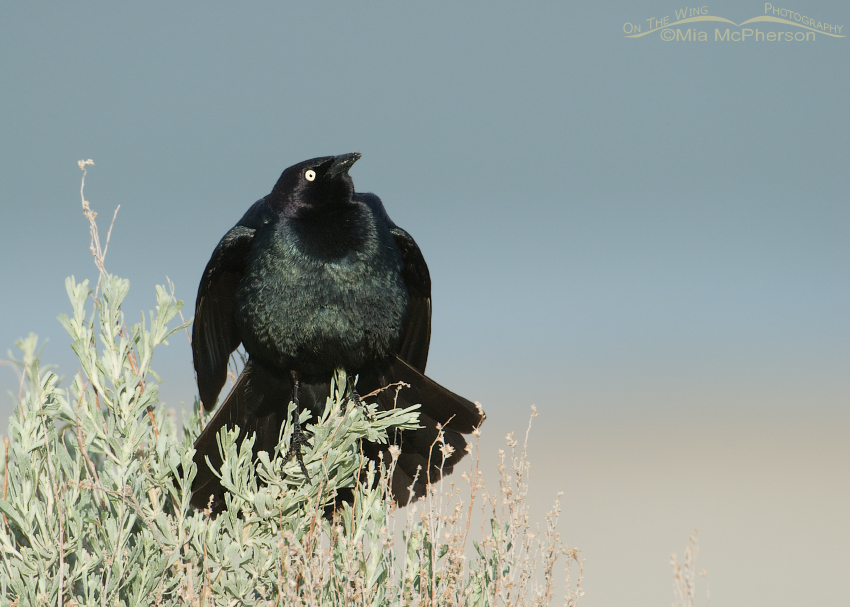
Brewer’s Blackbird (Euphagus cyanocephalus) male singing
Antelope Island State Park, Davis County, Utah
Nikon D200, f7.1, 1/350, ISO 400, -0.3 EV, Nikkor 200-400mm VR with 1.4x TC at 400mm, natural light

Of the blackbird target species there are Red-winged Blackbirds, Yellow-headed Blackbirds, Brewer’s Blackbirds, the less common Tricolored Blackbird,  and the rare Rusty Blackbird. The depredation order is currently under review because of the impact it may have on the declining population of the Rusty Blackbird.

Brown-headed Cowbird male

Brown-headed Cowbird (Molothrus ater) male
Antelope Island State Park, Davis County, Utah
Nikon D200, f6.3, 1/640, ISO 250, +0.3 EV, Nikkor 200-400mm VR with 1.4x TC at 400mm, natural light

Cowbirds are also targeted by the Bye bye Blackbird program, there are 3 species which can be affected,  Brown-headed Cowbirds, Shiny Cowbirds and Bronzed Cowbirds. Brown-headed Cowbirds can be found throughout most of North America while the Shiny and Bronzed Cowbirds are more localized to certain geographical areas.

Great-tailed Grackle male

Great-tailed Grackle (Quiscalus mexicanus) male
Farmington Bay WMA,
Davis County, Utah
Nikon D200, f7.1, 1/640, ISO 400, Nikkor 200-400mm VR with 1.4x TC at 400mm, natural light

There are three grackle species that are also targeted by the “Bye bye Blackbird” program, Common Grackles, Boat-tailed Grackles and Great-tailed Grackles. Common Grackles cover the largest geographical area, Great-tailed Grackles are found throughout the southwestern United States while Boat-tailed Grackles seem to prefer being along the east coast.

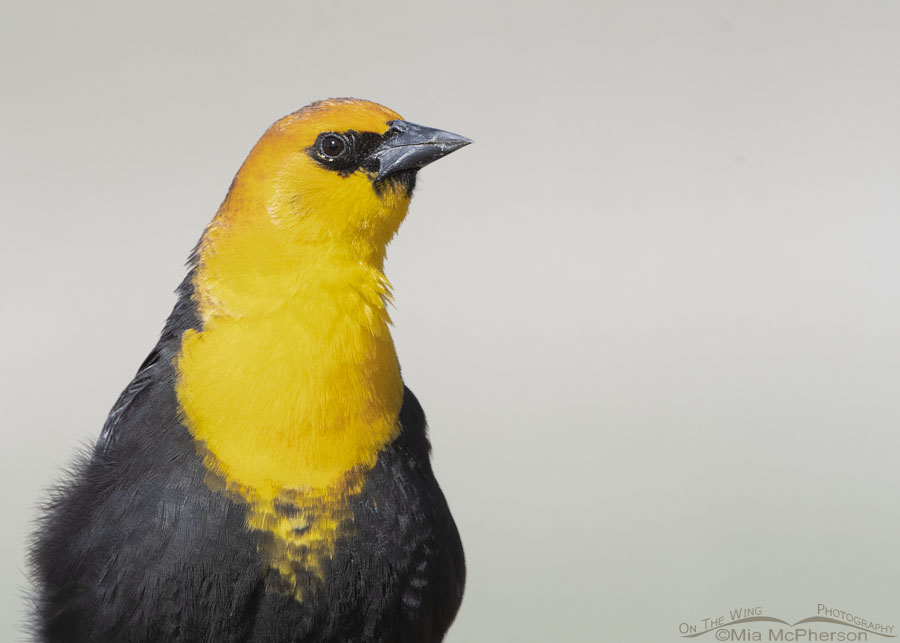
Adult male Yellow-headed Blackbird male singing

Adult male Yellow-headed Blackbird (Xanthocephalus xanthocephalus) male singing
Farmington Bay WMA, Davis County, Utah

 Nikon D200, f7.1, 1/800, ISO 400, +0.7 EV, Nikkor 200-400mm VR with 1.4x TC at 400mm, natural light

Why was the USDA “Bye bye Blackbird“ program started and when did it begin? It began in the 1960′s and became a part of the USDA later. The program was started to aid farmers, dairy farmers and ranchers in the reduction and removal of  avian “pests”. Dairy farmers say that a large flock of starlings or blackbirds can eat 200 pounds of feed a day and that their feces can spoil the feed.

Through the US Fish and Wildlife Service there is a “depredation order” which allows anyone kill blackbirds, starlings or grackles who claims they pose health risks or economic damage. Some areas of the country require permits but farmers are often able to hire private contractors who don’t need to report their bird culls to any authority.

USDA agents killed more than 4 million starlings, blackbirds, grackles and cowbirds in 2009.

“Every winter, there’s massive and purposeful kills of these blackbirds,” says Greg Butcher, the bird conservation director at the National Audubon Society. “These guys are professionals, and they don’t want to advertise their work. They like to work fast, efficiently, and out of sight.”

I have to wonder:

* Why aren’t the farmers required to cover the feed they say is being lost daily or annually?
* Would the birds even be there if the feed was covered?
* Would the birds be defacating on the feed if the feed were covered?
* Why should this program to exterminate these species be paid for by the government?
* What are the effects on non-target species who eat seeds?
* What are the effects on raptors who may ingest the poisoned birds?
* What are the long-term effects of DRC-1339 on humans and the environment?
* How many other birds are dying because of DRC-1339 that we don’t know or hear about?

The USDA says that DRC-1339 does not affect livestock, pets or humans but they didn’t think that DDT would cause the well documented problems for birds that it did. How many times has the USDA or FDA said that a poison or medication wouldn’t be harmful only later to have to recant those statements because it was harmful?  How many government studies have been proven wrong?

From promedmail.org: Known exceptions are owls and felines, with LD’s of about 5 mg/kg placing them in the sensitive category.

Last I checked felines included a well known family pet, the cat. And owls are protected.

DRC-1339 causes severe renal failure and congestion to the bird’s major organs, does that sound humane? I don’t think so.

What is next?

* If a Golden or Bald Eagle takes, kills and ingests a lamb or a calf will they be on the Bye bye Blackbird hit list too? They would be causing economic damage.
* Who is watching the private contractors to make sure they are “dosing” the target species safely if they don’t have to report to authorities?
* Why are the private contractors not required to report the number of birds (or species for that matter) to government authorities?

I’d hate to think that our great-grandchildren won’t ever know the sound of a Red-winged Blackbird singing on a spring morning. There needs to be more transparency & accountability about the “Bye bye Blackbird” program.

I’m really bothered by the USDA Bye bye Blackbird program, are you?

Mia

Juvenile male Red-winged Blackbird singing

Juvenile male Red-winged Blackbird (Agelius phoeniceus) singing
Pinellas County, Florida
Nikon D200, f6.3, 1/800, ISO 200, Nikkor 80-400mm at 400mm, natural light

http://www.truth-out.org/bye-bye-blackbird-usda-acknowledges-a-hand-one-mass-bird-death67028
http://www.sustainabilityforum.com/news/bye-bye-blackbird-usda-mass-bird-deaths
http://www.promedmail.org/pls/apex/f?p=2400:1001:2123109730310003::NO::F2400_P1001_BACK_PAGE,F2400_P1001_PUB_MAIL_ID:1000,86850

Facebook Twitter Stumbleupon Digg Delicious Reddit Posterous Pinterest Email

Share