
Wasatch Mountain Canyon Cedar Waxwing With A Cloudy Sky Background
I pulled over to the left side of the road after I passed the bush and the bird and I succeeded in getting the Cedar Waxwing in fairly good light with a cloudy sky background.
I'm wondering now if Great Blue Herons here in Utah might already be adapting to climate change by moving higher up into the mountain valleys and canyons that have suitable food and water supplies to breed and nest.
I'm going to keep trying to obtain better photos of the Gray Catbirds with the Black Twinberry berries and perhaps before long the catbirds will bring their young to feast on these berries too!
Knowing that this is a favorite perch has given me opportunities I might have missed if I hadn't been paying attention to the behavior of this tiny Broad-tailed Hummingbird since their arrival this spring.
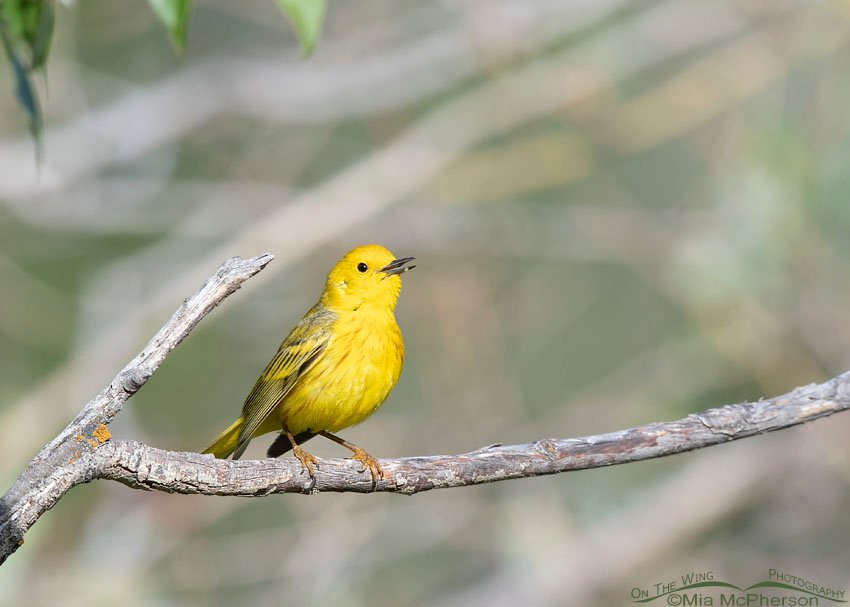
Spending time photographing Northern Yellow Warblers can try the patience of even the most patient photographer because they are so flighty, small and move quickly but it can also be rewarding when you get photos that you like.
Luck was on my side when I found the family of Mountain Bluebirds in good light plus they were close enough to take quality photos of them, first the male then the female and the juveniles.
Even though this adult Cedar Waxwing is small in the frame because I photographed it from quite a distance it is one of my favorite images taken in the Wasatch Mountains four days ago.
While these Barn Swallow photos aren't million dollar shots the experiences I shared with my mother while we photographed this bird together are worth everything to me.
I see and photograph Short-eared Owls in Sagebrush Country quite often. I spend a lot of time in areas where there is sagebrush dotting the desert, steppes and hillsides here in Utah and I find these amazing owls there.
I've been photographing nesting Cedar Waxwings and I have to say that it tests my skills and is a true challenge because of the light, how quickly these birds move and the cluttered habitat.
As a bird photographer I have found that it is easy to make any species of owl look interesting and appealing in my images but it is more of a challenge to do that with Turkey Vultures but that doesn't mean I don't try. I will always try.
After a bit the female Mountain Bluebird did something surprising... She flew in so close that I could only take close ups of her as she appeared to forage at the edge of the dirt road.
The male Broad-tailed Hummingbird lifted off from the perch so I pre-focused on it, listened for him to come back then when I heard the bird get close to the perch I fired off a burst of shots and captured him in a landing position with the vivid color of his gorget showing
I spotted a flash of black, white and red as a bird landed in the aspen tree that was closest to me above where the wrens and swallows are nesting and realized that a male Red-naped Sapsucker had flown in and was foraging for food in the buds of the aspen.
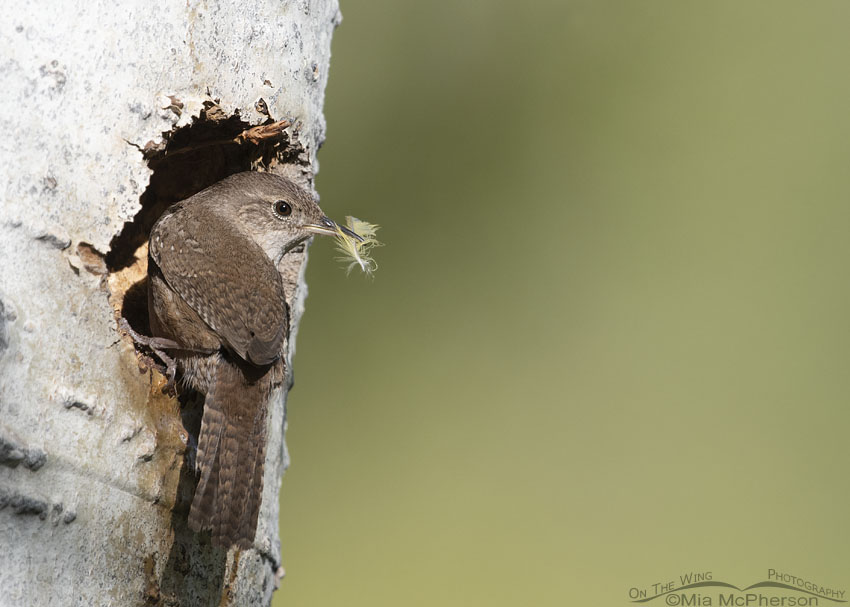
Two days ago I spent time photographing nesting Northern House Wrens in the high Uintas near Mirror Lake Highway, of interest to me is that two years ago I photographed Red-naped Sapsuckers using this same nesting cavity.
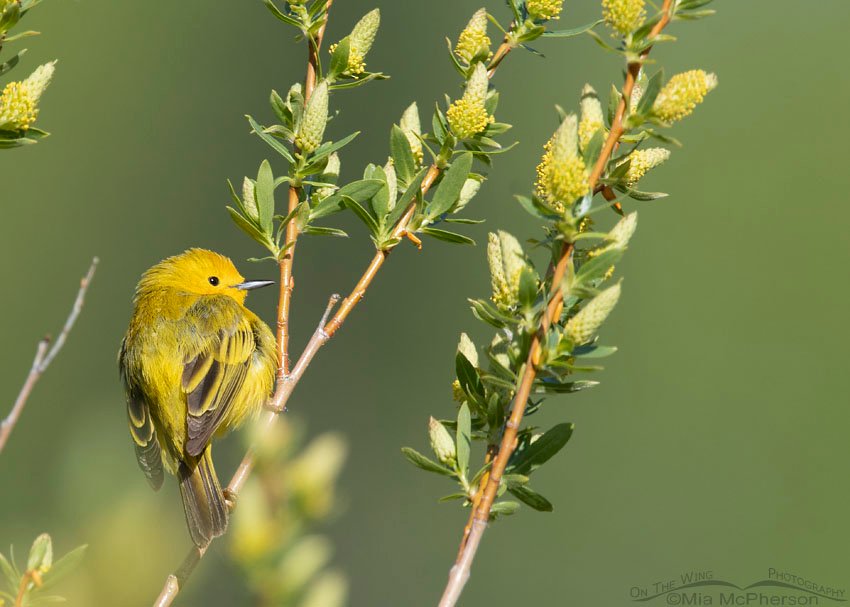
This male Northern Yellow Warbler stayed at the top of a willow for quite some time but I was never able to get a completely clear view of him because a light breeze was moving the out of focus willows in the foreground around.
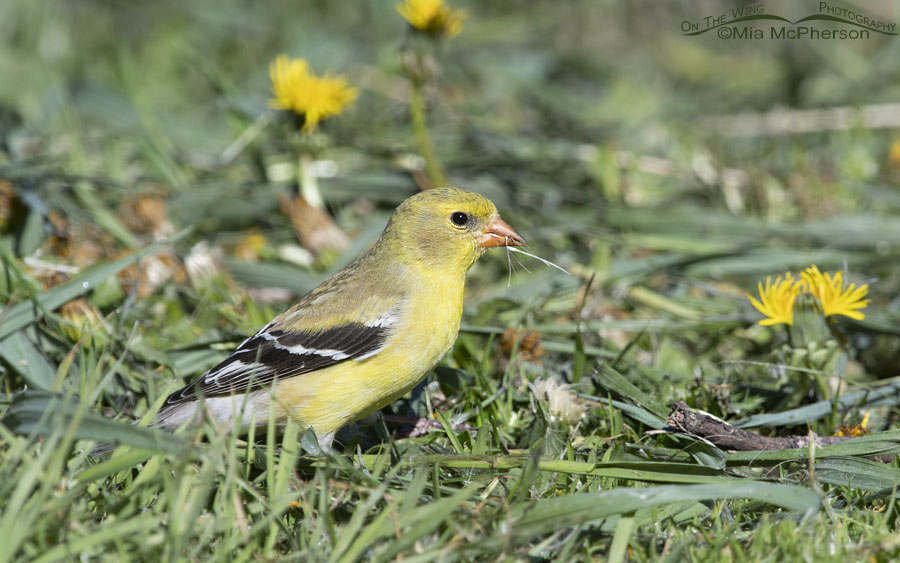
The day I photographed the Green-tailed Towhee singing up in the mountain canyon I also had an opportunity to take a nice series of photos of what appeared to be a mated pair of American Goldfinches.
I had fun yesterday morning photographing a male Green-tailed Towhee singing in a mountain canyon, this was a bird I heard before I spotted him perched on a flowering branch.
Even though the light yesterday morning wasn't optimal for bird photography I took my Mom to the Farmington Bay WMA area to show her around there, we only made it as far as Glover Pond though.
Last week when I took my Mom to Bear River Migratory Bird Refuge we were fortunate to see and photograph Killdeer mating while on the auto tour route.
Yesterday morning was spent up in the mountain canyons again photographing the birds I found at the higher elevations, the birds I saw the most of were Northern Yellow Warblers, birds who look like sunshine on the wing.
When I had the opportunity to photograph a Northern Yellow Warbler foraging in a flowering tree I jumped at the chance. Right after I took this photo the warbler snatched a tiny insect from the flowers but I couldn't make out what it was.
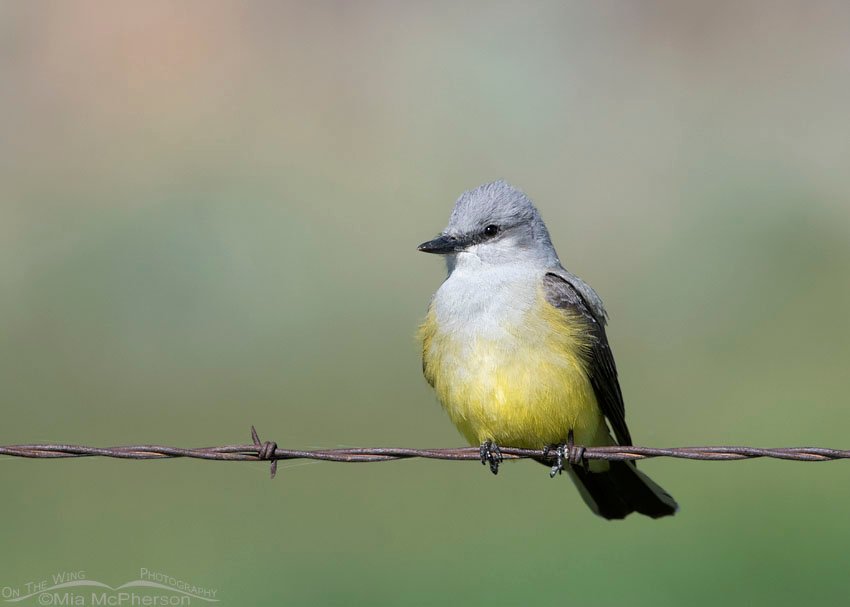
Last week I photographed this adult Western Kingbird perched on rusty barbed wire up in northern Utah with spring greenery behind it and I liked the greens, yellows, grays and whites in the photo.
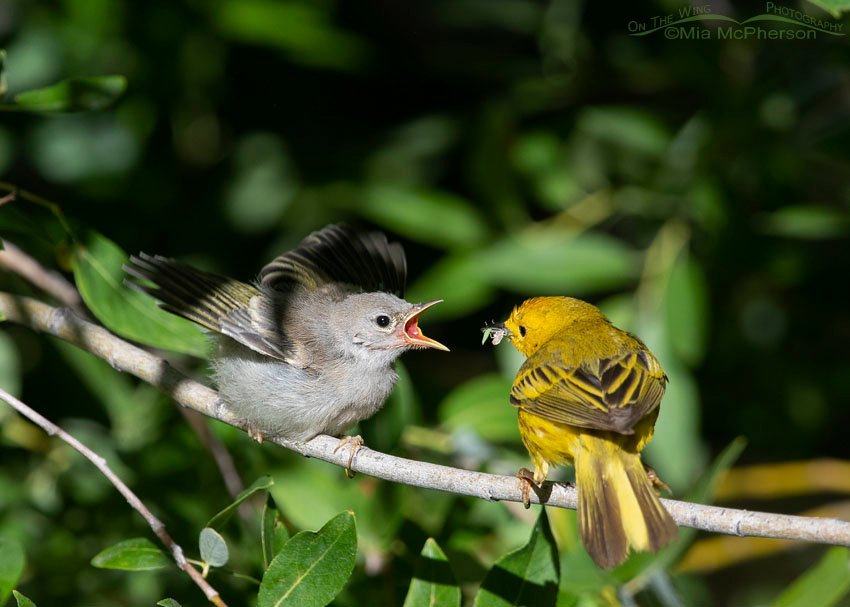
I was delighted to be able to photograph the female Northern Yellow Warbler as she fed her young and to watch the fledgling as it fluttered its wings and gulped down the food the female brought it.
Imagine a bird whose bright yellow feathers rival the rays of the sun then add a black forehead, ebony eyes, black and white wings and you have a male American Goldfinch in breeding plumage. Feathered sunshine.
Most often I see the ear tufts of Short-eared Owls when they are on alert, when there is a wind blowing the tufts from behind the owl or when they appear curious about something they can see or hear.
I have been trying to photograph this rufous morph Red-tailed Hawk in good light since the first time I spotted her on the 24th of March in northern Utah, yesterday I finally accomplished that goal.
Vesper Sparrows aren't bright or colorful birds but I find their appearance subtly beautiful in a quiet kind of way and their songs are always a delight to hear in the morning or late afternoon.
Barn Swallows are like tiny, feathered brick masons. One pellet by itself is nothing but combined pellets form the nests these birds use to raise their young in.
Green-tailed Towhees are migratory so I don't see them year round in Utah like I do their close relatives the Spotted Towhees. Green-tailed Towhees spend their winters in the southern most parts of the U.S. and in Mexico and I miss seeing a hearing them while they are away.