American Pipits and Fall Migration
American Pipits aren't flashy birds, in fact some people might think they are rather plain or dull colored. I am always happy to have them in my viewfinder and to hear their flight calls in the breeze.



American Pipits aren't flashy birds, in fact some people might think they are rather plain or dull colored. I am always happy to have them in my viewfinder and to hear their flight calls in the breeze.

The same morning that I photographed the Sage Thrasher with the berry in mid air I was also able to take a series of images of a Ruby-crowned Kinglet in the sweet golden light just after dawn.

The Sage Thrasher seemed like it was bathed in golden light when suddenly I saw that it had a sumac berry which it tossed it into the air and proceeded to swallow it whole.

Four days ago I was able to photograph a Snowy Egret landing sequence that I liked because of the action of the bird, the setting and the lovely lighting I had at the time.

It has been a while since I photographed Snowy Egrets so having them in my viewfinder yesterday morning was a real treat especially since they will be migrating soon and I will go the winter without seeing them.
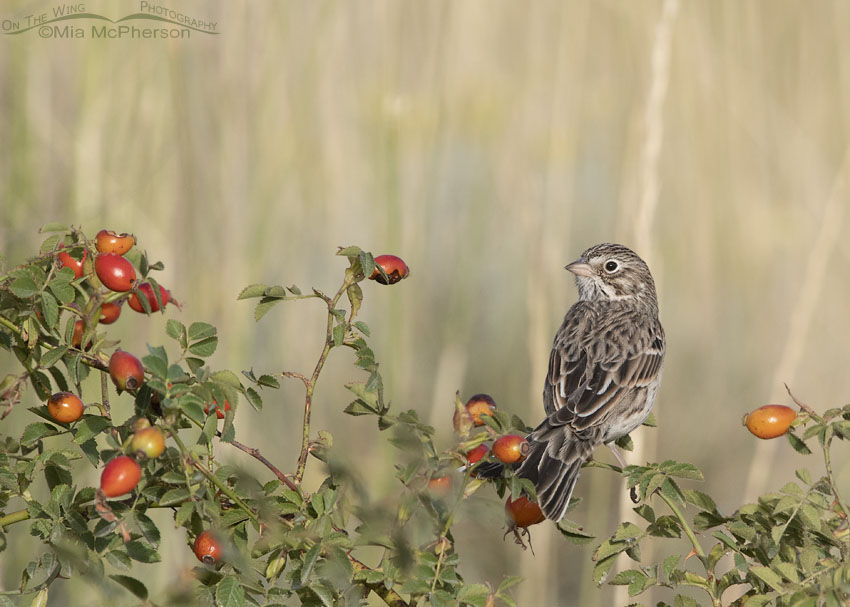
Yesterday I saw a single Vesper Sparrow which came in and perched out in the open on a lovely Wild Rose that was full of rose hips in nice light. What is not to like about that?
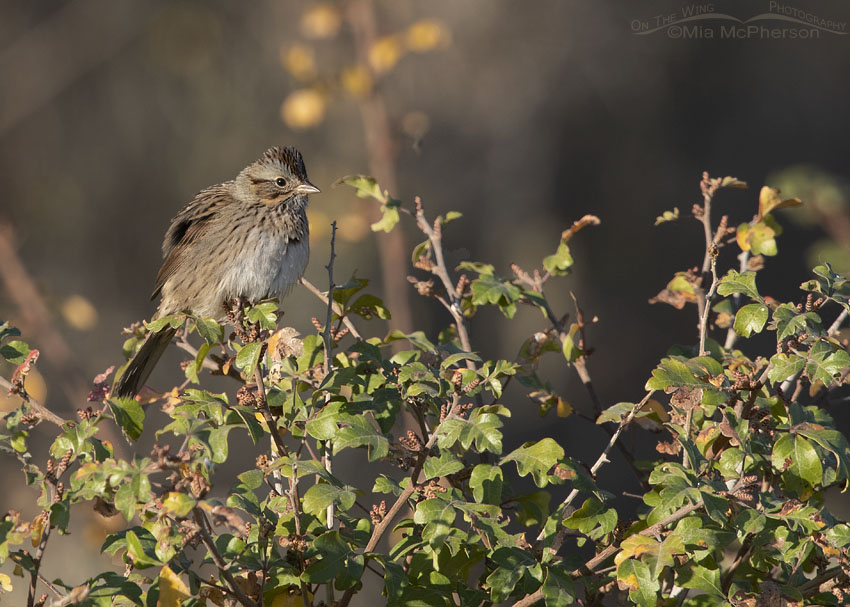
Right now Lincoln's Sparrows are moving to lower elevations and migrating south so I see more of them during the fall and early winter than any other time of the year here in Utah.

Typically I would prefer that all of the body of this Black-capped Chickadee was free of the out of focus elements in front of it but visually the abstract jumble of Autumn colored leaves stimulates my eyes and my brain.

I admit that it bothered me deeply that there was nothing that I could do for this Northern Yellow Warbler as it has for the other injured birds I have seen throughout the years that I couldn't help.

Yesterday morning I spent time focused on photographing Ruby-crowned Kinglets in a Wasatch Mountain Canyon in a thicket of hawthorn and chokecherry trees.
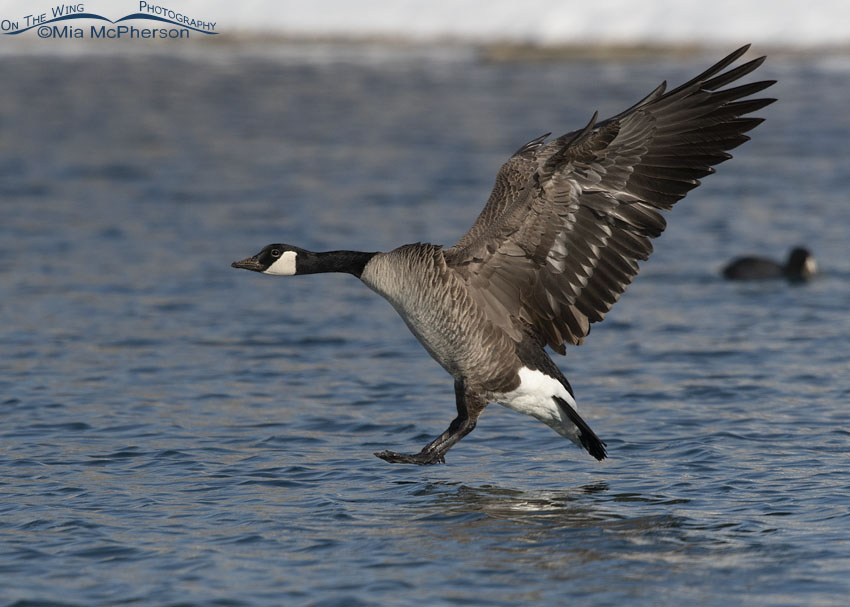
I've spent a lifetime appreciating these large geese and when I have lived in locations where Canada Geese weren't present I have missed hearing them calling overhead or seeing them floating by on the water.
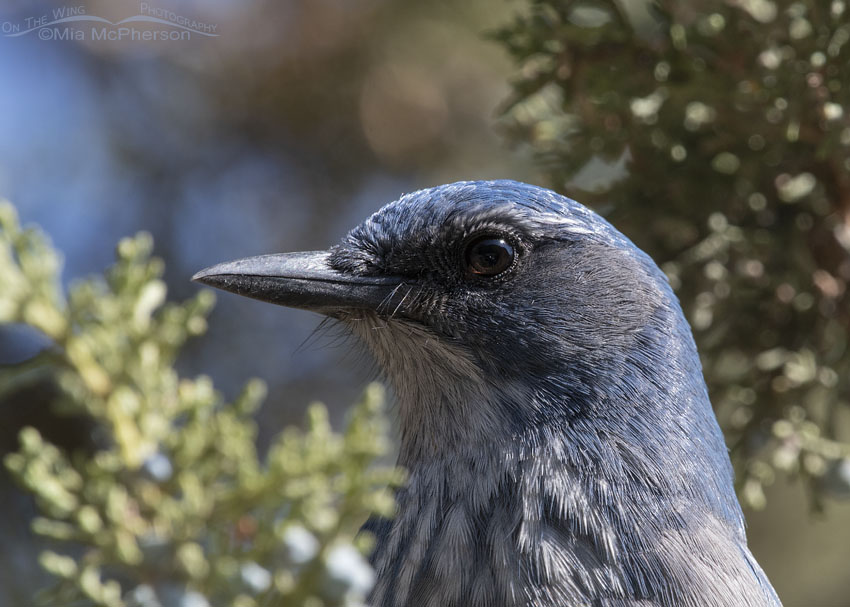
It isn't often that I am able to get close enough to a Woodhouse's Scrub-Jay that my only option is to take closeup portraits of them yet that is precisely what happened to me two days ago.

Two days ago I was able to photograph a Green-tailed Towhee foraging next to a gravel road up in a Wasatch Mountain Canyon, getting these birds out in the open can be a challenge so I was excited that this towhee was in the clear.

I see, but don't often photograph House Finches at home, I get most excited about them away from human civilization and in their natural habitats.
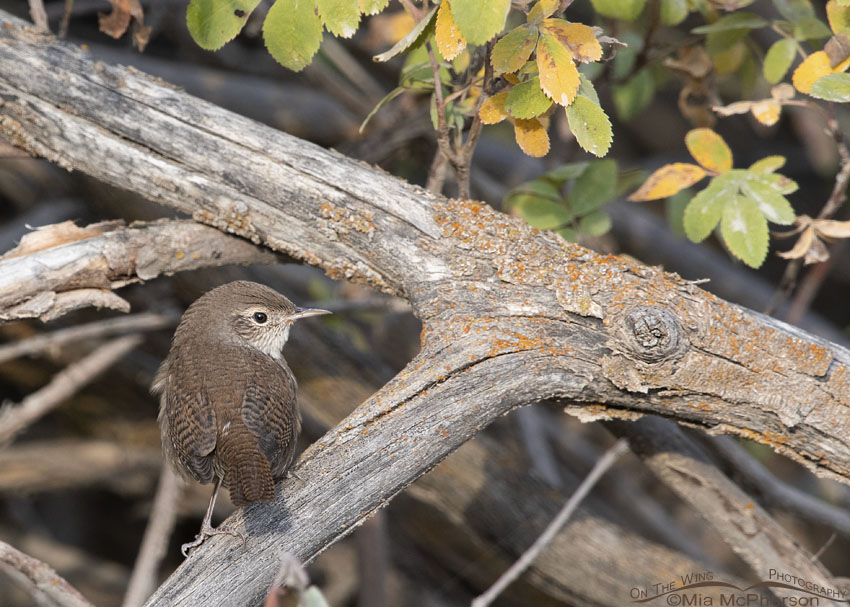
Yesterday morning I was delighted to find two Northern House Wrens foraging in a brush pile in the Wasatch Mountains not long after sunrise. This time of the year the wrens aren't singing like they do in the spring so I have to rely more on my eyes and not on a combination of my eyes and ears to locate them.

Yesterday I was surprised to find a Red Fox in a Wasatch Mountain Canyon, it is only my second time seeing a fox in that canyon and the last time wasn't that long ago.

I heard a familiar call, caught a flash of black, gray and white and spotted a Black-capped Chickadee land right in front of a Western Tent Caterpillar tent while calling out a clear "chickadee-dee-dee" to another chickadee that was nearby.

As I sat creekside in my Jeep an adult Song Sparrow flew in, landed and began hopping around looking for food for breakfast in the vegetation floating on the water at the edge of the creek.

Because of the avocet's determination to chase off this Greater Yellowlegs I was able to photograph it lifting off from the water with water still dripping from its feet and with the shorebird's head framed by its wings.

When the female American Goldfinch lifted off I liked the eye contact I had with her and how graceful she looked when she raised her wings, when I saw this image on my camera LCD I just had to smile.

I spent some time yesterday morning observing, photographing and enjoying the songs and calls of Black-capped Chickadees in a high mountain canyon. Chickadees always bring a smile to my lips and yesterday was no exception.

In the past week I have photographed so many birds in a Wasatch Mountain canyon that I thought I would share a group of them in a photo gallery.

I haven't just found and photographed birds this week, I have also had some furry creatures in my viewfinder including a young bull Moose and plenty of Least Chipmunks.
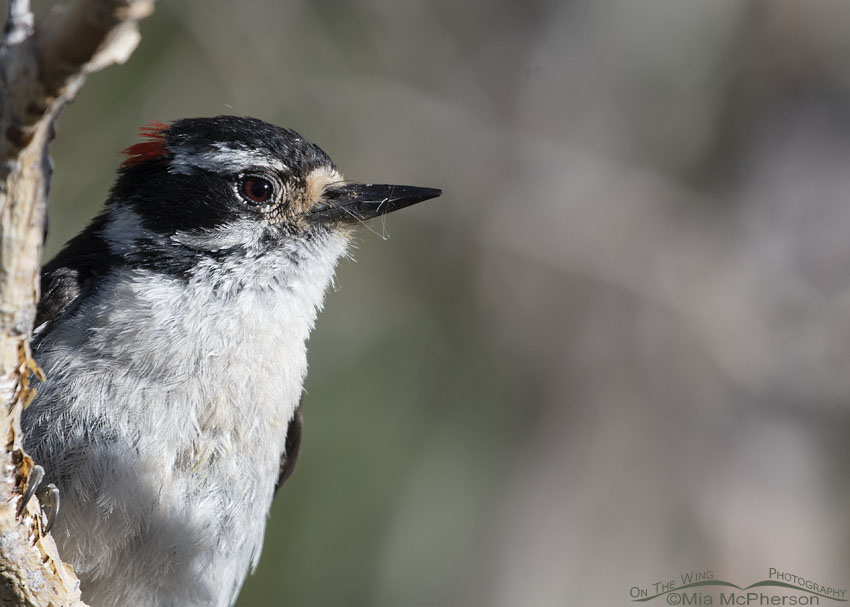
Who knew that Downy Woodpeckers have eyes the color of a fine Cognac? I didn't until I took this Downy Woodpecker close up in the Wasatch Mountains one month ago.
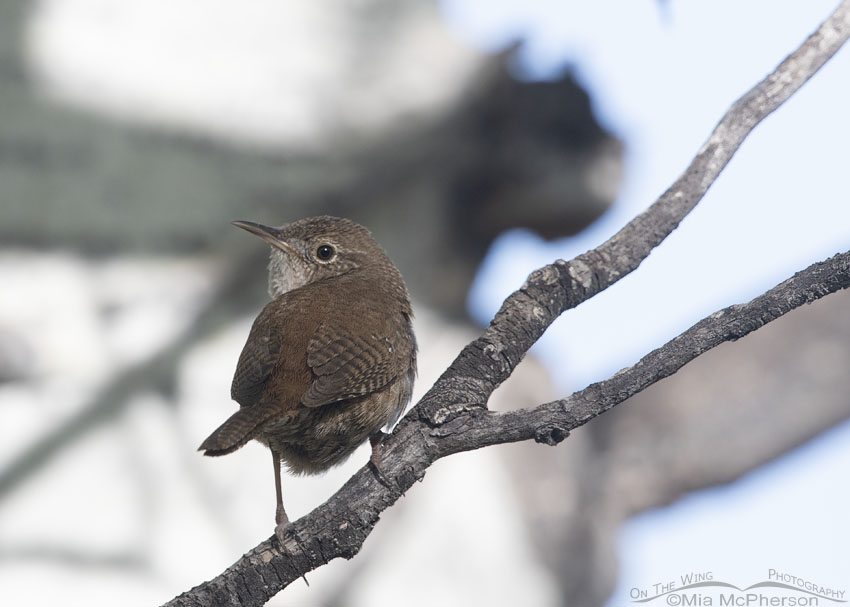
There are times I enjoy finding hidden faces in clouds, rocks, trees or other natural features and I saw one in this Northern House Wren photo.
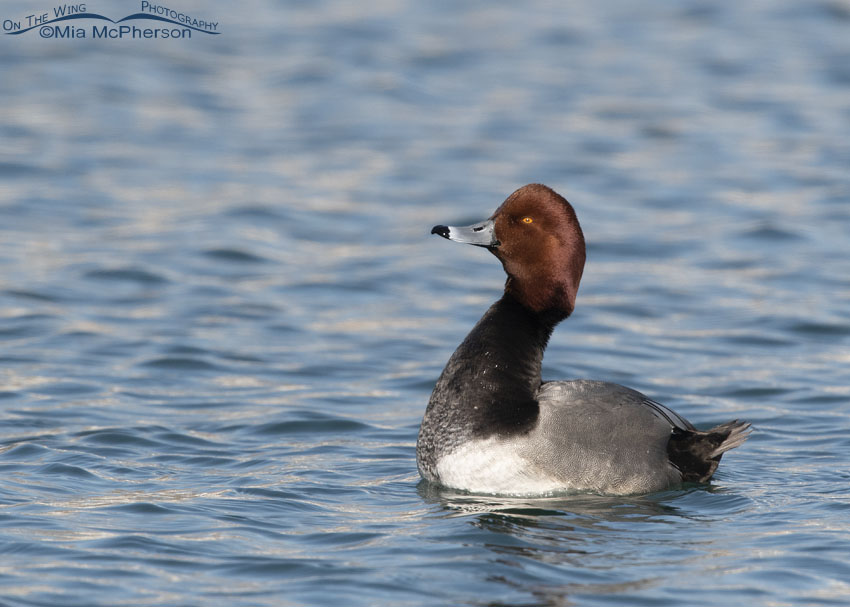
I enjoy viewing the image of the drake Redhead on the snowy January morning just as much as the drake Redhead photo on a clear February afternoon, they both show the ducks doing what ducks do no matter what the weather is doing.

I'm always happy to photograph the other things I see while I am out photographing birds and that includes cute critters like this Least Chipmunk nibbling on the fruits of the Utah Serviceberry shrub.

Last week while I was photographing some Lark Sparrows in northern Utah I took images of this one who had droopy wings because the sparrow was hot. I was hot, I know how the sparrow felt.
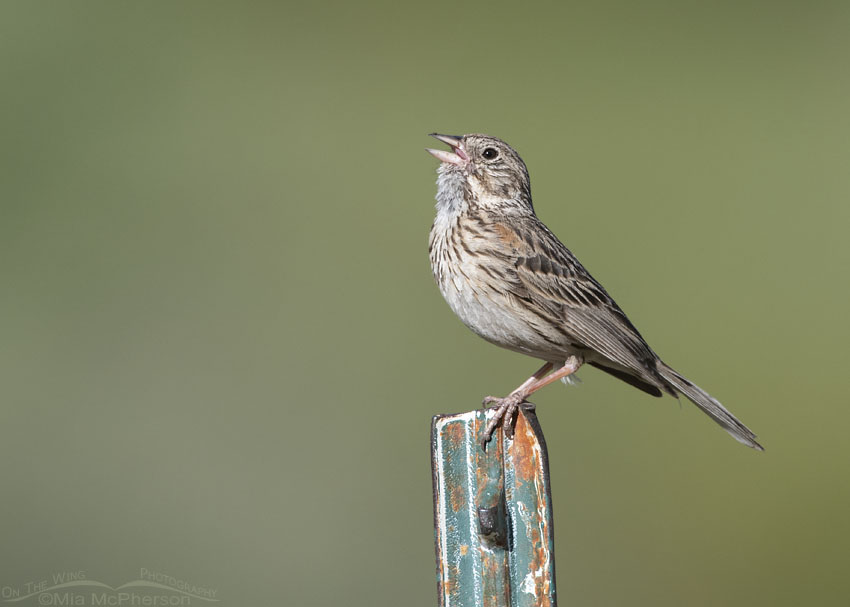
For several weeks I repeatedly saw and heard a Vesper Sparrow in a canyon in the Wasatch Mountains and early in July I was able to take some decent images of it as it sang on a metal post.

Northern Yellow Warblers are anything but mellow instead they are frenetic, hyperactive, frenzied, energetic and move so quickly they sometimes make me dizzy trying to track them with my long lens.